
Views: 0 Author: Site Editor Publish Time: 2026-05-08 Origin: Site
Tilting pad bearings are widely used in rotating machinery where shaft stability, load control, and reliable hydrodynamic lubrication are critical. Their ability to form independent oil wedges beneath each pad makes them particularly suitable for turbines, centrifugal compressors, pumps, generators, marine propulsion systems, and other equipment exposed to demanding operating conditions. Unlike fixed-profile bearings, the pads can pivot in response to shaft motion and load, helping the bearing maintain a stable fluid film over a broad operating range. Understanding tilting pad bearing applications therefore requires more than identifying industries; engineers also need to understand what mechanical problem the bearing solves in each machine.
A tilting pad bearing uses several individual bearing pads arranged around a rotating shaft or thrust collar. Each pad pivots slightly around its support point, allowing the lubricant film to develop a converging wedge as the shaft rotates. Hydrodynamic pressure generated within that wedge separates the moving surfaces during normal operating conditions and carries the applied load.
This self-adjusting geometry is one of the main reasons tilting pad designs are widely used in critical rotating equipment. Because each pad reacts individually to changes in shaft position and load, the bearing can provide greater dynamic stability than many fixed-geometry journal bearings. The design is especially valuable where rotor speed, thermal expansion, process conditions, or load variation make shaft behavior difficult to control.
A conventional fixed-profile journal bearing can develop cross-coupled fluid forces under certain operating conditions. In high-speed rotor systems, those forces may contribute to subsynchronous vibration or oil-whirl-related instability. Tilting pads reduce this tendency because each pad pivots to form its own pressure field instead of maintaining one continuous fixed bearing profile.
The result is not simply “less vibration” in every machine. Actual rotor behavior still depends on shaft stiffness, bearing clearance, preload, lubricant properties, rotor mass, alignment, and operating speed. However, tilting pad journal bearings are often selected when rotordynamic stability is a central design requirement.
Not all tilting pad bearings perform the same mechanical function. One of the most useful distinctions for understanding tilting pad bearing applications is whether the bearing supports radial load, axial load, or both through separate bearing arrangements.
| Bearing Type | Main Load Direction | Primary Function | Typical Equipment |
|---|---|---|---|
| Tilting pad journal bearing | Radial | Supports and stabilizes the rotating shaft | Turbines, compressors, pumps, generators, gearboxes |
| Tilting pad thrust bearing | Axial | Controls shaft position and transmits thrust | Turbines, pumps, marine propulsion systems, compressors |
| Combined arrangement | Radial and axial | Provides shaft support and thrust control in one machine system | Compressors, turbines, gearboxes and other compact rotating systems |
Journal bearings surround the shaft and primarily resist loads acting perpendicular to the shaft axis. Thrust bearings operate against a thrust collar or runner and resist loads acting along the shaft axis. Many turbomachinery systems require both because the rotor must remain stable radially while axial forces produced by pressure differences, impellers, turbines, or propellers must also be controlled.
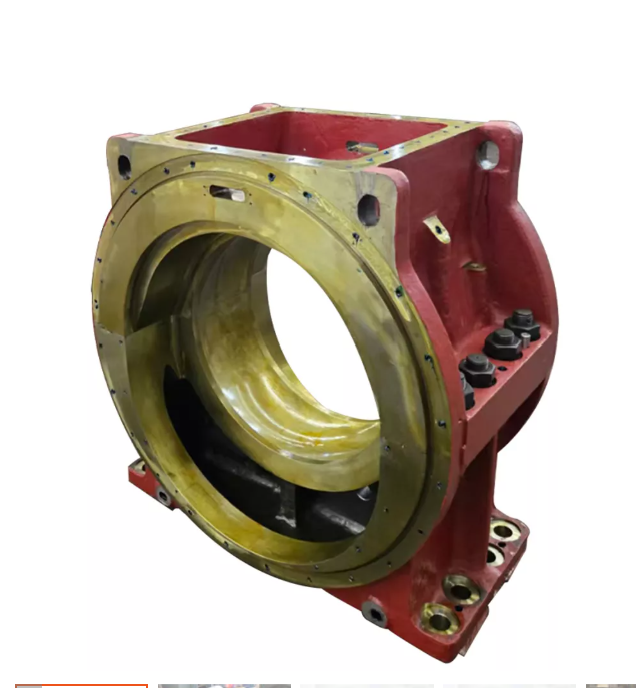
The most important industrial applications share one characteristic: the bearing is selected to solve a specific rotor-support or thrust-control problem rather than simply because the machine operates at high speed.
Steam and gas turbines are among the best-known tilting pad bearing applications. Their rotors may operate at high rotational speeds while experiencing thermal growth, changing load conditions, and strict vibration limits. Tilting pad journal bearings can provide stable radial support, while tilting pad thrust bearings control axial rotor position.
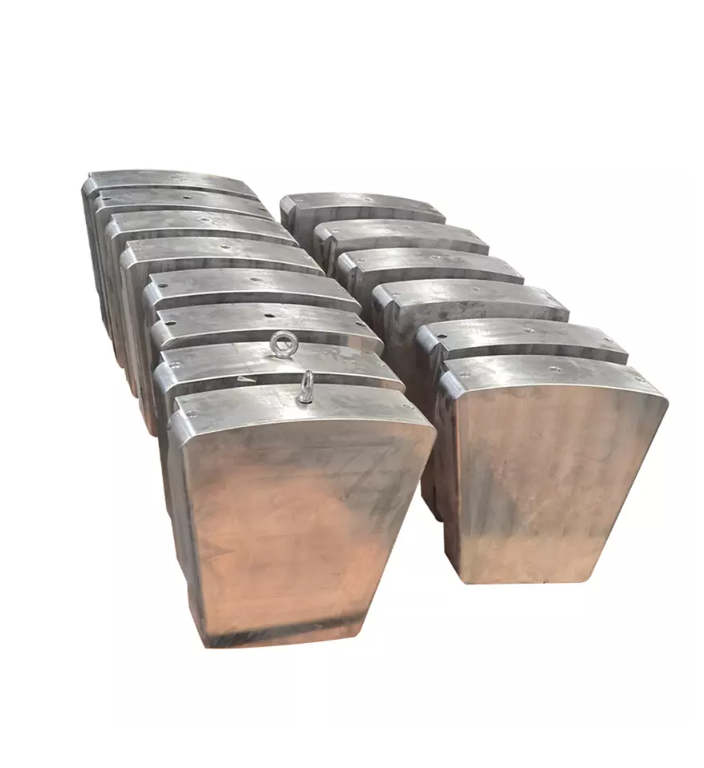
Axial forces in a turbine can arise from pressure differences across stages and changes in operating conditions. A thrust bearing must accommodate these forces while maintaining a controlled lubricant film. At the same time, journal bearing characteristics influence rotor critical speeds, damping, and overall rotordynamic behavior.
Bearing design for turbine service therefore cannot be separated from shaft dynamics. Pad geometry, clearance, lubricant delivery, load orientation, and thermal conditions should be evaluated as part of the complete rotor-bearing system.
Centrifugal compressors place particularly strong demands on rotor stability. High rotational speed, multiple impeller stages, aerodynamic forces, and process-condition changes can all influence shaft motion. For this reason, tilting pad journal bearings are commonly considered in compressor trains where subsynchronous vibration and dynamic stability are important concerns.
Thrust control is equally significant. Pressure differences across compressor stages can generate axial forces that must be absorbed without allowing excessive rotor displacement. A tilting pad thrust bearing may therefore operate alongside journal bearings within the same compressor.
The bearing configuration should reflect the actual compressor rotor dynamics rather than a generic speed threshold. Shaft stiffness, impeller arrangement, coupling configuration, bearing span, operating range, oil temperature, and expected thrust all affect the final selection.
Pumps represent another important group of tilting pad bearing applications, particularly in larger or higher-energy rotating systems. Pump rotors can experience radial hydraulic forces, axial thrust, thermal effects, and operating changes caused by variations in flow or system resistance. Bearing stability becomes increasingly important where the rotor is long, flexible, heavily loaded, or operated close to critical dynamic regions.
A journal bearing may support the shaft radially, while a thrust bearing controls axial movement generated by impeller pressure imbalance. The exact configuration depends strongly on pump architecture and service conditions.
Tilting pad bearings are not automatically required for every pump. Simpler or lower-duty machines may operate effectively with other bearing designs. Their value becomes greater where load, speed, rotor dynamics, reliability requirements, or axial thrust justify the additional design complexity.
Large generators contain heavy rotating assemblies that must remain accurately supported over long operating periods. In turbo-generator systems, bearing performance also interacts directly with the turbine shaft train. Tilting pad journal bearings may be selected to provide radial support while maintaining predictable dynamic characteristics.
Large rotor mass, shaft alignment, thermal expansion, and vibration control are important considerations. The bearing must support the shaft without creating an unstable fluid-film response as operating conditions change.
Generator applications also illustrate an important point: tilting pad bearings are not exclusively associated with extreme rotational speed. Rotor weight, load distribution, shaft dynamics, and reliability requirements may be equally important selection factors.
Hydroelectric machinery broadens the usual understanding of tilting pad bearing applications. Some hydro units operate at considerably lower rotational speeds than gas turbines or compressors, yet their shafts and runners can impose very high loads. Large vertical machines may require substantial radial guidance and axial thrust support.
This makes hydropower a useful reminder that “high speed” is not the only reason to use a tilting pad design. A heavily loaded hydro generator can benefit from the load-carrying behavior and hydrodynamic characteristics of properly engineered pads even if rotational speed is comparatively moderate.
For these systems, designers may need to consider vertical shaft arrangement, thrust magnitude, runner weight, thermal behavior, oil-film performance, and start-up conditions together. The application is therefore defined by the load system rather than by one operating parameter.
Marine propulsion is one of the more specialized tilting pad bearing applications because the shaft line can experience substantial axial thrust from the propeller. A thrust bearing or thrust block transfers that force from the rotating shaft into the ship structure while helping maintain controlled axial positioning.
Operating loads may vary with vessel speed, propeller condition, maneuvering, sea state, and changes in propulsion demand. Shaft alignment is also influenced by hull deflection, bearing location, shaft-line geometry, and thermal conditions. These factors make bearing selection part of the broader propulsion shaft system rather than an isolated component decision.
Tilting pad thrust bearings can be particularly useful where high thrust capacity and stable oil-film behavior are required. Journal bearings may also be used at other shaft-line locations depending on the propulsion arrangement and machinery design.
Gearboxes introduce radial forces, transmitted torque, gear-mesh excitation, and sometimes axial loading into the shaft-bearing system. In high-speed industrial gear units, predictable bearing stiffness and damping can be important for controlling rotor behavior and limiting vibration.
Tilting pad journal bearings may support high-speed shafts where fixed-profile designs would provide less desirable dynamic characteristics. Thrust bearings can also be required when helical gearing or machine configuration produces meaningful axial forces.
Bearing design must account for more than shaft rotational speed. Gear forces, shaft deflection, coupling loads, bearing spacing, lubricant temperature, and alignment all influence whether a tilting pad arrangement is appropriate.
Turbo expanders, process turbines, large electric machines, and specialized rotating equipment may also use tilting pad bearings where stable rotor support is essential. These systems often operate across changing loads or process conditions, increasing the value of predictable bearing behavior.
The specific reason for choosing a tilting pad design may differ considerably between machines. One application may prioritize high-speed stability, while another is dominated by axial thrust, rotor weight, or thermal movement. Engineering selection should therefore begin with the machine's load path and rotor behavior rather than a simple equipment label.
The common thread across major tilting pad bearing applications is the need to control the rotor under demanding mechanical and thermal conditions. High rotational speed is one factor, but it is only part of the picture.
Several engineering requirements frequently drive selection:
Rotor dynamic stability: Independent pads can reduce destabilizing fluid-film behavior in applications sensitive to subsynchronous vibration.
Radial and axial load management: Separate journal and thrust arrangements allow designers to address different load directions.
Thermal adaptability: Pad movement and suitable bearing geometry can help accommodate operating changes associated with temperature and shaft position.
Controlled oil-film formation: Each pad develops its own hydrodynamic wedge under normal operating conditions.
Machine-specific stiffness and damping: Bearing characteristics can be selected as part of a wider rotordynamic design.
These advantages do not remove the need for proper alignment, lubrication, installation, monitoring, or maintenance. A well-designed bearing can still perform poorly if the rotor system, oil supply, clearances, or operating conditions fall outside the intended design range.
Two machines using the same general bearing type may require very different designs. Selection should therefore be based on operating conditions rather than copying a bearing specification from a similar machine.
The first question is which load the bearing must carry. Radial shaft loads normally point toward a journal bearing, while significant axial forces require a thrust-bearing solution. Many turbines, compressors, pumps, and marine propulsion systems need both functions.
Load direction can also change during transient operation. Engineers should consider startup, shutdown, process changes, reverse thrust, and abnormal operating cases where these conditions are relevant.
Rotational speed affects lubricant shear, temperature, power loss, and rotor stability, but shaft diameter also matters because surface velocity depends on both diameter and rotational speed. For that reason, a single universal speed limit is rarely sufficient for selecting a lubrication or bearing configuration.
Rotordynamic analysis may be required for critical equipment. Bearing stiffness and damping, shaft geometry, rotor mass, coupling behavior, and critical-speed separation should be considered together.
Flooded lubrication remains suitable for many bearing systems, while directed or controlled lubricant delivery may be advantageous in applications where churning losses or bearing temperature become significant. The correct arrangement depends on bearing size, load, speed, lubricant properties, housing geometry, and heat-removal requirements.
Oil supply should provide adequate flow and temperature control without being treated as an independent design variable. Bearing geometry and lubrication strategy are closely linked because pad temperature and film thickness depend on both.
Bearing clearance influences oil-film thickness, stiffness, temperature, and dynamic behavior. Preload can alter pad response and shaft stability, while the number and orientation of pads affect load distribution.
These parameters should not be optimized separately. A change intended to increase stiffness, for example, may also influence temperature or minimum film thickness. Final geometry should therefore be selected against the operating envelope of the actual machine.
A practical way to evaluate tilting pad bearing applications is to connect each machine with its primary load and operating challenge.
| Equipment | Main Bearing Challenge | Typical Bearing Function | Key Design Considerations |
|---|---|---|---|
| Steam/gas turbine | High-speed rotor stability and axial force | Journal + thrust | Speed, thermal growth, thrust, rotor dynamics |
| Centrifugal compressor | Subsynchronous stability and process thrust | Journal + thrust | Rotor dynamics, load range, oil temperature |
| Pump | Radial hydraulic load and axial thrust | Journal and/or thrust | Pump configuration, thrust balance, duty cycle |
| Generator | Heavy rotor support and vibration control | Journal | Rotor mass, alignment, shaft dynamics |
| Hydro unit | Very high load, often at moderate speed | Journal + thrust | Vertical load, runner mass, oil-film capacity |
| Marine propulsion | Propeller-generated axial thrust | Primarily thrust, plus shaft support bearings | Thrust variation, alignment, shaft-line behavior |
| High-speed gearbox | Gear forces and rotor vibration | Journal and/or thrust | Gear forces, speed, shaft deflection, alignment |
| Turbo expander | High-speed rotor support | Journal + thrust as required | Speed, stability, process conditions |
The table should be treated as an engineering starting point rather than a universal specification. Actual bearing selection depends on the complete machine architecture and operating envelope.
A tilting pad bearing is not automatically the preferred choice for every rotating machine. Equipment with moderate speed, relatively stable loads, limited rotor-dynamic sensitivity, and less demanding reliability requirements may operate effectively with simpler fixed-profile journal bearings or other bearing technologies.
Additional complexity also brings design and maintenance considerations. Pad geometry, pivot condition, lubrication, clearance, assembly, and temperature behavior must all be controlled appropriately. Using a more sophisticated bearing without a clear mechanical reason can increase cost without producing a meaningful operational benefit.
The most defensible selection question is therefore not “Is a tilting pad bearing better?” but rather “Which bearing characteristics does this rotor actually require?”
Before specifying a tilting pad bearing, engineers should review the complete machine operating envelope rather than relying on nominal speed or load alone.
Shaft rotational speed and diameter
Radial bearing load
Maximum and normal axial thrust
Rotor mass and shaft flexibility
Critical speeds and vibration behavior
Operating and lubricant temperatures
Lubricant type, viscosity, supply pressure, and flow
Shaft alignment and expected thermal growth
Start-stop frequency
Direction of rotation and possible reversals
Pad clearance, preload, orientation, and pivot design
Maintenance access and condition-monitoring requirements
A bearing manufacturer normally needs several of these inputs before a suitable design can be evaluated. Providing complete operating information also reduces the risk of selecting a bearing based on one isolated parameter.
Tilting pad bearing applications extend well beyond high-speed turbines. Centrifugal compressors, pumps, generators, hydroelectric units, marine propulsion systems, gearboxes, and turbo expanders use these bearings because they can provide stable hydrodynamic support under demanding radial, axial, thermal, and dynamic conditions. The correct choice begins by distinguishing journal from thrust requirements and then evaluating load, speed, rotor behavior, lubrication, alignment, and temperature as one system. A tilting pad design offers the greatest value when those operating demands justify its additional engineering complexity.
Common applications include steam and gas turbines, centrifugal compressors, high-speed pumps, generators, hydroelectric machinery, marine propulsion systems, industrial gearboxes, and turbo expanders. They are generally selected where rotor stability, axial thrust control, heavy loading, or demanding operating conditions justify a hydrodynamic tilting pad design.
Turbines require controlled radial shaft support and often substantial axial thrust management. Tilting pad journal bearings can provide favorable stiffness and damping characteristics for high-speed rotors, while thrust bearings control axial rotor position. Thermal expansion and changing operating conditions also make predictable bearing behavior valuable.
Centrifugal compressor rotors can be sensitive to subsynchronous vibration and fluid-film instability. Tilting pad journal bearings are commonly used because their independent pads create individual hydrodynamic pressure wedges, which can improve rotor-dynamic stability compared with certain fixed-profile bearing arrangements.
Yes. Tilting pad thrust bearings are used in some marine propulsion systems to transmit propeller-generated axial thrust into the ship structure. Bearing selection must also account for shaft alignment, thrust variation, propulsion arrangement, and operating conditions.
A tilting pad journal bearing primarily supports radial loads acting perpendicular to the shaft axis. A tilting pad thrust bearing carries axial loads acting along the shaft. Complex rotating machinery often uses both because the rotor must be controlled in radial and axial directions.
A tilting pad design is most relevant when rotor-dynamic stability, heavy load, high surface velocity, axial thrust, thermal effects, or changing operating conditions exceed what a simpler bearing arrangement can comfortably manage. The decision should be based on machine-level analysis rather than speed alone.


