
Views: 0 Author: Site Editor Publish Time: 2026-04-03 Origin: Site
Replacing a Thrust Bearing is often treated as a simple maintenance task, but in real industrial equipment it is rarely that simple. A successful change depends on more than removing an old part and fitting a new one. It requires understanding why the original bearing failed, checking the surrounding parts, and making sure the replacement matches the actual operating load and structure. At Shanghai TOTEM Machinery Co., Ltd., we supply thrust pads, Babbitt-lined parts, base rings, and related machined components for demanding rotating equipment, and we know that proper replacement work has a direct effect on machine reliability.
A thrust bearing usually gives warning signs before replacement becomes unavoidable. Abnormal wear on the working surface is one of the clearest indicators. Scoring, scratches, uneven contact marks, discoloration, or visible material loss often show that the bearing is no longer operating under healthy conditions. Heat rise, vibration, noise, and unstable running behavior can also point to bearing deterioration.
Another important sign is excessive axial movement. If the shaft is no longer being controlled properly, the bearing may have already lost part of its load-carrying ability. In heavier equipment, this can quickly affect nearby parts and increase repair cost. For that reason, replacement decisions should be based on operating evidence, not only on age or maintenance schedule.
A damaged thrust bearing is often the result of a larger system problem. Lubrication failure, contamination, overload, misalignment, or damage to the thrust collar can all lead to bearing distress. If the old bearing is replaced without checking these conditions, the new one may fail much sooner than expected.
That is why a credible thrust bearing replacement process always begins with diagnosis. The bearing is the visible part of the problem, but not always the root cause. Good maintenance practice means checking the full operating environment before deciding what needs to be replaced and what needs to be corrected.
Before any disassembly starts, it is important to confirm exactly what kind of thrust-bearing arrangement the machine uses. A simple rolling-element thrust bearing is handled differently from a tilting pad assembly or a white metal thrust pad system. The removal sequence, inspection points, and replacement decisions all depend on the actual structure.
This step is especially important in industrial equipment where the thrust-bearing system may include pads, support rings, runners, lubrication passages, and precisely machined support faces. Treating every system the same can lead to unnecessary handling damage or incorrect ordering.
Before ordering a replacement, the surrounding components should be checked carefully. The thrust collar or runner should be inspected for scoring, heat marks, or uneven contact. Pad support areas should be checked for damage or distortion. Base ring integrity, housing cleanliness, and oil condition should also be reviewed.
This matters because the replacement part must fit the real condition of the system, not just the original drawing. In many industrial applications, replacing only the obvious worn part is not enough. Shanghai TOTEM Machinery Co., Ltd. supplies not only thrust pads but also related components such as Babbitt-lined pads and base rings, because proper replacement often involves the condition of the whole support structure.
Inspection Item | What To Check | Why It Matters |
Bearing Type | Rolling element, tilting pad, or white metal system | Determines removal method and replacement choice |
Working Surface | Wear marks, scoring, discoloration, material loss | Shows whether replacement is justified |
Thrust Collar or Runner | Surface damage, uneven contact, heat marks | A damaged mating part can ruin the new bearing |
Base Ring and Support Area | Cracks, distortion, poor seating | Weak support affects load distribution |
Lubrication Condition | Oil cleanliness, flow condition, contamination | Helps identify root cause of failure |
Housing Interior | Debris, metal particles, residue | Prevents repeat damage after reassembly |
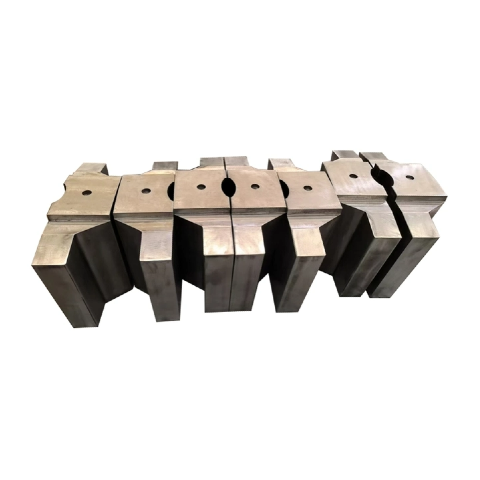
Removing a thrust bearing should be done with the same care used during installation. Correct tools matter because forcing parts apart carelessly can damage reusable surfaces and make later inspection less reliable. In precision-machined systems, rough handling may create new marks that are then confused with original failure patterns.
Parts should be removed in a controlled order, and component positions should be marked where necessary. This is especially helpful in more complex thrust-bearing assemblies where orientation and part relationship influence later analysis. Clean handling also reduces the risk of contamination entering lubrication passages or support surfaces during the job.
One of the most useful steps in thrust bearing replacement is to study the parts before they are fully cleaned. Wear marks, discoloration, wiping, edge loading, and uneven contact areas can reveal a great deal about how the system was operating before shutdown.
Once everything is polished or washed, much of that evidence is lost. That is why technicians should record the condition with notes or photos before cleaning begins. These observations often help identify whether the main problem was lubrication, alignment, overload, contamination, or support distortion. This makes the replacement process more accurate and more valuable.
A new bearing should never be treated as a stand-alone spare part. It is part of a working assembly, and its performance depends on fit, support condition, geometry, and lubrication readiness. Before the new bearing is installed, mating surfaces should be clean, seating areas should be checked, and any damaged support parts should already have been addressed.
This system mindset is what separates a durable repair from a short-term fix. If the new bearing enters an environment with poor alignment, unstable support, or contaminated lubrication, its service life may be limited from the start. Proper replacement means making sure the full operating condition is ready for the new part.
In industrial thrust-bearing systems, material and machining quality matter just as much as dimensions. The pad surface, Babbitt layer, bonding integrity, and structural accuracy all affect how the replacement behaves under load. A part that is similar in appearance but not suitable in material or support quality may not perform the same way in service.
This is particularly important in demanding equipment such as turbines, compressors, and marine systems. Replacement parts must be matched to the actual operating duty. Shanghai TOTEM Machinery Co., Ltd. focuses on industrial thrust-bearing components because buyers in these applications need more than a generic replacement. They need parts built for real load, lubrication, and service requirements.
The first operating period after replacement is critical. Once the machine is restarted, technicians should monitor axial position, temperature trend, lubrication condition, running smoothness, and unusual noise. Small problems often show themselves early, and catching them at this stage can prevent a second shutdown.
Temperature behavior is especially important. A stable rise followed by steady operation may be acceptable, while abnormal heat increase can signal poor lubrication, contact problems, or installation error. Smoothness of running also matters because instability after replacement may indicate that the original root cause was not fully corrected.
The best way to avoid another early failure is to correct the underlying cause, not just the visible damage. That means maintaining clean and adequate lubrication, verifying alignment, checking load conditions, and inspecting supporting parts on a regular basis. Periodic monitoring after replacement is often what confirms whether the repair was truly successful.
A thrust bearing replacement should improve reliability, not simply restore operation for a short time. When the cause is understood and the replacement parts are matched correctly, the machine has a much better chance of returning to stable service.
Changing a thrust bearing is not just a remove-and-replace job. The most reliable result comes from understanding why the original part failed, checking the full bearing environment, and using correctly matched components for the real operating duty. At Shanghai TOTEM Machinery Co., Ltd., we supply thrust pads, Babbitt-lined parts, base rings, and related components for industrial rotating equipment, helping customers support dependable replacement and long-term performance. If you are planning a repair or evaluating replacement parts for your machinery, contact us to discuss your project and find the right axial bearing support for your application.
A thrust bearing should be replaced when there are clear signs such as abnormal wear, scoring, rising temperature, unstable axial movement, unusual vibration, or visible damage on the working surface.
It is not recommended. A failed thrust bearing is often linked to lubrication problems, misalignment, contamination, or damage to nearby parts such as the thrust collar or support structure.
Wear patterns can show whether the real problem came from overload, poor lubrication, contamination, or uneven support. Cleaning too early may remove valuable evidence needed for correct diagnosis.
After replacement, technicians should monitor axial position, temperature trend, lubrication condition, noise, and running smoothness. The first operating period is often where hidden problems appear.


