

| Quantity: | |
|---|---|
Engineered for high-speed reliability and continuous operation, our customized corrosion-resistant rotor shafts deliver exceptional stability and dynamic balance for turbo generators and compressors. The foundation of this reliability begins long before the final shaping. We implement strict controls throughout the initial material preparation stages, including smelting, forging, and heat treatment. The smelting process ensures high material purity by minimizing non-metallic inclusions, which is crucial for preventing fatigue failure under heavy loads. Subsequent forging optimizes the internal grain flow of the metal, significantly enhancing its mechanical strength and toughness. Finally, precise heat treatment processes are applied to eliminate internal stresses and achieve a highly dense, uniform internal structure. This rigorous pre-treatment guarantees that the raw material is fully prepared for the demanding precision machining that follows, ensuring structural integrity from the inside out.
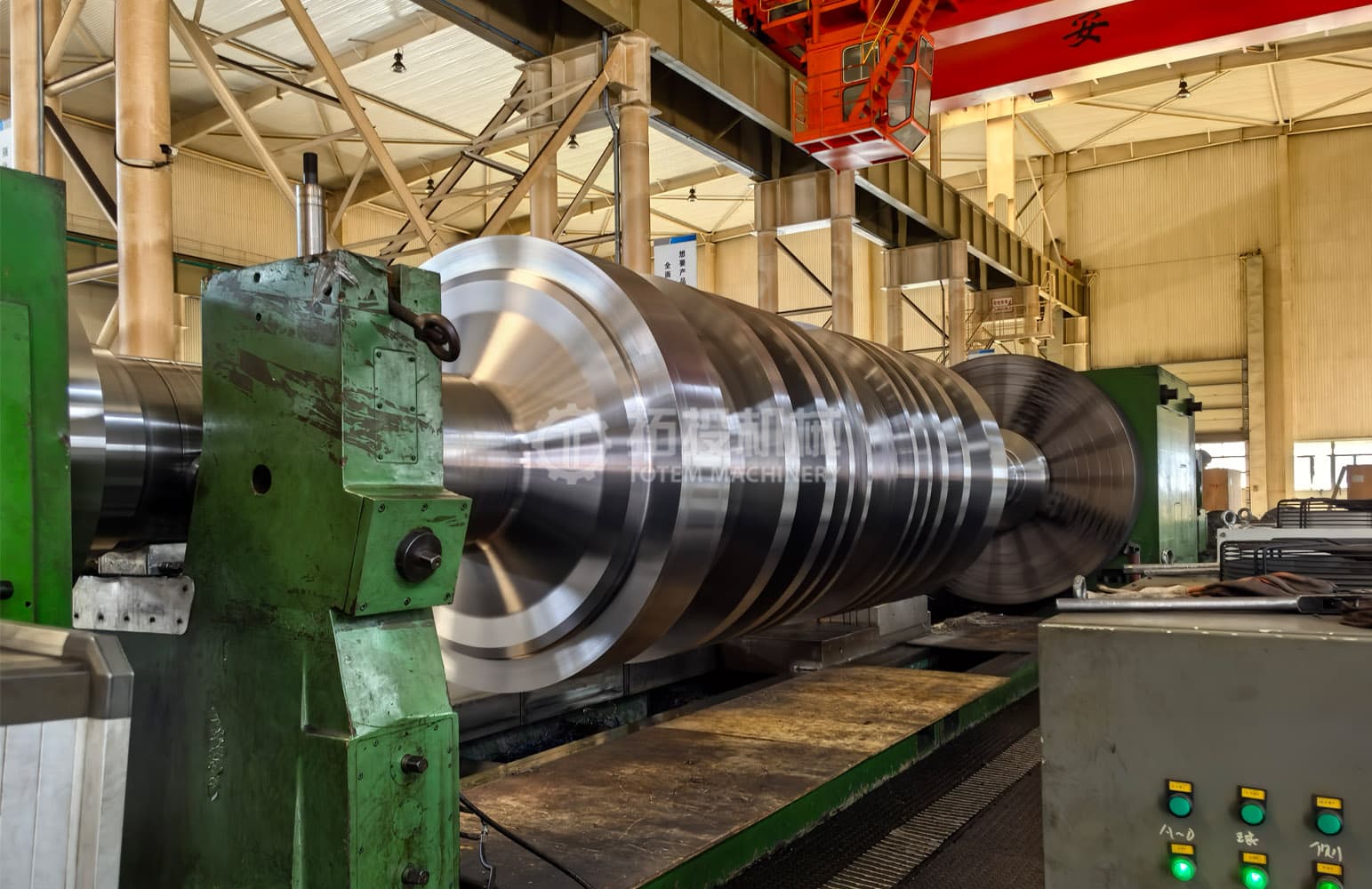
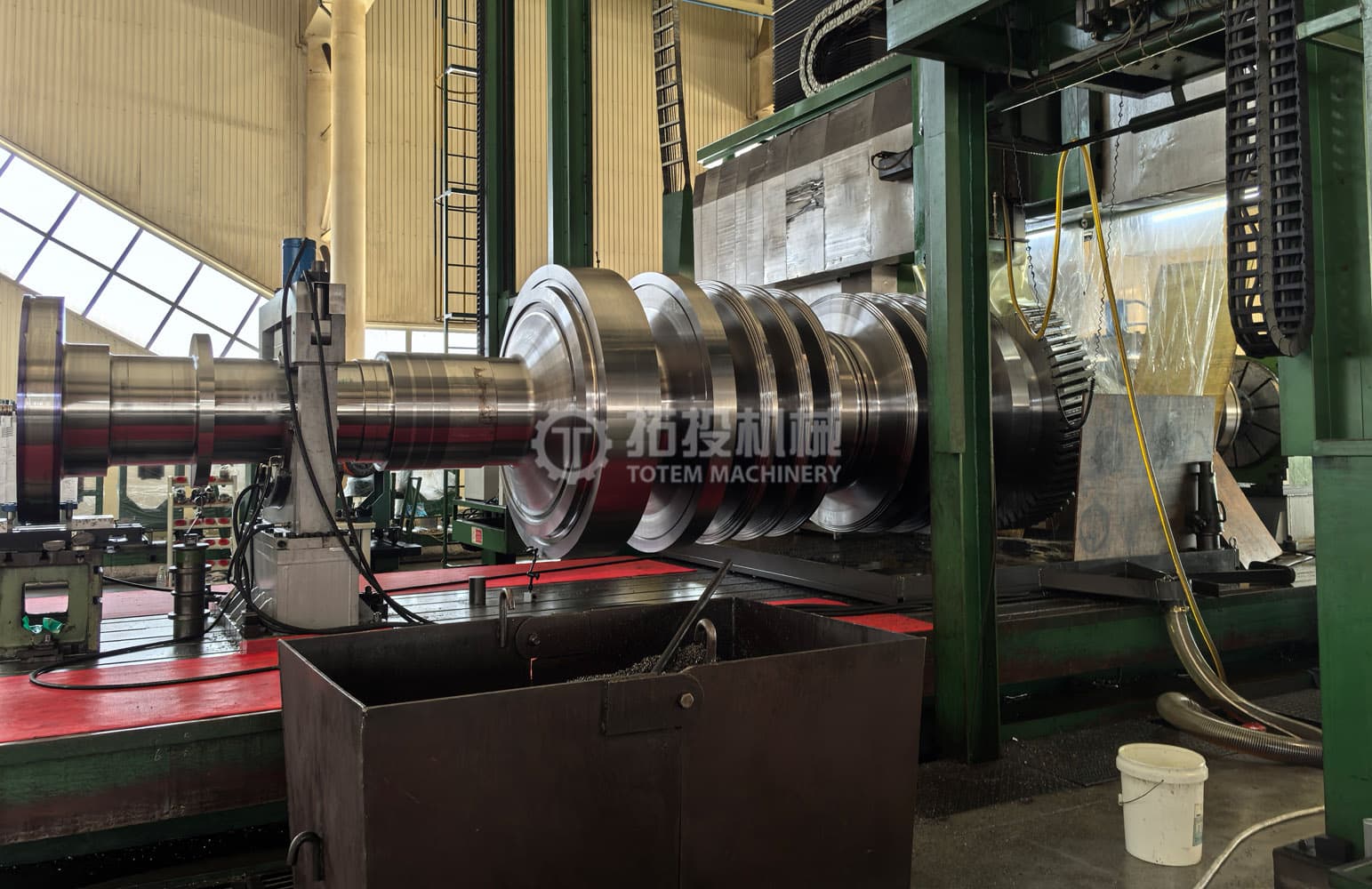
Once the material preparation is complete, the rotor shaft enters the precision machining phase. Utilizing advanced, large-scale CNC lathes and precision grinding equipment, we meticulously shape the shaft to meet exacting engineering specifications. Vital features such as journals, sealing areas, and couplings are machined with utmost care. The heavy-duty CNC equipment provides the rigidity and accuracy required to handle large-scale rotor shafts while maintaining tight control over roundness, alignment, and surface smoothness. This level of precision is essential for minimizing vibration during high-speed rotation, thereby extending the operational lifespan of both the rotor shaft and the entire generator or compressor system.
Finishing turning is a critical step in defining the final geometric profile of the rotor shaft. During this operation, advanced CNC lathes carefully remove the remaining material allowance to achieve the precise dimensional requirements. This process ensures that the main body, journals, and step transitions are highly concentric. Accurate finishing turning is vital for establishing the foundational dynamic balance of the shaft, reducing the risk of eccentric rotation when the equipment is operating at peak speeds.
The milling groove operation is essential for creating keyways and other specific structural features that allow the rotor shaft to securely connect with impellers, couplings, or other rotating components. Using high-precision milling machines, we ensure that every groove is cut with exact depth, width, and positional accuracy. Proper milling guarantees secure mechanical interlocking, preventing slippage and ensuring efficient power transmission under high torque conditions.
Boring holes in the flange requires exceptional positional accuracy, as these holes are responsible for the critical connection between the rotor shaft and adjoining equipment. Our precise boring process ensures that the bolt holes are precisely aligned and evenly distributed around the flange. This exact alignment is crucial for maintaining the overall balance of the assembly, facilitating straightforward installation, and ensuring a secure, vibration-free connection during the rigorous operation of compressors and generators.
Ensuring the operational stability of a customized corrosion resistance rotor shaft for turbo generators and compressors requires a rigorous and transparent product inspection protocol. For procurement professionals and engineering teams, verifying the exact specifications of each component is vital to minimizing operational risks, preventing unexpected downtime, and validating the investment. Our comprehensive quality control system focuses on delivering verifiable, quantitative data before any rotor shaft leaves the production floor. By implementing stringent testing procedures, we ensure that every shaft meets the exact geometric and surface requirements necessary for high-speed, heavy-duty applications in demanding industrial environments.
The surface finish of a customized rotor shaft plays a critical role in its interaction with bearings, seals, and advanced lubrication systems. Conducting surface roughness tests on-site provides fast, precise, and non-destructive quality control directly on the production floor. By delivering instant quantitative data, this method ensures the shaft meets strict specifications without interrupting the manufacturing flow or compromising the integrity of the finished part.
Proper surface roughness is essential for accurately predicting component performance regarding wear and lubrication. A precisely controlled surface finish allows lubricating oils to form a continuous and effective film, significantly reducing friction during the continuous high-speed rotation of turbo generators and compressors. This meticulous inspection helps identify and prevent micro-defects that could lead to stress concentrations or accelerated wear over time. Ultimately, this level of surface evaluation safeguards the rotor's overall reliability, extends its service life, and ensures that the corrosion-resistant properties of the material are fully preserved for long-term deployment.
One of the most critical parameters for high-speed rotating equipment is concentricity and rotational stability. By hitting a strict 0.02mm tolerance, our final run-out test confirms the machine's balance and precision. This exact level of dimensional accuracy is not just a numerical target; it is a fundamental requirement for ensuring the safe, stable, and efficient operation of complex compressor and generator systems.
Controlling the run-out within the strict 0.02mm tolerance effectively cuts down on high-speed noise and vibration during operation. Excessive vibration is a primary cause of mechanical fatigue and can severely damage surrounding sensitive components. By eliminating these potential issues at the inspection stage, we actively protect bearings from premature wear and ensure highly efficient energy transfer throughout the mechanical system. For high-end engineering projects, this rigorous measurement step is non-negotiable for delivering reliable, long-lasting performance. It directly contributes to lowering the total cost of ownership (TCO) by reducing the frequency of maintenance cycles and replacement needs.
Every customized corrosion resistance rotor shaft undergoes these systematic and highly regulated inspections to guarantee dimensional integrity and functional excellence. By prioritizing strict tolerance adherence and advanced surface evaluation, we provide a trustworthy solution for complex industrial energy systems, ensuring that your equipment operates at peak efficiency with minimal risk of mechanical failure.