
Views: 0 Author: Site Editor Publish Time: 2026-09-06 Origin: Site
The stern tube bearing plays a critical operational role in modern maritime engineering. It actively maintains precise propeller shaft alignment while ensuring absolute aft sealing integrity. You rely on this hidden component to safely cross oceans and navigate complex coastal waterways. Unfortunately, unexpected mechanical degradation quickly escalates into major business problems.
Unplanned bearing failures force vessels into emergency drydocking. This disrupts charter schedules and severs supply chains. Furthermore, oil leaks trigger severe environmental compliance fines under international maritime regulations. Ultimately, catastrophic propulsion downtime severely impacts fleet profitability. You need reliable strategies to prevent these incredibly expensive scenarios before they unfold.
This article provides technical directors and marine superintendents with a definitive framework. You will learn how to evaluate various bearing types and establish precise clearance tolerances. We will also explore actionable methods to mitigate wear. Implementing these technical strategies ensures optimal lifecycle management for your entire fleet.
Selecting the right stern tube bearing requires balancing environmental compliance (VGP) with load-carrying capacity and hydrodynamic performance.
Accurate clearance measurement is non-negotiable; deviations directly correlate to lubrication starvation and accelerated wear.
Unmitigated stern tube wear initiates misalignment that cascades through the shaftline, frequently causing intermediate shaft bearing failure.
Evaluating marine propulsion system parts at the decision stage must prioritize class-society approvals, material longevity, and retrofit feasibility over initial procurement costs.
Modern ships rely heavily on robust engineering principles. These aft support structures function precisely as a Hydrodynamic Journal Bearing. Continuous shaft rotation creates a pressurized fluid wedge inside the housing. This microscopic fluid wedge physically lifts the shaft. It prevents destructive metal-to-metal contact during normal cruising speeds.
Operational realities differ greatly at low speeds. Mixed friction often occurs during turning-gear operations or slow harbor maneuvers. The shaft rotates too slowly to build a full fluid wedge. Engineers must account for this boundary lubrication phase. You must select materials capable of surviving these high-friction transitional periods without sustaining permanent damage.
Oil-lubricated bearings utilize a classic white metal or Babbitt lining. They offer extremely high load capacity for massive commercial vessels. They also exhibit excellent embeddability. If hard particulates enter the oil film, the soft white metal absorbs them safely. The maritime industry has decades of established performance baselines for these systems.
However, oil-lubricated setups present distinct disadvantages. They require complex, multi-lip aft seal systems to keep seawater out and oil in. A sudden seal breach risks catastrophic bearing failure and environmental pollution. Operators face strict EAL (Environmentally Acceptable Lubricant) compliance requirements globally. Many EALs suffer from hydrolysis when exposed to water, severely degrading their lubricating properties.
Water-lubricated systems provide an eco-friendly alternative. They utilize composite, elastomeric, or traditional lignum vitae materials. They offer zero pollution risk. They comply fully with the Vessel General Permit (VGP) regulations. They simplify aft seal design significantly. These systems ingeniously use ambient seawater for both lubrication and cooling.
Despite these benefits, water-lubricated options have notable drawbacks. They generate higher friction at low RPMs. This friction often manifests as loud stick-slip vibration. They remain highly susceptible to abrasive wear. Sediment-heavy coastal waters introduce sand directly into the bearing clearance. Furthermore, they require strict shaft coating and bronze liner compatibility to prevent severe galvanic corrosion.
You must evaluate specific fleet variables before choosing a system. Deep sea vessels differ drastically from brown water operators. Deep sea ships maintain high RPMs for weeks, favoring hydrodynamic stability. Coastal operators face frequent low-speed maneuvering in abrasive waters.
Regulatory operating zones heavily dictate your choices. Vessels frequenting strict environmental zones often mandate water-lubricated systems. Finally, drydocking intervals influence the final decision. Extended five-year intervals demand highly durable materials and robust seal monitoring capabilities.
| Operational Feature | Oil-Lubricated (Babbitt) | Water-Lubricated (Composite) |
|---|---|---|
| Load Capacity | Extremely High | Moderate to High |
| Environmental Pollution Risk | High (Requires strict EALs) | Zero (VGP Compliant) |
| Seal System Complexity | High (Multi-lip systems) | Low (Simplified forward seals) |
| Low RPM Performance | Stable | Susceptible to stick-slip vibration |
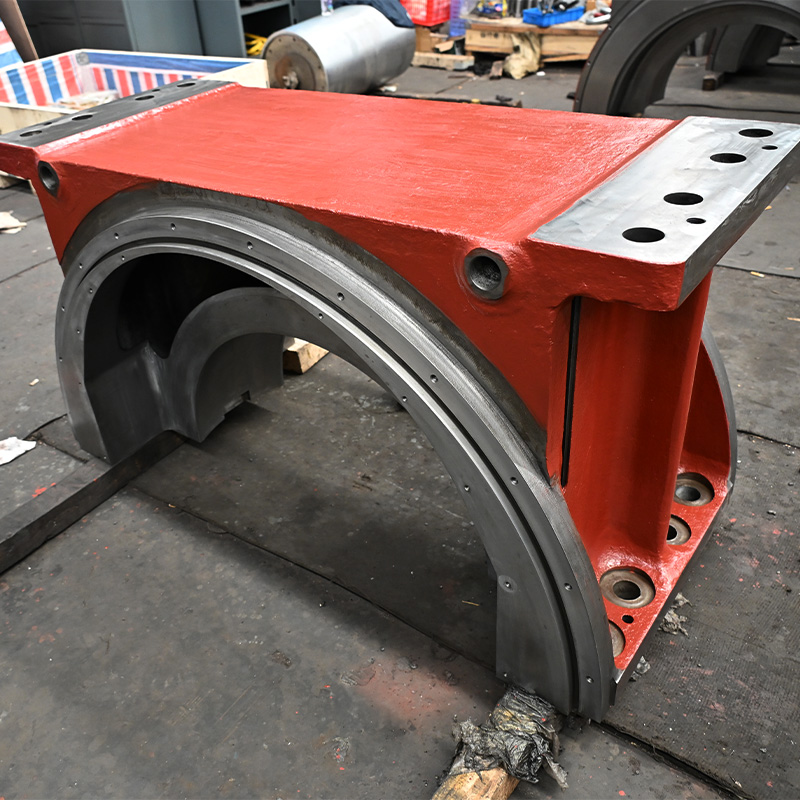
Precise diametrical clearance remains essential for safe propulsion. The internal gap cannot be too tight or too loose. It must accommodate thermal shaft expansion during heavy engine loads. It must handle expected bearing material swelling. Elastomeric composites swell noticeably when submerged in seawater for extended periods.
Clearance also dictates fluid dynamics. An optimal gap allows adequate lubricating fluid flow across the load zone. Too much clearance causes the shaft to rattle. It destabilizes the hydrodynamic wedge. Too little clearance strangles fluid flow. This rapidly initiates overheating and adhesive failure.
Engineers typically use a poker gauge to measure internal gaps. We commonly call this a wear down gauge. The industry standard dictates taking readings at the top and bottom of the aft seal assembly. You must record accurate baseline readings first. Always perform this during newbuild commissioning or initial shaft installation.
Alternative verification methods exist for drydock inspections. Many surveyors mandate these secondary checks.
Feeler Gauge Method: Technicians physically insert long feeler blades into the gap between the shaft and the bearing material.
Jacking Method: Engineers place hydraulic jacks under the propeller boss. They apply controlled upward force and measure the dial indicator deflection.
Optical Alignment: Laser tools verify the structural integrity of the surrounding stern tube housing.
Class societies provide standard rule-of-thumb tolerances for maritime operators. Maximum allowable clearance generally correlates to the specific shaft diameter. Material type also heavily influences these limits. A 600mm shaft running on white metal has different tolerance thresholds than one running on composite resin.
False readings pose a significant risk during data analysis. Shaft bending moments easily distort clearance measurements. The immense weight of a stationary propeller bends the shaft downward. Vessel trim variations during floating measurements also skew the results. You must actively account for these variables when reviewing wear down logs.
We must differentiate between the primary wear mechanisms. Abrasive wear involves physical particle ingress. Sand and sharp sediment enter water-lubricated systems operating in shallow ports. Metal shavings occasionally contaminate closed oil systems. These particles act like sandpaper against the rotating surfaces.
Adhesive wear involves severe lubrication starvation. The fluid wedge collapses entirely. Bare metal rubs directly against bare metal. This causes aggressive adhesive wiping of soft white metal surfaces. Material literally melts and smears across the housing. Adhesive wear destroys a system much faster than abrasive wear.
You can track specific indicators to prevent catastrophic failures. Proactive monitoring transforms unexpected breakdowns into scheduled maintenance.
Temperature Spikes: PT100 sensors track localized heat. Sudden, rapid increases signal acute fluid starvation or seal failure. Gradual increases suggest progressive, long-term material wear.
Lube Oil Analysis: Oil samples reveal hidden internal damage. Laboratories look for specific Babbitt material components. Elevated levels of tin, antimony, and copper provide an early warning sign.
Vibration Analysis: Technicians monitor structural frequencies. Specific frequency anomalies highlight hydrodynamic instability. They also reveal uneven wear patterns before audible noise begins.
Hull deflection heavily influences wear rates. Massive steel hulls bend constantly. Varying cargo loads cause this inevitable deflection. Heavy seas exacerbate the structural bending. It physically alters the shaft's resting angle inside the stern tube housing.
The rigid stern tube cannot compensate perfectly for this bending. This geometric mismatch leads to severe edge loading. The shaft presses heavily against the extreme aft or forward edge of the bearing material. Localized, accelerated wear happens quickly in these highly stressed zones.
Mechanical linkages connect the entire propulsion train. Stern tube maintenance is never an isolated issue. As the stern tube bearing wears down over time, the propeller shaft naturally drops. It falls millimeters away from its originally designed operational center line.
This physical drop alters the meticulously calculated bending moments. Reaction forces change along the entire propulsion shaftline. The massive rotating weight must find support somewhere else. The structural burden shifts forward toward the engine room.
We must connect these mechanical dots. Aft wear causes severe alignment distortion. This misalignment transfers excessive, unintended vertical load forward. Immense stress violently hits the intermediate support blocks. Operators soon notice alarming symptoms of intermediate shaft bearing failure.
Overheating occurs rapidly in the intermediate zone. Bearing surfaces become wiped and severely scored. Severe vibration shakes the surrounding hull plates. Engineers frequently investigate the intermediate block first because it shows the most dramatic symptoms. However, they must trace the root cause backward. In many cases, unmitigated stern tube drop initiated the entire destructive sequence.
Procurement teams must shift their focus. You cannot simply look at the initial unit cost. You must evaluate the long-term financial impacts of your components. Factor in daily lube oil consumption. Calculate the projected seal maintenance expenses.
Consider the specialized installation tooling requirements for different brands. Some systems require expensive proprietary hydraulic gear. Others utilize standard shipyard tools. Smart procurement demands long-term financial thinking. You need components that offer predictable operational expenses over a twenty-year vessel lifespan.
Evaluate manufacturer track records meticulously. Oil-lubricated systems need proven, documented EAL compatibility. Some seal compounds degrade rapidly when exposed to specific biodegradable base oils. You must verify these chemical compatibility charts.
Class society type approvals remain absolutely mandatory. DNV, ABS, and Lloyd's Register certifications prove the design meets rigorous maritime safety standards. Do not shortlist vendors who lack current, globally recognized type approvals for their core product lines.
Many modern fleets aggressively pursue green technology upgrades. They want to convert aging oil-lubricated setups into water-lubricated systems. Selecting reliable marine propulsion system parts is crucial for this complex transition. The conversion criteria demand strict engineering oversight.
You must assess vendor engineering support carefully. Do they provide custom machining for odd-sized stern tubes? Can they guarantee rapid global dispatch for emergency drydocks? Emergency repairs require immediate, decisive action. You also need on-site alignment verification from the vendor's technical team to ensure a successful retrofit.
Stern tube bearing selection and routine maintenance remain highly strategic. They are not isolated mechanical tasks. They represent vital risk-management decisions for any commercial fleet. Ignoring slight wear deviations today guarantees catastrophic mechanical failures tomorrow.
We recommend a proactive next step for your engineering team. Conduct an immediate, thorough review of all vessel poker gauge records. Perform updated alignment modeling based on current cargo profiles. Complete these verification actions before your next scheduled drydock. You must use this precise data to inform your future purchasing and retrofit decisions.
A: The maximum allowable wear varies significantly. It depends on the specific shaft diameter, the bearing material type, and strict Class Society rules. Surveyors typically check current measurements against the manufacturer's original installation baseline to determine acceptable safety margins.
A: You should measure clearance annually during routine in-water surveys. You must also measure it whenever condition monitoring sensors detect sudden structural vibrations or unexplained temperature anomalies in the aft region.
A: Yes, you can. This retrofit requires installing new bronze shaft liners, changing bearing carriers, and modifying the forward seal arrangements. Environmental compliance goals usually drive this complex engineering upgrade.
A: Low shaft RPM causes this issue. The slow rotation fails to establish a thick hydrodynamic fluid film. This leads to boundary lubrication, localized high friction, and the loud, vibrating noise known as stick-slip.


