
Views: 0 Author: Site Editor Publish Time: 2026-08-09 Origin: Site
Marine intermediate shaft bearing failure rarely begins with one isolated defect. A rising temperature may result from poor oil supply, but it can also indicate excessive local loading caused by shaft bearing misalignment. White metal damage may be the visible failure while an unfavorable bearing reaction remains the underlying cause. Effective diagnosis therefore has to connect temperature, lubrication condition, bearing contact, shaft journal condition, and shaft-line alignment rather than treating each symptom separately. The objective is not only to identify the damaged component, but also to determine what caused its operating conditions to become unacceptable.
Intermediate bearing overheating is often the first indication that the hydrodynamic condition has changed. During normal operation, shaft rotation develops a lubricating film that separates the journal from the bearing working surface. If film thickness becomes inadequate, friction increases and bearing temperature can rise. Misalignment is particularly important because it can concentrate bearing load toward an edge, disturb the lubricating film, and eventually permit direct contact between the shaft and the bearing surface.
Temperature alone, however, does not identify the cause. The diagnostic value comes from its pattern. A rapid increase following maintenance may point toward assembly, clearance, oil-supply, or alignment problems. A gradual increase over a longer period may accompany progressive wear, contamination, changing operating conditions, or deterioration of load distribution. Comparing the affected bearing with its previous trend and with other shaft-line bearings is generally more useful than treating a single temperature reading as proof of failure.
Other warning signs include abnormal vibration, unusual noise, changes in lubricant appearance, metallic debris, localized oil discoloration, unstable bearing temperatures during load changes, and evidence of journal scoring. Once direct surface contact develops, damage can extend from the bearing into the shaft journal, producing wear marks, taper, ovality, and degraded surface condition.
A Marine journal bearing depends on controlled geometry, surface condition, lubrication, and appropriate shaft support to maintain hydrodynamic operation. Therefore, a temperature alarm should trigger a system-level investigation rather than an assumption that the bearing material alone has failed.
Most marine intermediate shaft bearing failure investigations can be organized around three interacting causes: loss of effective lubrication, unfavorable shaft alignment, and abnormal bearing load. Any one can initiate the problem, while the others often accelerate it.
A hydrodynamic bearing requires adequate lubricant delivery and suitable operating conditions to establish separation between the rotating journal and bearing surface. Restricted passages, insufficient supply, contamination, unsuitable lubricant condition, or interruption of circulation can reduce the film's ability to carry load.
The important diagnostic distinction is between oil supply failure and oil-film failure under otherwise available lubrication. Oil may be present in the housing while the operating film is still inadequate because local pressure and clearance conditions have changed. This is why simply confirming an oil level does not eliminate lubrication from the investigation.
Water contamination can also reduce the effectiveness of an oil-supported bearing system. Changes in lubricant type or operating condition can alter shaft-line behavior as well as lubrication performance, so maintenance history should be reviewed alongside temperature data.
Shaft bearing misalignment changes how the shaft is supported through the bearing. Instead of distributing the reaction over the intended working area, the load may become concentrated toward one region. Local pressure rises, the oil film becomes less stable, friction increases, and intermediate bearing overheating can follow.
Alignment is not necessarily fixed throughout a vessel's service life. Hull deflection, loading condition, ballast arrangement, modifications, changes in operational profile, and shaft-line component condition can alter the relationship between bearings and the shaft. Static alignment references established earlier in a vessel's life therefore may not fully represent actual operating behavior.
This explains why repeatedly replacing a damaged bearing without checking shaft-line alignment can result in recurring failure. High temperature and premature bearing replacement can be symptoms of an unresolved alignment problem rather than independent bearing defects.
The bearing must carry radial load without creating an unfavorable pressure concentration. A bearing can be dimensionally correct yet operate poorly if the shaft-line load distribution places too much reaction on it—or leaves an adjacent bearing carrying too little.
Load problems and misalignment therefore should not be treated as separate diagnostic branches. Alignment determines bearing reactions, bearing reactions influence film formation, and deteriorating lubrication changes friction and temperature.
Where white metal forms the working surface, a Babbitt sliding bush is intended to operate with a lubricating film between the shaft and bearing surface. Once that film is lost, white metal bearing failure may progress from polishing or wiping to more severe material displacement and journal damage.
A useful diagnosis follows the failure path instead of immediately choosing a repair method. Start with operating evidence, then inspect lubrication, bearing surfaces, the journal, and finally the load and alignment conditions capable of producing the observed pattern.
| Evidence | Likely Diagnostic Direction | Next Check |
|---|---|---|
| Rising bearing temperature without obvious damage | Lubrication condition or increasing local load | Oil flow, lubricant condition, temperature trend, bearing reaction |
| Localized wiping near one bearing edge | Misalignment or concentrated loading | Contact pattern, bearing position, alignment and load distribution |
| Broad scoring on bearing and journal | Oil-film breakdown or contamination | Lubrication circuit, oil cleanliness, journal surface condition |
| Repeated failure after bearing replacement | Root cause outside the bearing | Shaft alignment, bearing reactions, housing position |
| Journal taper, ovality, or localized wear | Secondary shaft damage after bearing distress | Dimensional inspection, surface condition, crack and hardness checks |
| Abnormal vibration combined with temperature rise | Shaft-line geometry or developing contact | Runout, alignment, adjacent bearings and couplings |
The damaged surface can reveal where load and heat were concentrated. Record the location and direction of wiping, scoring, discoloration, cracking, embedded debris, or unusual contact before machining or cleaning removes the pattern.
For white metal bearing failure, the question is not simply whether the lining can be restored. Determine whether the damage is localized or widespread and whether its distribution is consistent with lubrication loss, contamination, or concentrated edge loading.
Bearing housings and mating surfaces also matter. Distortion, poor seating, or incorrect installation can affect the final bearing geometry even when the replacement lining has been machined correctly.
Once bearing damage is confirmed, the shaft journal becomes a critical decision point. Journal diameter, taper, ovality, runout, surface finish, hardness changes where relevant, and evidence of cracking should be assessed against the applicable shaft design and repair limits. Dimensional inspection and nondestructive examination are commonly used when evaluating damaged intermediate-shaft bearing seating areas.
A Forged intermediate shaft works directly with the surrounding bearings and couplings, so journal geometry, runout, coaxiality, and mating dimensions influence the condition of the complete shaft line rather than only the shaft itself.
If surface damage is repaired without identifying why the bearing was overloaded, recurrence remains possible. Alignment checks should therefore evaluate the shaft as a connected system, including adjacent bearings and relevant coupled equipment rather than only the failed location.
Static measurements are useful, but operating conditions can change shaft position and bearing reactions. Condition-monitoring approaches can combine temperature, vibration, runout, position, movement, stress, or strain information to identify alignment behavior that is difficult to reproduce while the vessel is stationary.
The strongest diagnosis is the one that makes all evidence agree: the temperature history, lubrication condition, bearing damage pattern, journal condition, and measured alignment should support the same failure mechanism.
Repair decisions should be made only after determining whether damage is limited to the bearing or has extended into the journal, housing, or broader shaft line.
A lightly damaged journal that remains within approved dimensional limits may require controlled polishing or machining, while significant taper, ovality, cracking, hardness change, or loss of allowable diameter can change the repair strategy. Repair acceptance should be based on the applicable design, OEM, class, and vessel requirements rather than a universal machining allowance.
White metal bearings may be candidates for reconditioning when the shell remains suitable and the specified repair process can restore the working surface and required geometry. Typical repair processes can include removal or renewal of damaged white metal, machining, dimensional control, bonding inspection where required, and subsequent installation and alignment checks.
Replacement becomes more attractive when the bearing structure is unsuitable for reliable restoration, dimensions cannot be recovered within approved limits, damage is widespread, or project requirements favor a new component. Yet replacement alone is not corrective action if shaft bearing misalignment, housing displacement, lubrication deficiency, or abnormal load distribution caused the original damage.
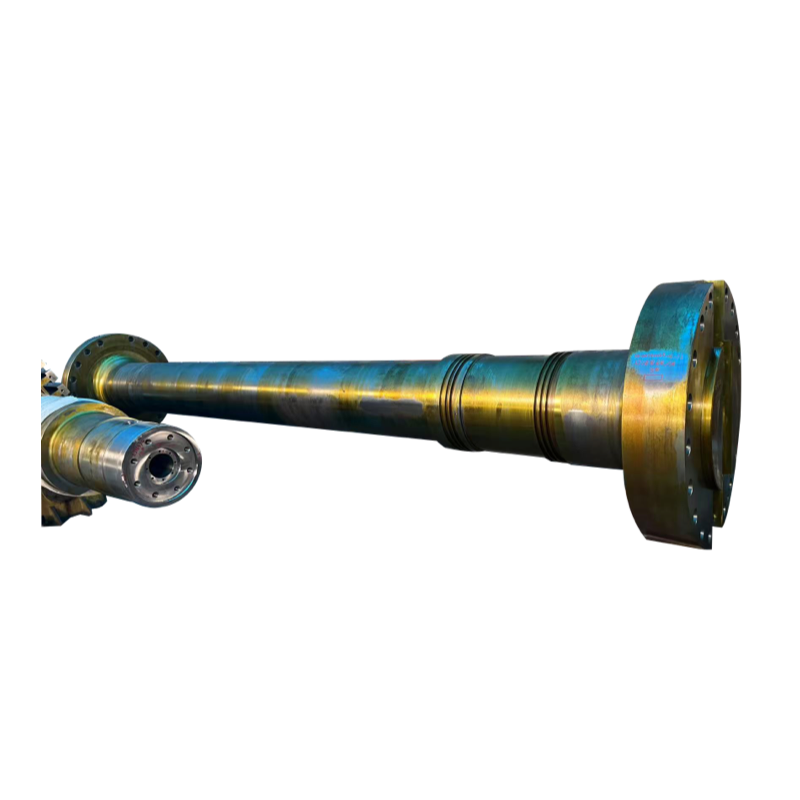
For broader shaft-line work, the interaction among bearings, shafts, housings, thrust components, seals, and other Marine propulsion parts should be considered during specification and dimensional matching.
Before selecting a repair path, confirm five items together: the remaining bearing condition, journal dimensions, bearing-housing condition, lubrication-system integrity, and measured shaft-line alignment. A repair that addresses only one of these may restore appearance without restoring the operating condition that the bearing needs.
Completion of machining or bearing replacement should not be treated as the end of the investigation. Restart verification is where the proposed root cause is tested against actual operating behavior.
Before rotation, confirm lubricant availability, oil passages, assembly condition, bearing clearance requirements, bearing seating, shaft freedom, and all alignment adjustments made during repair. Any measurement references changed during dismantling should be documented so that final results can be compared correctly.
During initial operation, monitor bearing temperature as a trend, not merely as a pass-or-fail number. The important questions are whether temperature stabilizes, whether one bearing behaves differently from neighboring supports, and whether changes in speed or propulsion load produce repeatable abnormal behavior. Vibration, oil condition, shaft movement, and other available condition data should be evaluated at the same time.
A marine line shaft bearing that remains cool at low load can still show unfavorable behavior when the shaft line reaches a different operating condition. Verification should therefore represent the approved operating range rather than stopping after a short unloaded check.
If temperature begins to rise again, avoid assuming that the newly repaired bearing needs more running-in time. Recheck oil delivery, bearing load, alignment, and shaft condition before continued operation converts a diagnostic warning into another damaged bearing.
Successful restart verification closes the diagnostic loop: the original symptoms have disappeared, the shaft and bearing surfaces are operating correctly, lubrication remains stable, and the load distribution no longer reproduces the failure pattern.
Marine intermediate shaft bearing failure should be treated as a shaft-line problem until lubrication, bearing load, journal condition, and alignment have all been evaluated. Replacing damaged white metal or repairing a scored journal can restore components, but recurring intermediate bearing overheating usually demands investigation of the operating condition that produced the damage. Shanghai TOTEM Machinery Co., Ltd. is a manufacturer of marine shaft, bearing, and related machined components. A system-level diagnosis helps ensure that repair decisions address both the damaged part and its underlying cause.
A: Common warning signs include rising bearing temperature, abnormal vibration, changes in lubricant condition, unusual noise, unstable temperature trends, and early scoring or wiping on the bearing surface.
A: Yes. Misalignment can concentrate bearing reaction toward one area, reduce effective oil-film separation, increase friction, and produce localized heating or accelerated bearing-surface wear.
A: Not necessarily. Repair may be possible when the bearing structure remains suitable and an approved process can restore the lining, dimensions, geometry, and required inspection condition.
A: Check journal diameter, taper, ovality, surface condition, runout, hardness where relevant, and possible cracking before deciding whether polishing, machining, further repair, or replacement is appropriate.
A: Recurrence can occur when the original root cause—such as misalignment, unfavorable bearing load, lubrication deficiency, housing problems, or journal damage—remains after the bearing itself is replaced.
A: Monitor temperature trends together with lubrication, vibration, shaft behavior, and operating load. Verification should confirm stable behavior across the approved operating conditions rather than only during a brief low-load test.


