


| Quantity: | |
|---|---|
The OEM Rotary Separator Dryer serves as a cornerstone for large-scale industrial material processing. Engineered for extreme durability and continuous operation, this equipment effectively combines advanced thermal drying with mechanical separation to handle the most demanding bulk materials, including coal, sand, and mineral ores. As a purpose-built Original Equipment Manufacturer (OEM) solution, it is designed to integrate smoothly into existing production lines or operate as a standalone powerhouse, providing procurement engineers and plant managers with a reliable, high-throughput system that maximizes operational efficiency.
Unlike standard drying equipment, the OEM Rotary Separator Dryer features a meticulously engineered architecture to withstand extreme operational stress and heavy material loads. The primary component is a massive horizontal cylindrical drum constructed from industrial-grade carbon steel or specialized wear-resistant alloy, tailored to the specific abrasiveness of the feedstock. This precision-balanced drum ensures stable rotation and long-term structural integrity.
The primary function of this equipment is the rapid removal of moisture and volatile compounds from granular bulk matter. By integrating separation capabilities, it reduces the need for secondary screening equipment, saving valuable facility space and lowering overall capital investment.
Engineered for versatility, the OEM Rotary Separator Dryer is a critical asset across multiple heavy industry sectors, helping facilities meet strict moisture content standards before final packaging or further processing:
Procuring an OEM Rotary Separator Dryer delivers significant strategic value for global manufacturing enterprises. It offers deep customization capabilities—allowing buyers to specify exact drum dimensions, temperature ratings, construction materials, and automation interfaces to match their specific facility requirements. This tailored approach ensures optimal energy efficiency and maximum throughput. Furthermore, partnering with an OEM guarantees comprehensive lifecycle support, including installation guidance, performance commissioning, and direct access to genuine spare parts. This investment secures a scalable, high-performance processing solution designed to lower total cost of ownership and minimize costly operational downtime.
When overseas buyers evaluate an OEM Rotary Separator Dryer (also described as a custom rotary drum dryer with integral screening/separation, drying-and-sizing rotary drum, or OEM rotary drying & separating system), they are investing in a heavy fabricated thermal machine whose long-term reliability depends entirely on strict cylindricity, precise alignment, and repeatable heat transfer. The manufacturing workflow requires more than simple assembly; it demands a rigorous combination of large-scale heavy fabrication and precision machining. Every step in our process is designed to ensure structural integrity and operational stability, reducing maintenance risks for continuous industrial applications.
The finished drum is then integrated with its heavy-duty stationary support frame, adjustable trunnion rollers, and thrust rollers. The drive assembly, typically comprising a girth gear and pinion or a chain and sprocket system driven by a gearbox and motor, is precisely aligned. Labyrinth or air-seal style inlet and outlet seals, along with the breeching components, are installed to maintain a tightly controlled hot-air envelope. This systematic integration ensures all mechanical and structural components work in unison, preparing the rotary drying system for reliable performance.
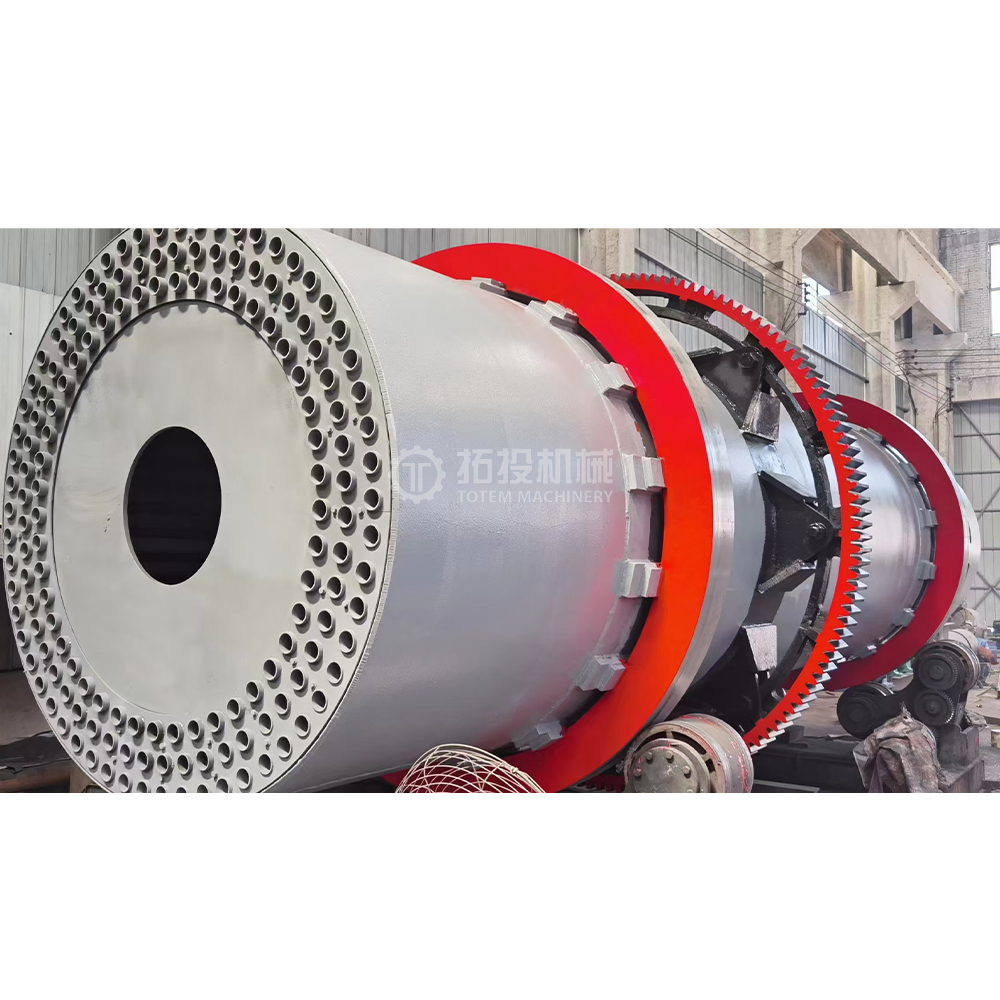
For buyers investing in heavy-duty industrial equipment, the operational reliability of an OEM Rotary Separator Dryer depends entirely on the rigorous quality assurance (QA) system behind it. Before any unit is cleared for deployment in coal, sand, or mineral processing facilities, it undergoes a strict, multi-stage inspection process. This comprehensive testing protocol guarantees that the custom rotary drying and separating drum meets all specified dimensions, structural requirements, and safety standards, ensuring decades of stable operation under continuous industrial workloads and minimizing procurement risks.
The quality control process begins strictly at the material procurement stage. Every batch of steel plates, forgings, and castings intended for the OEM Rotary Separator Dryer is accompanied by authorized Mill Test Certificates (MTCs). Our inspection team verifies the chemical composition and evaluates mechanical properties, including tensile strength and impact resistance, to ensure full compliance with international standards such as ASTM or EN. This meticulous traceability is essential for mining and chemical applications that demand specific material grades, such as SS304 stainless steel for corrosion resistance or Hardox wear plates for handling highly abrasive mineral aggregates.
Flange Flatness: The inlet and outlet flanges are checked for optimal flatness to guarantee a secure, airtight seal with the burner assembly and dust collection systems, preventing thermal loss.
To withstand the harsh environments typical of coal and mineral processing plants, the equipment undergoes a strict surface treatment inspection. Prior to painting, surface preparation is evaluated to ensure optimal primer adhesion. Following the coating application, the Dry Film Thickness (DFT) is precisely measured to guarantee adequate corrosion protection. A final visual inspection is conducted to confirm that all safety guards, warning labels, nameplates, and auxiliary accessories are correctly installed and compliant with operational safety guidelines.
Transparency is a core component of our QA protocol. We compile a comprehensive "Data Book" for each dryer, containing all material certificates, dimensional inspection reports, NDT results, and run-test logs. For projects requiring stringent international compliance, we fully support and welcome third-party inspection agencies—such as SGS, BV, or TUV—to witness the dynamic run-tests and verify the documentation. This objective validation provides an unbiased layer of trust, assuring buyers that their investment in our custom rotary drum drying system meets exact engineering specifications.
Reinforced Base Securing: Major oversized components, such as the main drum shell and heavy support frames, are firmly bolted to heavy-duty steel skids or thick wooden sleepers. This creates an exceptionally stable base with designated lifting points, ensuring safe and balanced handling by port cranes and heavy-duty forklifts.
Waterproof Protective Wrapping: The entire mechanical assembly is thoroughly shrouded in robust, waterproof polyethylene sheeting or industrial shrink wrap. This multi-layer barrier provides excellent defense against heavy rain, seawater spray, dust storms, and environmental debris during open-air storage or transport.
ISPM-15 Export-Grade Crating: Smaller, highly critical, or fragile items—such as drive motors, gearboxes, automated control panels, and installation fasteners—are securely packed into custom-built, heavy-duty plywood crates. All wooden packaging materials are strictly ISPM-15 compliant, utilizing heat-treated wood to meet international phytosanitary regulations, ensuring smooth customs clearance without the risk of pest infestations or quarantine delays.

Containerization vs. Flat-Rack Solutions: Depending on the specific dimensions and capacity of your OEM Rotary Separator Dryer, we engineer the packaging layout for either standard 20ft/40ft shipping containers (which may involve strategic modular disassembly) or specialized flat-rack containers for oversized loads. We meticulously calculate and optimize the center of gravity and provide reinforced lashing points to ensure absolute stability during maritime transport.
Turnkey System Grouping: For complete, multi-component drying systems, we develop a detailed packing plan that groups components logically by installation sequence (e.g., mechanical drive parts, electrical systems, foundation hardware). Each package is clearly marked with a unique identification number that corresponds directly to the master bill of materials and the provided installation manual, streamlining your on-site assembly process.
By choosing our custom rotary drum drying system, you are securing more than just heavy-duty industrial equipment; you are partnering with a manufacturer that provides a highly professional logistics solution designed to guarantee safe delivery, reduce installation delays, and protect your investment from our factory floor to your operational site.


