
Views: 0 Author: Site Editor Publish Time: 2026-09-04 Origin: Site
Decisions surrounding marine propulsion represent massive capital expenditures. They carry heavy long-term operational consequences for any fleet. Choosing the right marine propeller dictates vessel efficiency, emissions compliance, and maintenance schedules for decades. Our core objective is evaluating whether a fixed or controllable pitch marine propeller best aligns with your specific operational profile, load variances, and maintenance capabilities. You will quickly realize there is no universal "best" choice in the maritime industry. Instead, you must find the optimal match for your specific hull designs and mission requirements.
We will break down the structural differences, application strengths, and integration risks for both propulsion options. By understanding how each system manages engine loads and maneuvering demands, you can confidently specify equipment. This careful evaluation prevents premature mechanical failures and optimizes long-term fuel consumption. We aim to equip you with the technical insight needed to make highly informed engineering decisions.
Vessels with continuous, steady-state cruising profiles (e.g., bulk carriers) typically achieve higher hydrodynamic efficiency and lower maintenance costs with Fixed Pitch Propellers (FPP).
Vessels requiring high maneuverability and dynamic positioning under varying loads (e.g., tugboats, ferries, offshore supply vessels) see a faster ROI with a Controllable Pitch Propeller (CPP).
Integrating a CPP increases the complexity of marine propulsion system parts, requiring specialized hydraulics and more frequent maintenance intervals.
Upgrading or changing propeller types necessitates rigorous structural evaluation, including comprehensive shaft alignment inspection, to prevent premature bearing failure.
Engineers and fleet managers face a complex business and operational problem during vessel design. Misaligning the propeller type with the vessel application leads to cascading mechanical and financial issues. If you install an overly simplistic propeller on a highly dynamic vessel, you suffer suboptimal fuel burn and poor vessel response. Conversely, over-engineering a simple cargo ship with complex variable-pitch systems introduces unnecessary maintenance liabilities. This mismatch ultimately causes excessive engine wear and compromised maneuverability.
You must establish clear performance metrics before selecting a propeller. We evaluate several baseline success criteria for any marine propeller retrofit or new build project. Meeting these benchmarks ensures your propulsion system aligns directly with daily operational realities.
Meeting required bollard pull and top speed: The propulsion system must deliver exact thrust targets for towing or transit operations.
Optimizing engine load limits across varying sea states: The propeller must allow the main engine to operate within its ideal thermal and mechanical parameters, regardless of weather conditions.
Minimizing unscheduled dry-docking: The chosen system must demonstrate enough reliability to keep the vessel operational between legally mandated survey periods.
The fixed pitch propeller remains the most common propulsion method in global commercial shipping. Engineers cast these propellers as a single, solid piece of metal. Foundries typically utilize Nickel-Aluminum (Ni-Al) bronze due to its exceptional resistance to cavitation and saltwater corrosion. Because the casting process fixes the blades permanently in place, manufacturers optimize the blade pitch for one specific design speed and one specific engine RPM. This creates a highly tuned hydrodynamic profile for continuous operations.
Fixed pitch propellers dominate specific maritime sectors for good reason. They win definitively in deep-sea commercial shipping applications. Vessels like Very Large Crude Carriers (VLCCs) and container ships run their main engines at a constant RPM for days or weeks at a time. In these steady-state conditions, the FPP achieves maximum hydrodynamic efficiency. Furthermore, when your primary operational priority involves reducing the total count of moving marine propulsion system parts to mitigate failure risks, the solid FPP casting is unbeatable. It eliminates internal hub mechanics entirely.
However, this mechanical simplicity introduces strict operational limitations. FPPs exhibit notoriously poor reverse thrust efficiency. Stopping or reversing the vessel requires stopping and physically reversing the main engine itself. This process consumes valuable time during critical maneuvers. Additionally, fixed pitch systems cannot adapt to significant changes in draft, displacement, or towing loads. If a bulk carrier operates fully loaded versus completely empty, the fixed pitch angle forces the engine to operate off-design in at least one of those scenarios, sacrificing valuable fuel efficiency.
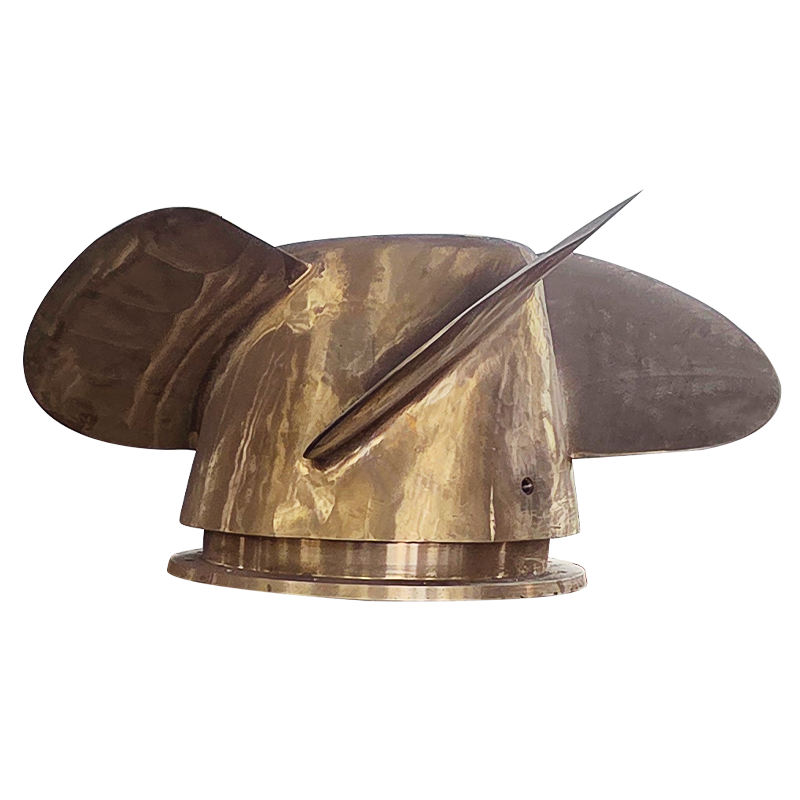
Controllable pitch systems represent a leap in mechanical complexity and operational flexibility. Unlike solid castings, CPP blades are mounted individually on a central hub. Each blade pivots on its axis. This design allows the operator on the bridge to adjust the pitch angle on demand. Internal hydraulic mechanisms, driven by high-pressure oil pumps, push and pull mechanical yokes inside the hub to rotate the blades. This changes the propeller's thrust vector while the engine RPM remains completely constant.
A Controllable Pitch Propeller wins decisively in dynamic operational environments. Applications requiring rapid thrust reversal—such as harbor tugs or passenger ferries—rely on CPPs to switch from full ahead to full astern in seconds. They accomplish this without stopping and reversing the main engine. Furthermore, CPPs excel on vessels equipped with PTO (Power Take-Off) shaft generators. The main engine can run at a constant RPM to generate critical electrical power for hotel loads or heavy machinery. Meanwhile, the adjustable pitch entirely dictates the vessel's physical speed through the water.
Despite these massive operational advantages, CPP systems present distinct drawbacks. They demand a much higher initial CapEx. Purchasing and installing a variable-pitch system often costs two to three times more than a comparable FPP. Additionally, the complex internal hydraulics require a significantly larger hub. This larger hub-to-propeller diameter ratio blocks water flow at the root of the blades. Consequently, it slightly reduces maximum hydrodynamic efficiency compared to a perfectly tuned fixed pitch propeller operating at its single design speed.
Choosing between these two technologies requires a multifaceted evaluation of your fleet's specific needs. You must weigh upfront purchasing power against long-term maintenance realities. We break down the evaluation into three primary dimensions: financial trade-offs, vessel maneuverability, and system survivability.
Fleet operators must compare upfront purchasing and installation costs against projected fuel savings for variable-load missions. While an FPP saves immense capital upfront, a CPP can dramatically lower fuel consumption on vessels that frequently change speeds or towing loads. You must also factor in the cost of specialized spare parts. CPP hubs require hydraulic seals, distribution boxes, and specialized technician labor during dry-dock periods. These routine expenses can quickly offset initial fuel savings if the vessel rarely utilizes its variable-pitch capabilities.
You must evaluate the necessity of crash-stop capabilities for your specific routes. Ferries navigating crowded urban waterways require extreme, fine-tuned low-speed maneuvering to dock safely. CPP systems provide instant thrust adjustments down to fractions of a knot. Furthermore, note the integration capabilities of CPPs with automated dynamic positioning (DP) systems. Offshore supply vessels relying on DP2 or DP3 classifications almost exclusively utilize variable-pitch systems to hold precise GPS coordinates against shifting wind and wave forces.
Mechanical complexity directly impacts vessel survivability in harsh environments. You must assess the risk of hydraulic leaks in CPP systems. A failed stern tube seal or ruptured internal O-ring can leak hydraulic oil into the ocean, triggering environmental fines and forcing emergency dry-docking. Conversely, contrast the impact of catastrophic blade damage. If an FPP strikes a submerged log or ice, the bent blade often requires full propeller replacement or heavy, time-consuming hot work in a dry-dock. In contrast, individual CPP blades bolt directly onto the hub. Technicians can sometimes unbolt and replace a single damaged CPP blade without removing the entire hub assembly.
Operational Comparison: FPP vs CPP
| Evaluation Metric | Fixed Pitch Propeller (FPP) | Controllable Pitch Propeller (CPP) |
|---|---|---|
| Initial CapEx | Low (Simple solid casting) | High (2x-3x higher due to hydraulics) |
| Hydrodynamic Efficiency | Very High (at specific design RPM) | Moderate (Larger hub restricts flow) |
| Thrust Reversal | Slow (Requires engine reversal) | Instant (Pitch adjustment only) |
| Maintenance Complexity | Low (Virtually zero internal parts) | High (Hydraulic seals, pumps, yokes) |
| Blade Repair | Difficult (Requires full replacement/hot work) | Easier (Individual blades bolt on/off) |
Transitioning from theory to physical installation uncovers significant engineering challenges. Detail the physical reality of installation carefully. A variable-pitch system cannot mount to standard solid shafting. Instead, it requires a specially bored, hollow marine propeller shaft to house the internal hydraulic push-pull rods. This oil distribution tube runs the entire length of the shaft from the engine room gearbox down to the external propeller hub.
Retrofit Constraints: Fleet operators frequently underestimate the difficulty of upgrading an existing vessel. Converting from FPP to CPP usually requires replacing the entire shaft line. You cannot simply swap the propeller itself. The shipyard must install new stern tube bearings capable of handling different load distributions. Additionally, you must install a compatible marine gearbox equipped with an oil distribution box to feed the hydraulic mechanisms.
Critical QA/QC: Quality control during installation dictates the lifespan of the entire propulsion train. We must highlight that the added weight and mechanical complexity of a CPP hub makes strict tolerance checks mandatory. The heavy hub shifts the center of gravity further aft, increasing the bending moment on the aft stern tube bearing. Stress the absolute necessity of a laser-guided shaft alignment inspection post-installation. Performing this verification precisely prevents severe operational vibrations, premature bearing wear, and catastrophic seal failures.
Navigating the procurement phase requires a structured, logical approach. Do not rely on industry trends alone. We recommend following a strict sequence of analytical steps to validate your engineering choices.
Step 1: Define the primary mission profile. Calculate the exact percentage of time the vessel spends at steady cruise versus time spent maneuvering, towing, or idling on dynamic positioning. If steady cruising exceeds 80%, FPP remains the logical front-runner.
Step 2: Calculate lifecycle budget constraints. Map out your allowable CapEx limits against your targeted fuel and maintenance reductions. Ensure you account for the expensive hydraulic overhauls required by variable-pitch systems at the 5-year and 10-year survey marks.
Step 3: Assess crew technical competency. Evaluate your onboard engineering staff and your local port maintenance infrastructure. Complex hydraulics require specialized servicing. If your vessel operates in remote regions lacking sophisticated shipyard support, the simplicity of an FPP provides crucial peace of mind.
Step 4: Consult with a naval architect. Never finalize a propeller specification without data. Have your naval architect run CFD (Computational Fluid Dynamics) simulations. These computer models compare specific FPP and CPP designs against your exact hull lines, revealing precise wake fields and thrust deduction fractions.
Selecting a marine propeller remains a heavily calculated compromise between mechanical simplicity and operational adaptability. The decision ultimately shapes your vessel's capabilities and dictates your maintenance schedules for the next twenty years. You must strictly align the equipment with your real-world maritime environments.
We strongly advise against over-engineering your propulsion systems. Only pay for the high complexity and maintenance demands of a CPP if the vessel’s mission profile guarantees a tangible return on that investment. Otherwise, the robust reliability of an FPP will serve your fleet much better.
Take actionable steps before committing capital. We recommend you reach out for a technical consultation, request a structural assessment, or commission preliminary propulsion modeling before drafting any final procurement specs. Engaging propulsion experts early prevents costly retrofits down the line.
A: No. CPPs require a specialized hollow shaft for internal hydraulics and a compatible marine gearbox. A complete stern-gear replacement is necessary.
A: Generally, yes. Because FPPs lack a bulky variable-pitch hub, their smaller hub diameter allows for a more hydrodynamically efficient blade root, yielding slightly better performance at the specific design speed.
A: It should be performed immediately upon installation, verified again once the vessel is fully loaded in the water (to account for hull deflection), and routinely checked during scheduled dry-dockings or if abnormal vibrations occur.


