


| Quantity: | |
|---|---|
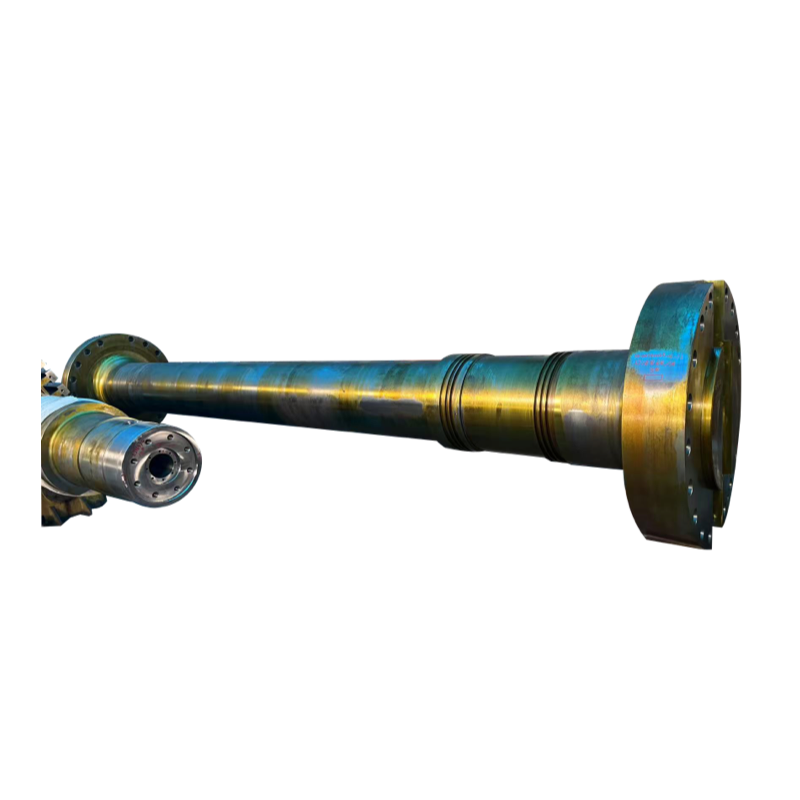
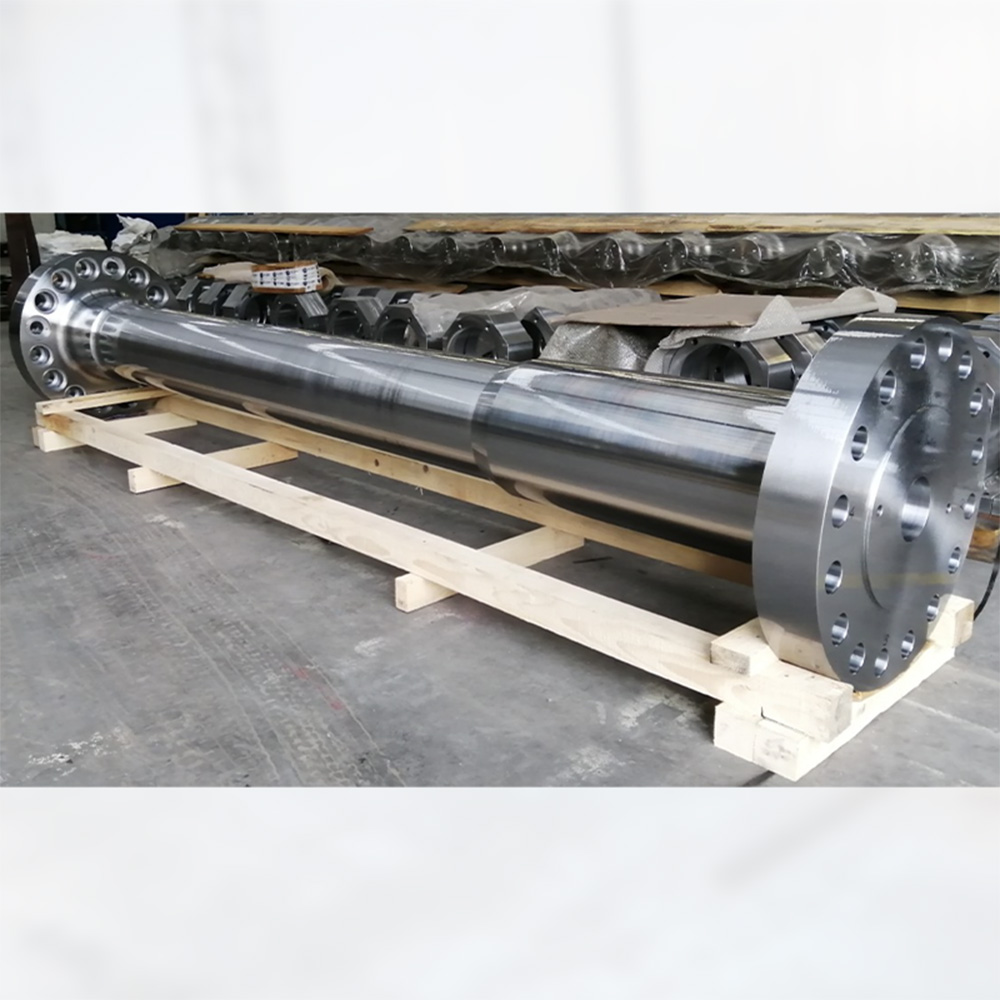
The customized large forged intermediate shaft is an indispensable transmission component within marine propulsion systems. Positioned strategically between the thrust shaft and the stern shaft, its primary function is the reliable transmission of torque and the continuous structural support of the entire shafting system. During operation, the torque generated by the main engine or deceleration device is transferred through the thrust shaft and continuously delivered to the stern shaft and propeller via this intermediate shaft. It not only withstands continuous torsional loads but also maintains exceptional straightness and alignment during long-term operation. This precise alignment is crucial for cooperating with sliding or rolling bearings to achieve stable support, directly impacting vibration levels, bearing lifespan, and overall operational stability.
To ensure maximum durability and structural integrity, our intermediate shafts are manufactured from high-quality carbon steel or alloy steel forgings. These premium raw materials undergo rigorous and highly controlled heat treatment processes to achieve a uniform, stable internal micro-structure and superior mechanical properties. Depending on specific design requirements, key sections of the shaft can be subjected to quenching, tempering, normalizing, or specialized surface strengthening. These processes significantly enhance the shaft's torsional strength, fatigue resistance, and long-term operational reliability, ensuring it can withstand demanding marine environments without compromising performance.
The structural complexity of marine propulsion requires the intermediate shaft to achieve high-precision matching with couplings, bearings, and adjacent shaft segments. Our facility is equipped with comprehensive processing capabilities for large-scale shaft components. We execute meticulous rough machining and precision machining, implementing strict key dimension control throughout every manufacturing stage. This guarantees the exact dimensional accuracy and coaxiality requirements for shaft necks, flange connection surfaces, and critical mating parts. By maintaining stringent processing technology control, we effectively minimize assembly errors, providing a highly reliable foundation for the overall alignment and smooth operation of the shaft system.
Operational safety is paramount in marine propulsion. Therefore, every intermediate shaft undergoes a comprehensive series of rigorous tests and evaluations prior to delivery. Our systematic quality control process includes precise roughness testing to ensure optimal surface finish, runout testing to verify rotational accuracy, magnetic particle inspection to detect surface flaws, and comprehensive non-destructive testing to identify any internal inconsistencies. This strict testing protocol ensures that every single component strictly adheres to design specifications and demanding usage requirements, significantly reducing procurement and operational risks.
Beyond the intermediate shaft itself, it serves as the core that organically connects the propeller shaft, thrust shaft, and related bearing systems. It requires precise coordination with intermediate shaft bearings and thrust bearings to control deflection, jumping, and coaxiality. To support comprehensive marine propulsion needs, we provide a wide range of manufacturing and supporting services around the intermediate shaft system.
Our extended product capabilities include specialized journal machining, supporting bearing structural components, thrust shaft manufacturing, thrust bearing components, and various propeller shaft related parts. By leveraging our extensive manufacturing capabilities and assembly matching experience, we assist clients in building structurally sound, smoothly operating, and highly reliable propulsion shaft systems.
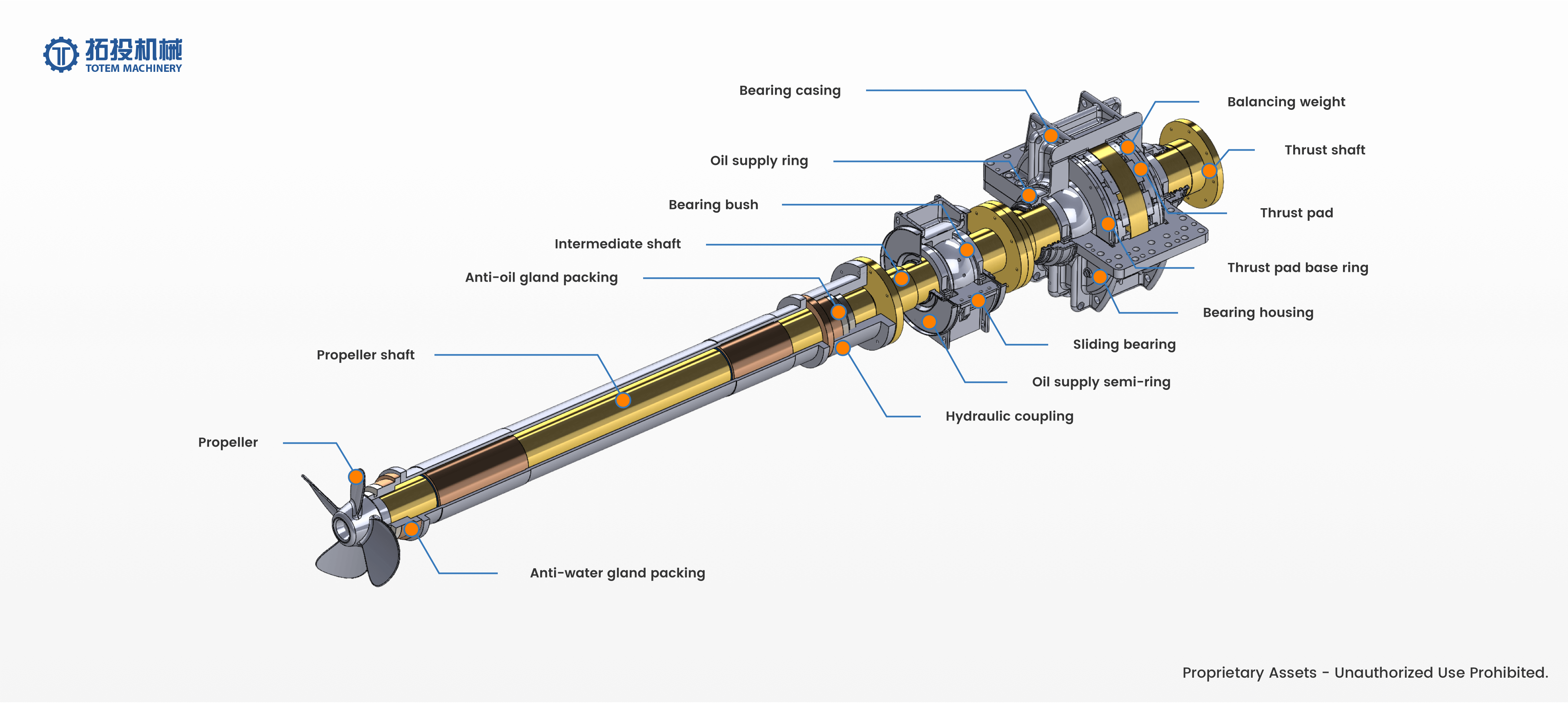
The large forged intermediate shaft serves as the critical power transmission link in marine propulsion systems, effectively transferring rotational force from the main engine to the propeller. In complex and demanding maritime environments, the structural integrity and operational stability of the propulsion system are paramount. Our customized intermediate shafts are engineered to deliver seamless power transmission, ensuring that vessels maintain optimal maneuverability and efficiency even under harsh sea conditions. By focusing on precise dimensional accuracy and structural reliability, we help shipbuilders and marine engineers minimize operational risks and enhance the overall safety of the vessel during long-term navigation.
Our large forged intermediate shafts are widely used in various types of ship propulsion systems, catering to the specific operational demands of the global maritime industry. We provide highly reliable solutions for merchant ships, such as cargo vessels, bulk carriers, and oil tankers, where continuous, stable operation during long-haul voyages is essential for maintaining supply chain efficiency. For engineering ships, including dredgers, pipe-laying vessels, and heavy-lift crane ships that frequently operate under extreme dynamic loads and highly variable conditions, our shafts provide the exceptional torsional strength required for heavy-duty tasks. Furthermore, we supply specialized shafts for special vessels, adapting to unique operational profiles and stringent performance criteria necessary for specialized maritime missions and complex marine environments.
An intermediate shaft does not operate in isolation; it is a vital part of a highly synchronized mechanical network. Together with thrust shafts, sliding bearings, stern shafts, and other essential components, they form a complete ship shaft system. The performance of the entire propulsion mechanism depends heavily on the seamless coordination between these parts. Our manufacturing process focuses on this critical synergy, ensuring that our intermediate shafts are perfectly matched with adjoining components in terms of structural dimensions, dynamic performance, and service life. This precise alignment significantly reduces mechanical vibration, minimizes premature wear on sliding bearings, and maximizes the overall transmission efficiency of the propulsion system.
Understanding that every shipbuilding project has unique specifications, our company provides comprehensive and customized manufacturing services. We do not rely on standard templates; instead, every intermediate shaft is meticulously produced based on the specific drawings and technical standards provided by the customer. More importantly, our production strictly adheres to rigorous classification society requirements.
Whether your project demands compliance with major international classification societies, we ensure that every structural detail and performance metric meets the exact regulations for marine applications. This commitment to deep customization and strict maritime standards guarantees that the intermediate shaft will integrate flawlessly into your specific propulsion system, providing long-lasting reliability, reducing installation complexities, and lowering long-term maintenance costs for complex marine operations.
Secure and reliable packaging is crucial for heavy-duty marine propulsion components. We implement a rigorous, multi-layered packaging and shipping protocol for the customized large forged intermediate shaft to ensure it arrives at your shipyard or facility in pristine condition, completely free from corrosion or transit damage. By minimizing transit risks, we help procurement teams and shipyard engineers ensure that the shaft is ready for immediate installation upon arrival, without the need for costly rework or project delays.
All critical surfaces of the forged intermediate shaft, particularly the precision-machined areas, mating surfaces, and end faces, undergo meticulous preparation. We apply high-grade anti-rust oil or specialized protective agents designed for long-term maritime transit. Following this, the components are tightly wrapped with premium VCI (Volatile Corrosion Inhibitor) paper or equivalent barrier materials. This comprehensive sealing process effectively isolates the metal from aggressive air and moisture, significantly reducing the risk of oxidation and corrosion during extended ocean freight and warehouse storage. This is especially critical for maintaining the dimensional accuracy of the mating surfaces during prolonged exposure to salty, humid ocean environments.
Given the substantial weight and precise dimensions of large marine shafts, robust internal stabilization is essential. We utilize high-density cushioning materials, including pearl cotton, industrial foam, and heavy-duty rubber pads, strategically applied around the product to absorb vibration and mechanical impact. Furthermore, based on the specific geometric structure of the shaft, custom-engineered wooden supports and positioning blocks are installed securely inside the package. These tailored fixtures prevent any rolling, shifting, or internal movement, ensuring the product remains perfectly stable throughout complex handling procedures. This robust internal framework significantly reduces the risk of physical damage caused by rough handling or turbulent sea conditions.
For the outermost defense, the packaging adopts a reinforced export wooden case or other high-strength containment solutions engineered with exceptional load-bearing capacity. These heavy-duty cases are fully compliant with international shipping standards and are perfectly suitable for demanding sea, land, or air transportation routes. To facilitate safe and efficient logistics operations, clear handling marks are permanently stenciled on the exterior. These include critical indicators such as the center of gravity, designated lifting points, moisture protection warnings, and anti-tilt symbols. Proper labeling not only ensures compliance with international freight regulations but also prevents accidental mishandling by crane operators and forklift drivers, allowing operators at the destination port or project site to handle the heavy cargo with maximum safety and precision.
We understand that different maritime projects have unique logistical constraints. Therefore, our packaging solutions can be fully adjusted according to specific customer requirements. This flexibility includes modifying the overall protection level, altering the cushioning method, upgrading the internal fixing structure, or redesigning the outer case to accommodate unique dimensions. Whether adapting to extreme transportation conditions, specific destination port regulations, or extended on-site storage requirements, we provide a customized logistics strategy that guarantees the integrity of your marine propulsion components from our facility to your vessel.


