
Views: 0 Author: Site Editor Publish Time: 2026-09-03 Origin: Site
Driveline failure on the open water carries exceptionally high stakes. Severe vibrations can quickly destroy costly transmissions. In extreme cases, a snapped component causes a catastrophic hull breach. Replacing a compromised setup is rarely as simple as matching old dimensions. Over time, builders update machining standards. Engines get repowered, and raw materials suffer subtle degradation. You must carefully evaluate current engine performance and environmental factors before ordering a new component. Our goal is to provide a definitive framework for specifying your replacement correctly. We will guide you through precise alignment strategies, critical safety tolerances, and optimal material choices. You will learn how to measure vital tapers and keyways accurately. This ensures seamless integration across your entire driveline. By following these calculated steps, you ensure long-term reliability. You effectively safeguard your vessel against premature wear and devastating breakdowns.
A bent or severely corroded shaft cannot be permanently repaired; exceeding standard runout tolerances necessitates a full replacement.
Specifying the correct diameter and material requires calculating maximum torque using Engine HP, RPM, and gear reduction ratios.
Upgrading your shaft material (e.g., to Aquamet 22) often pays off by preventing crevice corrosion in oxygen-depleted stern tubes.
Accurate specification requires measuring tapers, keyways, and thread types directly from the vessel, not relying solely on legacy builder manuals.
Determining whether to repair or replace begins with measuring runout. A machinist uses a dial indicator to measure runout precisely. Standard marine tolerances usually limit acceptable runout to 0.002 inches per foot of length. If your component exceeds this limit, you must replace it. Attempting to straighten severely bent metal induces microscopic fatigue. It creates weak points prone to sudden snapping under load. You compromise the structural integrity entirely.
Crevice corrosion destroys stainless steel secretly and rapidly. It occurs when stagnant saltwater sits trapped under bearings and seals. Without free-flowing oxygen, the protective oxide layer on the steel breaks down. Pitting starts soon after. Once pitting depth exceeds minor surface blemishes, it compromises structural integrity heavily. You risk catastrophic failure under high torque. We highly recommend reviewing Marine Propeller Shaft failure warning signs to catch these issues early.
Fretting at the coupling also demands immediate replacement. A loose fit between the shaft and the transmission coupling leads to irreparable scoring. You cannot machine this damage away without reducing the diameter below safe engineering limits. A true interference fit requires fresh, accurately machined surfaces to transmit power safely.
Specifying your new setup begins with a strict torque calculation. You calculate maximum torque using Engine Horsepower (HP), the transmission gear ratio, and the shaft RPM. This mathematical relationship dictates the minimum safe diameter required. As horsepower increases or gear ratios drop, torque forces multiply aggressively. A wider diameter becomes necessary to prevent twisting under heavy acceleration.
Safety factors heavily influence this sizing process. Naval architects use specific safety multipliers based on the vessel's primary application. Commercial vessels endure continuous heavy loads, requiring higher multipliers than weekend pleasure craft.
Standard Marine Safety Factor Multipliers
| Vessel Application | Typical Safety Factor | Usage Characteristics |
|---|---|---|
| Light Pleasure Craft | 2.0 - 3.0 | Intermittent use, light displacement, smooth acceleration. |
| Heavy Cruisers / Yachts | 3.0 - 5.0 | Extended cruising, heavier displacement, moderate continuous loads. |
| Commercial / Towing | 5.0 - 8.0+ | Continuous heavy towing, frequent shock loads, high duty cycles. |
You must also consider strict strut and tube constraints. Your existing vessel has physical space limitations built into the hull. If your new torque calculation demands a larger diameter, you face immediate modifications. You might need to bore out the stern tube to accommodate thicker metal. You may also need to replace the struts entirely. Always verify structural clearances before finalizing your diameter specifications.
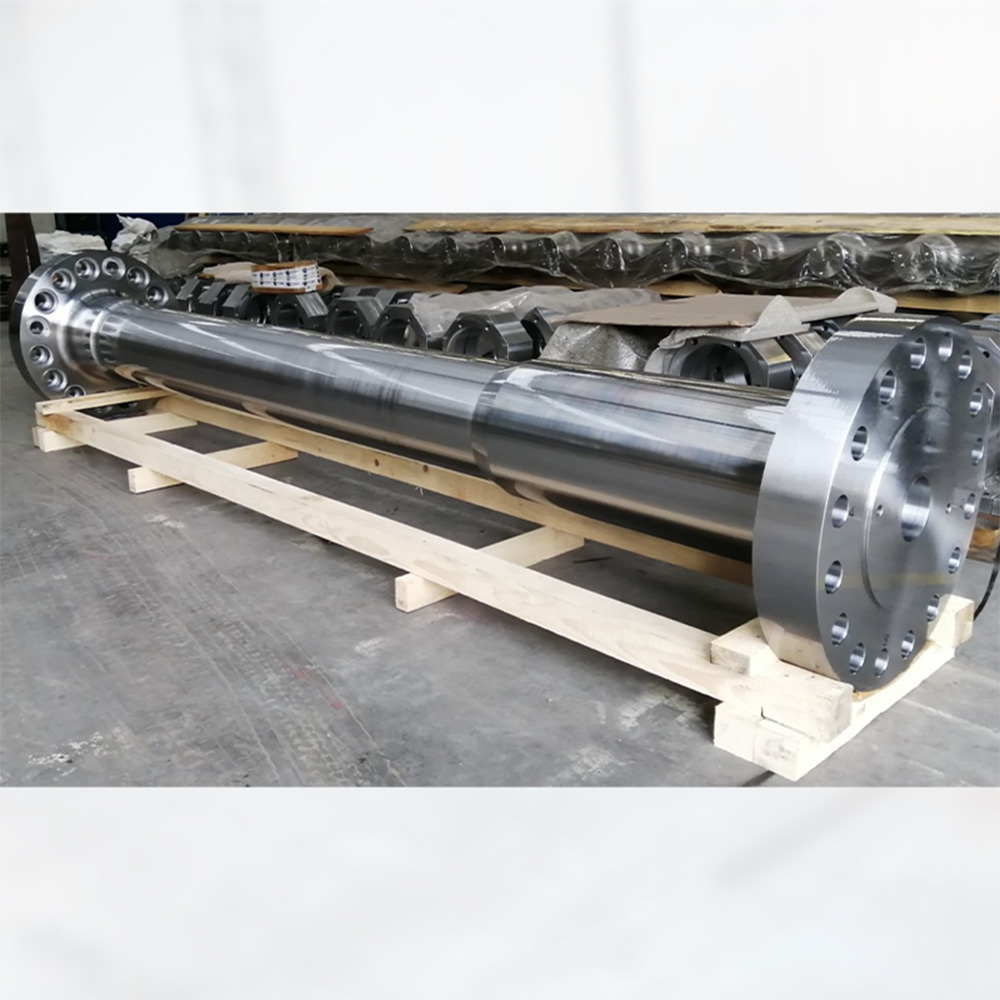
Navigating yield strength and corrosion resistance is vital for longevity. The Aquamet family dominates modern marine applications today. Aquamet 17 offers high strength but lower corrosion resistance in warm waters. Aquamet 19 balances strength and durability well for moderate climates. However, Aquamet 22 remains the undisputed gold standard for saltwater environments. It delivers a superior mix of exceptional yield strength and ultimate corrosion resistance.
Many older boats utilized standard 300-series stainless steels. Today, standard 316 or 304 alloys are inadequate for high-torque inboard applications. They lack the necessary torsional strength to handle modern diesel outputs. They also fall victim to crevice corrosion rapidly in warm, stagnant saltwater environments.
When specifying a marine propeller shaft, balance upfront material costs against lifespan. Premium alloys require higher initial fabrication expenses. Yet, they reduce lifetime maintenance labor drastically. By resisting pitting and bending, they outlast cheaper materials by decades. You avoid the recurring costs of premature hauling and replacement.
Your machinist must follow exact specifications for tapers, keyways, and couplings. Matching the taper perfectly to the propeller hub ensures maximum contact area. The SAE standard typically dictates a precise 1:16 taper ratio. You need a minimum 70% lapped fit to prevent wobbling and vibration. Metric tapers use different ratios like 1:10. Mixing an SAE hub with a metric taper ruins both components immediately upon tightening.
Keyway cutting requires strict adherence to engineering guidelines. Machinists must cut radiused corners inside the keyway base. Sharp, 90-degree corners create dangerous stress risers in the metal. These stress risers lead directly to subsequent fracturing under heavy rotational loads. A radiused corner distributes the stress evenly across the metal grain.
Coupling selection also dictates the machining approach heavily. You can choose solid, split, or flexible couplings. You must machine the shaft end to match the chosen coupling type precisely. Solid couplings usually require a straight bore with a tight interference fit. Split couplings might clamp onto a perfectly straight section. Ensure you clarify this interface before any metal cutting begins.
A new driveline component never operates in isolation. It integrates deeply with existing marine propulsion system parts. The new diameter dictates the inner diameter of your cutlass bearing. You must maintain proper water-lubrication clearances inside the nitrile rubber. If the fit is too tight, the bearing overheats and melts quickly. If it is too loose, excessive vibrations destroy the housing.
You also need to evaluate your propeller shaft seal carefully. You can choose traditional packing boxes or dripless mechanical seals like a PSS. Your seal choice impacts the required surface finish directly. Dripless seals require a pristine, highly polished surface to prevent O-ring damage. Traditional stuffing boxes are slightly more forgiving but require constant physical adjustment.
Finally, precise engine alignment is absolutely non-negotiable. New components will fail prematurely if they are improperly aligned. You must align the engine to strict tolerances of 0.003 inches or less. Misalignment bends the metal every single rotation. This accelerates metal fatigue rapidly and destroys bearings in a matter of hours.
Never rely on "factory specs" when ordering replacements. Original blueprints often do not reflect current reality. Previous owners frequently modify the driveline to accommodate new gear. Engines get repowered, and transmissions change over the years. You must physically measure your current setup to guarantee accuracy.
Provide your machinist with exact, critical dimensions using precision calipers. Use a numbered checklist to ensure nothing is missed:
Overall Length (OAL) from tip to tip.
Precise outer diameter down to the thousandth of an inch.
Taper length and the specific ratio used (SAE or Metric).
Thread size and pitch for the locking nuts.
Keyway length, width, and exact depth dimensions.
Vetting a machine shop carefully is your final crucial step. Look for fabricators utilizing advanced CNC capabilities for precise cuts. Request ABS (American Bureau of Shipping) certification if applicable to your vessel size. Always ask for material mill certificates. These documents prove you are receiving genuine Aquamet 22, not inferior imported steel.
Replacing a compromised driveline requires exact specification across multiple engineering disciplines. You must balance torque capacity, material grade, and machining precision carefully. A properly specified shaft does more than just spin the propeller efficiently. It protects your entire transmission from vibration and ensures complete hull integrity. Never cut corners on physical dimensions or alloy quality. We highly recommend consulting with a certified marine driveline specialist. Have a qualified naval architect verify your torque calculations before submitting a final order. Taking these calculated steps guarantees a smoother, safer experience on the water for years to come.
A: Yes, you can. A two-piece setup helps when engine rooms have severe space constraints. It allows installation without removing the rudder or pulling the engine. However, it adds complexity. You introduce a midpoint coupling, which requires an additional support bearing. This increases alignment difficulty and adds a potential failure point.
A: Inspect the contact area visually. Over-tightened traditional packing boxes cause deep, irregular scoring. They trap abrasive grit against the spinning metal. In contrast, dripless mechanical seals typically show a clean, polished wear ring without deep grooves. If you feel deep ridges with your fingernail, the seal has permanently damaged the surface.
A: An Aquamet 22 shaft can easily last 15 to 20 years under normal conditions. It offers exceptional resistance to standard wear and fatigue. However, lifespan is highly condition-dependent. Galvanic corrosion from stray electrical currents or severe grounding incidents usually forces an early replacement long before pure mechanical wear does.
A: Yes, you should perform this step or verify your mechanic does. Apply a fine lapping compound to the taper. Rotate the propeller hub against it to reveal the contact pattern. You need at least 70% uniform contact. Failing to lap it properly creates a loose fit, leading to sheared keyways.


