


| Quantity: | |
|---|---|
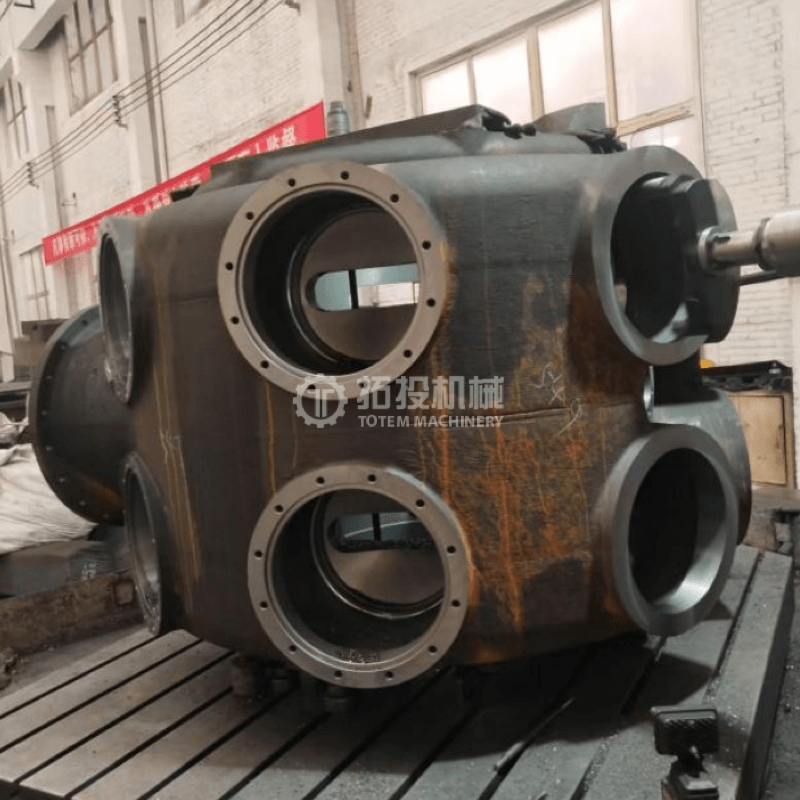
The industrial gas reciprocating compressor cylinder is the critical pressure-bearing and core working component within the compressor system. Designed to form an enclosed compression chamber, it guides the precise reciprocating motion of pistons to enable the continuous intake, compression, and discharge of industrial gases. In heavy-duty applications, the compressor cylinder block operates under extremely demanding conditions, enduring long-term high internal pressure, relentless cyclic mechanical loads, and significant thermal stress. Ensuring the structural integrity and operational stability of this component is essential for minimizing equipment downtime and maintaining the efficiency of the entire gas compression facility.
 |  |  |
 |  |  |
Totem Machinery specializes in the advanced design and manufacturing of compressor cylinder housings tailored for a wide range of industrial equipment. We understand that long-term operational stability is paramount for procurement managers and project engineers. Therefore, our gas compressor cylinder structures are meticulously engineered to account for optimal stress distribution, thermal deformation resistance, and exceptional sealing reliability. By implementing rational cooling channel layouts and optimized structural arrangements, our designs effectively control operational temperature rises. This proactive thermal management guarantees stable performance even under continuous operation, fluctuating high pressures, and alternating loads, significantly reducing the risk of premature wear or critical failure.
The foundation of a durable compressor cylinder lies in its material composition. Depending on the specific working pressure and medium characteristics, these cylinders are constructed as monolithic castings or high-strength forged-welded structures. We meticulously select premium materials, including high-quality HT250 cast iron, high-strength low-alloy steel, and corrosion-resistant alloys. By strictly controlling the metallurgical quality of our castings and forgings and applying appropriate heat treatment processes, we ensure that every forged cylinder body possesses outstanding tensile strength, superior toughness, and excellent fatigue resistance.
To transform premium materials into precision-engineered components, the inner wall of the cylinder body undergoes meticulous machining. The inner bore and critical key mating surfaces of the compressor cylinder block are processed using state-of-the-art large CNC boring and milling equipment. This advanced machinery allows us to maintain strict control over vital geometric tolerances, including roundness, straightness, concentricity, and surface roughness. While we employ specialized surface hardening and wear-resistant treatments as required, this fundamental dimensional accuracy is the key to effectively reducing leakage risks and minimizing friction, providing a highly reliable solution for demanding industrial gas compression applications.
The machining process of the industrial gas reciprocating compressor cylinder is a critical manufacturing phase that directly dictates the operational efficiency and longevity of the final equipment. Transforming a large casting steel blank into a highly precise mechanical component requires a meticulously planned sequence of CNC machining operations. Among these, the internal bore machining is the most vital. The process begins with rough boring, a heavy-duty material removal stage designed to establish the foundational internal geometry. During this phase, specialized tooling is utilized to carve out the preliminary cylinder bore, correcting any minor casting deviations and setting the stage for subsequent high-precision operations. This initial step is essential for establishing the structural centerline of the cylinder, ensuring that all subsequent machining aligns accurately with the compressor's design specifications.
Following the rough machining, the cylinder undergoes fine boring and necessary finishing processes. This transition is where the demanding dimensional accuracy and superior surface quality required for industrial gas compression are achieved. The internal bore of a reciprocating compressor cylinder must maintain incredibly tight tolerances to accommodate piston movement effectively. Even microscopic deviations in the bore's roundness or straightness can lead to gas leakage, reduced compression efficiency, or accelerated wear of internal components. By utilizing advanced fine boring techniques, we ensure that the cylinder bore meets exact dimensional specifications. Furthermore, the finishing process focuses on optimizing the surface roughness. A highly smooth and meticulously finished bore surface significantly reduces friction between the cylinder wall and the piston rings. For procurement professionals and plant operators, this translates directly to extended maintenance intervals, reduced risk of sudden mechanical failure, and a lower total cost of ownership over the compressor's lifecycle.
To achieve this level of precision on large casting steel components, the cylinder body is precisely machined using an advanced large boring mill. The utilization of such heavy-duty, high-rigidity CNC equipment is crucial for eliminating vibration and tool deflection during the machining process, which are common challenges when working with massive steel castings. The following diagram illustrates the cylinder body bore boring process in action. By employing this large boring mill, we guarantee consistent geometric accuracy across the entire length of the bore. This precision is fundamentally about ensuring uniform force distribution during piston reciprocation. When the piston moves within a precisely machined bore, the mechanical loads and thermal stresses are distributed evenly across the cylinder walls. This prevents localized high-pressure zones that could cause uneven wear or structural fatigue, thereby maximizing the operational stability and reliability of the reciprocating compressor under continuous, heavy-duty industrial gas processing conditions.
 |  |
The rigorous control over every machining step—from the initial rough boring to the final micro-finishing on the large boring mill—ensures that each large casting steel cylinder is fully prepared for the demanding conditions of industrial gas compression. By prioritizing dimensional accuracy and surface integrity, the machining process minimizes internal friction, enhances the sealing performance of the piston assembly, and ultimately delivers a compressor cylinder that provides substantial long-term value and operational safety for complex industrial facilities.
For industrial gas reciprocating compressors, the cylinder block is a critical pressure-containing core component. Any structural flaw or sealing failure can lead to severe operational hazards or costly system downtime. Therefore, after completing the primary machining processes, every large casting steel cylinder block enters a stringent and comprehensive quality inspection phase. Our rigorous quality control protocols are specifically designed to verify structural soundness, pressure-retaining capabilities, and dimensional accuracy, ensuring that the final product delivers exceptional safety and a prolonged service life in demanding industrial environments.
The structural integrity of large casting steel components is paramount for safe operation. We utilize advanced Ultrasonic Testing (UT) to meticulously inspect the internal structure of the cylinder block. This non-destructive testing method is highly effective in detecting hidden internal defects such as shrinkage cavities, porosity, or micro-cracks that might occur during the casting process. By identifying and eliminating any compromised components early in the quality control cycle, we guarantee that only cylinders with flawless internal structures proceed to final assembly. This rigorous UT inspection significantly reduces the risk of mechanical failure under continuous, high-stress compressor operation, providing procurement teams with confidence in the reliability of their investment.
Industrial gas compressors often handle volatile, corrosive, or highly pressurized gases, making absolute sealing integrity a non-negotiable requirement. To validate this, the cylinder body and its critical connection areas are subjected to rigorous Hydrostatic and Pneumatic Pressure Testing. Using water and gas media respectively, we apply specified internal pressures that exceed standard operating conditions. This dual-testing approach meticulously verifies the pressure resistance and sealing performance of the cylinder block. It allows our quality control engineers to check for even the most minute leaks or structural flaws under extreme stress. For buyers, this means the delivered cylinder is fully certified to handle demanding gas compression tasks without the risk of hazardous pressure drops or environmental contamination.
Beyond individual component testing, understanding how the cylinder behaves under actual operational stresses is crucial. We employ a specialized Cylinder Block Installation and Pressure Testing Fixture to simulate the precise installation and loading conditions the cylinder will experience within the complete compressor machine. This advanced testing setup comprehensively verifies the sealing integrity and structural stability of the cylinder block in its fully assembled state. By replicating real-world operating conditions, this simulation effectively bridges the gap between isolated component tests and actual field performance. It ensures seamless integration during final equipment assembly, minimizes on-site installation challenges, and guarantees that the cylinder will maintain structural stability and perfect alignment when subjected to dynamic operational loads.
PT
Installation
Installation
By implementing these comprehensive testing protocols, we ensure that every large casting steel cylinder meets the highest standards of industrial safety and durability. Our dedication to strict quality inspection not only mitigates procurement risks but also ensures that your reciprocating compressors will operate with maximum efficiency, reduced maintenance needs, and long-term stability in any demanding application environment.
At Totem Machinery, our expertise extends far beyond the production of the main cylinder housing. We possess comprehensive machining and manufacturing capabilities for the entire ecosystem of core components required in industrial gas reciprocating compressors. Understanding that a compressor's efficiency relies on the precise interaction of all moving parts, we have developed an integrated production approach. This allows us to supply not only the primary cylinder blocks but also the critical peripheral components that operate within and alongside them. By offering a complete suite of structurally compatible parts, we help equipment builders and maintenance teams streamline their procurement process while ensuring optimal mechanical compatibility.
Our extensive manufacturing portfolio covers all essential elements of the compressor's drive and compression mechanisms. These interrelated components primarily include:
Inlet and Outlet Valves: Critical for efficient gas flow management, these valves are manufactured to withstand rapid pressure changes and continuous cycling, ensuring tight sealing and optimal volumetric efficiency.
Piston Rods and Rod Heads: Forged and machined to endure immense alternating tensile and compressive stresses, ensuring reliable force transmission from the crosshead to the piston.
Crossheads: Engineered with precise guide surfaces to maintain absolute linear motion, effectively absorbing lateral forces and preventing uneven wear on the cylinder liner and piston rod seals.
Connecting Rods: Designed for fatigue resistance, these components provide a durable link between the crosshead and the crankshaft, maintaining structural integrity under heavy industrial loads.
Crankshafts: Machined with strict attention to journal concentricity and dynamic balance, translating rotary motion into the reciprocating action required for gas compression with minimal vibration.
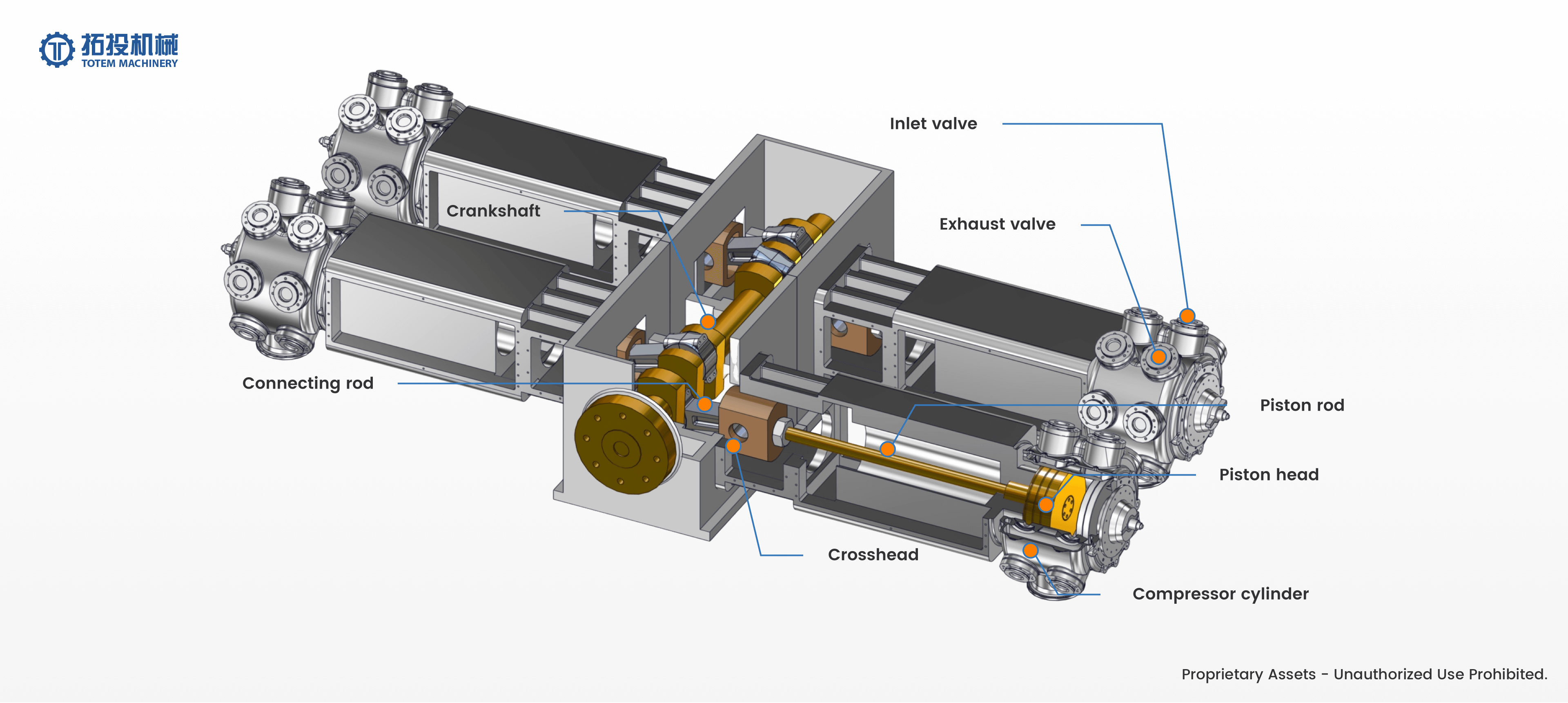
The true value of our comprehensive manufacturing capability lies in the integrated understanding and precise manufacturing control of these key components. When cylinder blocks, valves, piston rods, crossheads, connecting rods, and crankshafts are sourced from different origins, slight variations in machining tolerances can lead to accelerated wear, increased vibration, or compromised sealing. By adopting an integrated solutions approach, Totem Machinery eliminates these compatibility risks. Every component is engineered and machined with the entire assembly in mind. This unified dimensional control guarantees that all parts fit together accurately during assembly and interact smoothly during operation.
Providing structurally compatible and performance-stable compressor cylinder component solutions is our primary objective. For industrial gas applications, where equipment downtime can lead to significant operational losses, the reliability of the reciprocating compressor is critical. Our integrated manufacturing capability means that the piston rod aligns properly with the cylinder bore, the crosshead moves with minimal friction, and the valves operate in exact synchronization with the compression cycle. This holistic approach to component manufacturing significantly reduces mechanical stress, extends the service life of wear parts, and ensures stable gas delivery.
For procurement professionals and engineering teams, partnering with a manufacturer capable of delivering a complete set of core compressor components offers substantial strategic advantages. It simplifies vendor management, reduces the logistical complexities of sourcing individual parts, and provides a single point of accountability for component performance. Whether you are assembling new industrial gas compressors or conducting major overhauls on existing equipment, our integrated component solutions are designed to meet strict project requirements, lower long-term maintenance frequency, and support reliable, continuous industrial operations.


