English ![]()

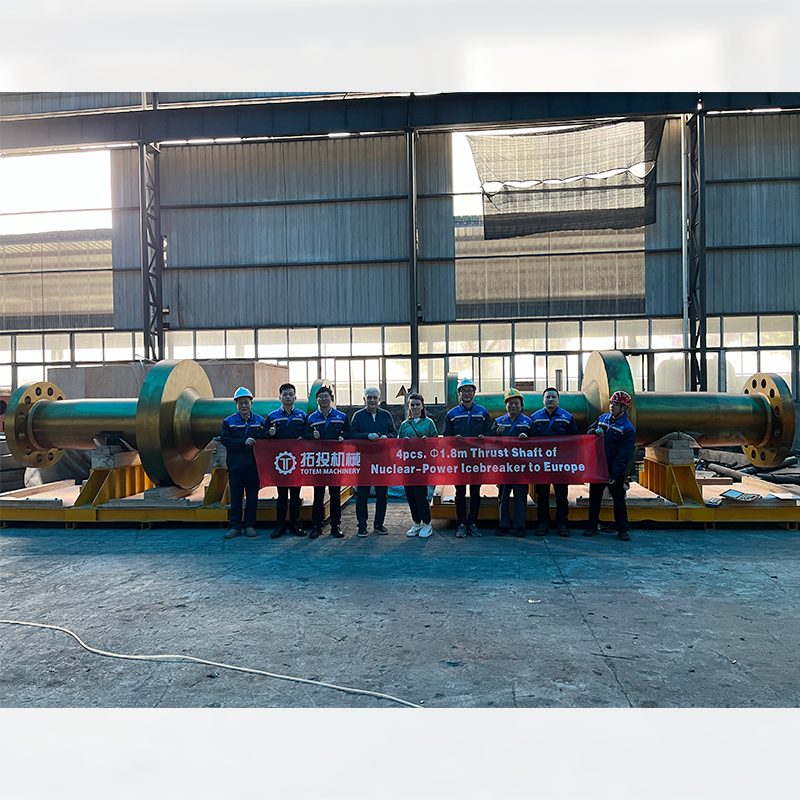
Why do polar ships need higher-standard thrust shafts? In marine propulsion systems, the thrust shaft is a key component that transmits power from the main engine to the propeller, directly affecting the reliability of the vessel’s navigation.
Read More →For reciprocating compressor cylinders operating in highly corrosive environments, 17-4PH martensitic stainless steel is the ideal material choice to meet HRC 30-34 hardness requirements. However, applying traditional complex three-layer water jacket structures to stainless steel results in severe casting defects, such as sand core sintering and shrinkage porosity. While the industry typically compromises by adopting a two-layer structure, this sacrifices the continuous water circulation and cooling efficiency. This article details TOTEM's engineering practice: by implementing a specific structural layout, we achieved effective communication between the water cavities without significantly increasing casting thermal joints. This solution successfully restores the circulating cooling path while ensuring the internal density of the casting, providing a reliable manufacturing path for complex stainless steel cylinder blocks.
Read More →This article compares the traditional three-layer structure and systematically analyzes the advantages of the two-layer structure for stainless steel compressor cylinder blocks in casting process, cooling efficiency, strength, sand removal and maintenance, and reliability. It serves as a reference for the selection and design of medium- and high-pressure, high-speed reciprocating compressors.
Read More →Why do polar ships need higher-standard thrust shafts? In marine propulsion systems, the thrust shaft is a key component that transmits power from the main engine to the propeller, directly affecting the reliability of the vessel’s navigation.
Read More →For reciprocating compressor cylinders operating in highly corrosive environments, 17-4PH martensitic stainless steel is the ideal material choice to meet HRC 30-34 hardness requirements. However, applying traditional complex three-layer water jacket structures to stainless steel results in severe casting defects, such as sand core sintering and shrinkage porosity. While the industry typically compromises by adopting a two-layer structure, this sacrifices the continuous water circulation and cooling efficiency. This article details TOTEM's engineering practice: by implementing a specific structural layout, we achieved effective communication between the water cavities without significantly increasing casting thermal joints. This solution successfully restores the circulating cooling path while ensuring the internal density of the casting, providing a reliable manufacturing path for complex stainless steel cylinder blocks.
Read More →This article compares the traditional three-layer structure and systematically analyzes the advantages of the two-layer structure for stainless steel compressor cylinder blocks in casting process, cooling efficiency, strength, sand removal and maintenance, and reliability. It serves as a reference for the selection and design of medium- and high-pressure, high-speed reciprocating compressors.
Read More →Match thrust vs journal bearings to radial and axial loads to prevent rotor crashes and downtime. Expert selection guide for engineers.
Read More →Learn to select thrust bearings to prevent axial displacement, downtime, and drivetrain damage. Compare load, speed, and lubrication limits.
Read More →Prevent propeller shaft bearing failures. Learn oil vs water lubrication, sizing, and alignment to boost vessel reliability and cut downtime.
Read More →