


| Quantity: | |
|---|---|
The Tin-Based Babbitt Bushing (often referred to as a babbitt bearing sleeve) serves as the foundational load-bearing component within steam turbine shafting and steam turbine sliding bearing systems. Its reliability and structural integrity directly influence the operational stability, safety margins, and overall service lifecycle of large-scale rotating equipment. Engineered specifically for demanding industrial environments characterized by high rotational speeds, elevated temperatures, and continuous heavy loads, our high-strength tin-based babbitt alloy bushing utilizes a robust alloy steel base material. Approximately 90% of the active working surface is lined with a high-density tin-based babbitt alloy. This specialized configuration acts as a critical safeguard, designed to protect high-value rotor journals from severe friction damage, thereby minimizing the risk of unplanned downtime and ensuring continuous productivity for power generation and heavy industrial facilities.
Our tin-based babbitt alloy bushing delivers exceptional anti-galling properties, featuring outstanding embeddability to absorb microscopic foreign particles and conformability to adapt to slight shaft misalignments. Even under conditions of fluctuating lubrication or short-term abnormal operation, this sacrificial lining effectively protects critical rotor journals from severe wear and scoring. For procurement and maintenance teams, this translates directly to a significant reduction in equipment damage risks and a decrease in unscheduled maintenance costs over the equipment's lifecycle.
The inner surface oil groove architecture features an optimized hydrodynamic profile. This specific geometry facilitates the rapid formation of a stable, uniform oil film during operation. By maintaining consistent fluid lubrication, the bushing effectively reduces the friction coefficient between moving parts and dampens operational vibrations, significantly improving the long-term running smoothness of industrial steam turbines and extending the operational intervals between scheduled overhauls.
Engineered to maintain a dense alloy structure with uniform thickness, the bushing exhibits exceptional bonding force between the babbitt lining and the steel shell. This strong metallurgical bond ensures that the sliding bearing can withstand continuous, alternating heavy loads without experiencing peeling, cracking, or delamination, providing dependable structural stability for long-term continuous operation.
The following technical parameters outline the standard specifications and customization capabilities of our steam turbine sliding bearing bushings. These metrics are designed to help procurement engineers verify compatibility with existing turbine systems and ensure adherence to stringent industrial standards.
Parameter | Standard Value & Customization Range |
Base Material | High-Strength Steel / Alloy Steel (Customizable) |
Lining Material | Premium Tin-Based Babbitt Alloy |
Structure Type | Solid / Split (Customizable) |
Applicable Bearing Types | Journal Bearing, Thrust Bearing, Tilting Pad Bearing |
Key Surface Roughness | Ra0.4 to Ra0.8 |
Non-Destructive Testing | UT / PT Full Inspection |
Adaptation Standard | Compatible with Multiple International Industrial Standards |
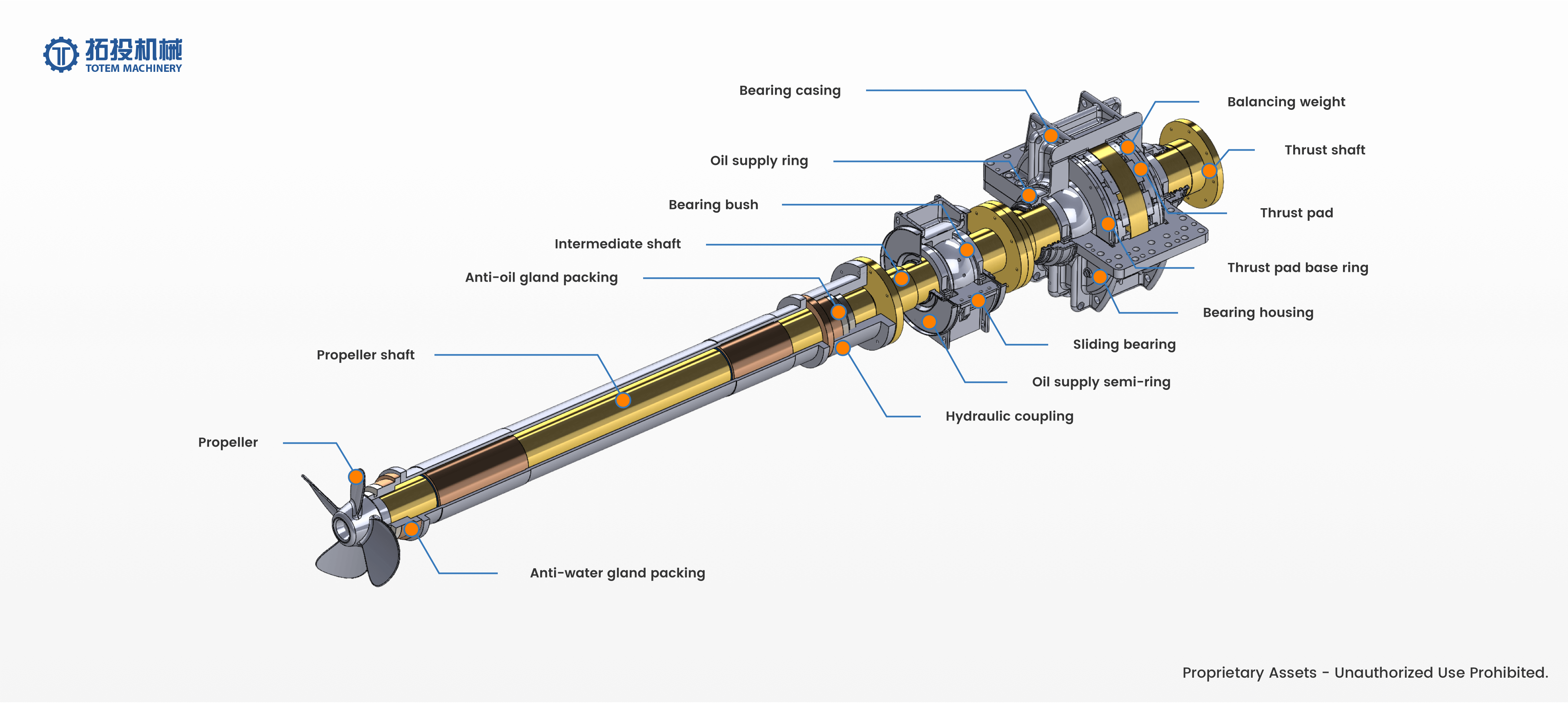
Our steam turbine sliding bearing babbitt bushing is widely adapted to serve as a core component in heavy industry sectors. It is highly suitable for industrial steam turbines, power generation steam turbines, marine propulsion systems, hydropower units, thermal power units, and various large-scale rotating machinery. By maintaining stable lubrication and load-bearing performance under long-term harsh working conditions, it fully meets the strict reliability requirements of industrial operation, continuous power generation, and demanding marine engineering projects.
The manufacturing of a steam turbine sliding bearing bushing requires a highly controlled machining process to ensure long-term operational stability under high-speed and heavy-load conditions. By combining premium raw materials with standardized precision machining, we provide reliable components that help reduce maintenance frequency and lower operational risks for industrial rotating equipment.
The foundation of a durable sliding bearing lies in the precise selection and combination of base metals and lining materials. We strictly select high-strength steel or structural alloy steel as the base material. This robust steel backing provides exceptional structural rigidity, preventing deformation during continuous high-speed turbine operation and ensuring secure installation within the bearing housing.
For the working surface, we utilize high-purity tin-based babbitt alloy as the lining. The tin-based alloy is chosen for its superior embeddability, conformability, and anti-seizure properties. By implementing strict element composition control during the casting process, we prevent the formation of hard spots or porosity. This ensures stable material performance, allowing the bearing to safely absorb microscopic foreign particles and adapt to slight shaft misalignments, thereby protecting the expensive turbine rotor journals from scoring or excessive wear.
To guarantee the dimensional accuracy and mechanical integrity of the steam turbine sliding bearing bushing, we execute a standardized, full-process precision machining flow. Each step is carefully monitored to meet rigorous industrial tolerances:
Rough and Finish Turning of the Outer Circle: The outer diameter undergoes systematic rough and finish turning to strictly control roundness and dimensional accuracy. A precise outer profile ensures a proper interference fit with the bearing pedestal, which is critical for effective heat dissipation and vibration dampening during turbine operation.
Precision Milling of Keyway: Anti-rotation keyways are machined using precision milling equipment with strict tolerance control. Accurate keyway dimensions prevent any unwanted rotational movement or shifting of the bearing bushing within its housing, ensuring reliable positioning under fluctuating loads.
Precision Boring of Inner Hole: The babbitt alloy lining is subjected to precision boring to achieve optimal coaxiality and surface precision. This step establishes the foundational geometry of the inner bore, ensuring uniform clearance between the bearing and the rotor, which is essential for balanced load distribution.
Manual Scraping of Working Surface: This is a highly specialized and critical procedure for white metal bearings. Experienced technicians perform manual scraping to create specific contact points and microscopic oil pockets on the babbitt surface. This meticulous hand-finishing process is vital for meeting the demanding oil film formation requirements. The scraped surface facilitates the rapid establishment of a hydrodynamic oil film, which significantly reduces the friction coefficient, prevents metal-to-metal contact during startup and shutdown, and ultimately extends the service life of the bearing system.


To ensure the ultimate reliability and operational safety of the steam turbine sliding bearing bushing, we implement a rigorous and scientific product inspection protocol. Following the completion of the machining phase, precise dimensional measurement and calibration are conducted, with a particular focus on the inner hole size. Utilizing advanced measuring tools, our quality control inspectors meticulously verify the inner diameter dimensions to guarantee absolute compliance with the specified engineering drawings and technical requirements. This critical calibration step ensures the optimal clearance for the lubricating oil film, which is essential for reducing friction and preventing overheating during high-speed rotation. Accurate dimensional control directly translates to seamless assembly, reducing installation time and minimizing the risk of operational failure for our clients.
Beyond surface and dimensional checks, the internal integrity of the tin-based alloy lining and the base material is paramount. Therefore, after finishing the main processes, the bearing bushing is subjected to comprehensive Ultrasonic Testing (UT). This non-destructive testing (NDT) method is highly effective in detecting hidden internal material defects that cannot be seen by the naked eye. By transmitting high-frequency sound waves through the component, we can accurately identify potential issues such as non-metallic inclusions, shrinkage cavities, porosity, or micro-cracks within the alloy bonding zone. Identifying and eliminating these internal flaws before delivery is crucial, as such defects could compromise the load-bearing capacity and lead to premature fatigue or unexpected downtime under heavy industrial loads. Our strict UT inspection provides purchasing managers and engineers with the confidence that the delivered bearings possess exceptional structural soundness.
Measurement and Calibration
UT
Relying on our comprehensive quality control procedures and scientific inspection methods, we ensure that every steam turbine sliding bearing bushing delivered meets rigorous industrial standards. By thoroughly verifying both dimensional accuracy and internal material soundness, we guarantee optimal load-bearing capability, superior wear resistance, and outstanding operating stability after assembly. This meticulous approach to product inspection significantly lowers the procurement risk for our clients, ensuring that the components will perform reliably even in demanding environments. Consequently, our inspected bearing bushings are widely trusted and utilized in critical bearing systems across various sectors, including marine engineering, hydropower stations, thermal power plants, and other heavy-duty industrial rotating equipment. Ultimately, these rigorously tested components serve as fundamental parts that safeguard the long-term, safe, and continuous operation of the entire shaft system, helping facilities minimize maintenance downtime and optimize overall productivity.
The tin-based alloy lining of a steam turbine sliding bearing bushing is a precision-engineered surface critical for rotor stability. Because babbitt metal is relatively soft, it is highly susceptible to mechanical damage, scratches, and environmental corrosion during international transit. To guarantee that your critical components arrive at the installation site in flawless condition, we have developed a stringent multi-layer protective packaging system. This comprehensive approach is specifically designed to withstand the harsh conditions of long-distance sea freight, rough land transport, and rapid air shipments, ensuring zero degradation of the bearing's performance characteristics.
We adopt a highly secure, multi-layer protective packaging solution for every industrial bearing shipment:
Inner layer: Critical surfaces, especially the machined babbitt alloy lining and mating faces, are meticulously coated with premium anti-rust oil. The entire bearing is then tightly wrapped with Volatile Corrosion Inhibitor (VCI) anti-corrosion paper. This combination effectively isolates the metal from air and moisture, preventing oxidation and salt spray corrosion, which is particularly crucial for extended ocean voyages.
Cushioning layer: To counteract dynamic loads, vibrations, and potential impacts during transit, we utilize advanced shock-absorbing materials. The bearing is securely nested using thick pearl cotton, high-density foam, and customized wooden positioning blocks. This custom-fit internal structure prevents any displacement within the box, safeguarding the delicate sliding surfaces from bruising or deformation.
Outer layer: The final line of defense is a heavy-duty export wooden case. Constructed from reinforced, fumigation-free plywood, these sturdy crates are engineered to bear the heavy weight of industrial turbine bearings. They feature reinforced structural supports suitable for safe handling by forklifts and overhead cranes at ports and warehouses, ensuring structural integrity from our facility to your plant.
Beyond our standard export packaging, fully customized packaging solutions are available according to specific client requirements. We understand that a planned inventory restock differs vastly from an emergency power plant outage maintenance scenario. Therefore, we can adapt the protection level, cushioning method, internal fixing structure, and outer case design to align with your unique transportation conditions and project timelines. Whether you require vacuum-sealed moisture barriers for prolonged tropical storage or compact, lightweight crating for expedited air freight, our logistics team ensures your components are delivered safely and efficiently.
Selecting the right supplier for heavy machinery components is a critical decision that impacts the long-term reliability of your operations. TOTEM MACHINERY is committed to delivering comprehensive solutions that mitigate procurement risks and enhance operational stability.
TOTEM MACHINERY focuses exclusively on high-precision bearing component manufacturing for heavy industries. We possess mature casting and machining processes tailored for complex babbitt-lined bearings. Combined with a strict full-process quality control system and complete non-destructive testing capabilities, we ensure that every product leaving our facility meets stringent industrial standards. This mature manufacturing ecosystem guarantees dimensional accuracy, superior bonding strength of the alloy, and consistent performance, providing peace of mind for procurement managers and engineering teams alike.
We have cultivated extensive, long-term service experience working directly with industrial equipment manufacturers, power plant operators, shipbuilding contractors, and engineering project integrators worldwide. Our deep understanding of global industrial demands allows us to provide high-reliability products, flexible customization, and professional technical support. By partnering with TOTEM MACHINERY, clients can effectively reduce operation risks, minimize costly equipment downtime, and significantly improve overall equipment efficiency. We strive to be a dependable link in your supply chain, supporting your ongoing success in demanding industrial environments.


