
Views: 0 Author: Site Editor Publish Time: 2026-07-06 Origin: Site
An incorrectly specified propeller shaft often leads to premature bearing wear, harmonic vibration, and catastrophic underway failures. For commercial and high-performance vessels, these mechanical breakdowns result in unacceptable downtime and exceptionally high dry-docking costs. Off-the-shelf components frequently fail to meet exact load and alignment requirements. Specialized hull designs and complex repower projects always demand highly tailored engineering solutions. Specifying a highly reliable custom shaft requires you to balance material yield strength, precise machining tolerances, and seamless component integration. You must consider how it interacts alongside other drivetrain elements to ensure long-term operational longevity. In this article, you will learn how to accurately assess operational loads. We will help you select optimal alloy grades for specific marine environments. We also explain why advanced machining tolerances matter. Finally, we show you how to audit potential manufacturing partners for your custom propulsion needs.
Material dictates lifespan: Selecting the correct alloy (based on Pitting Resistance Equivalent Number - PREN) is critical for preventing crevice corrosion in salt water.
Manufacturing method matters: High-torque applications often require forged over standard rolled bar stock.
Precision eliminates vibration: Strict straightness tolerances and exact taper fits are non-negotiable for long-term bearing and seal survival.
System context is required: A shaft cannot be specified in a vacuum; it must be matched precisely to the marine propeller, gearbox, and stuffing box parameters.
The primary goal of a drivetrain is translating raw engine torque directly to the water. We must achieve this transfer without inducing torsional deflection or long-term metal fatigue. A poorly matched Propeller Shaft absorbs excess twisting stress from heavy diesel engine pulses. Over time, this constant stress leads to early mechanical failure. You need to evaluate several input dimensions accurately before finalizing a design.
Evaluate these core input parameters during the initial engineering phase:
Maximum engine horsepower (BHP) and maximum shaft RPM at full throttle.
Gearbox reduction ratios, noting continuous versus intermittent duty cycles.
The overall weight, diameter, and pitch of the Marine Propeller you plan to install.
Mitigating structural risk involves adhering to strict safety margins. Classification societies like ABS and DNV mandate specific safety factors. We calculate these minimums based on the vessel’s distinct operational profile. Commercial towing vessels face sudden shock loads and sustained high torque. Leisure crafts generally experience lighter, intermittent stresses. Creating an adequate safety margin protects your vessel from catastrophic shaft shearing. Heavy seas and submerged debris strikes demand robust safety calculations.
| Operational Profile | Typical Load Characteristic | Recommended Minimum Safety Factor |
|---|---|---|
| Leisure / Light Duty | Intermittent high RPM, low shock | 2.0 - 2.5 |
| Commercial Passenger | Continuous steady RPM, medium load | 3.0 - 3.5 |
| Heavy Towing / Tug | High torque, frequent heavy shock loads | 4.0 - 5.0+ |
| Ice Class Vessels | Extreme torsional shock, sub-zero impacts | Defined by specific Class Notation |
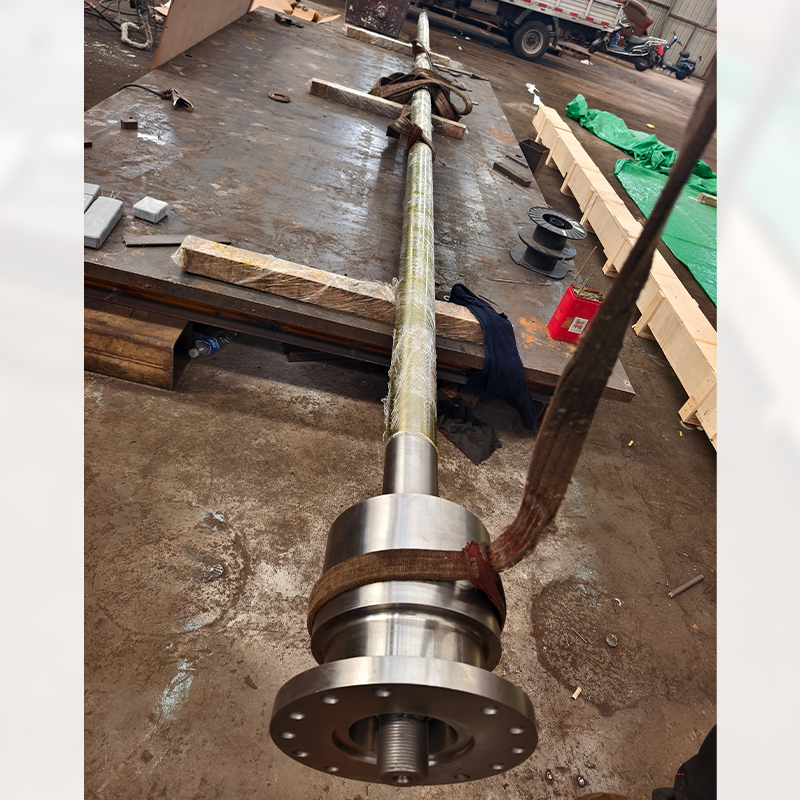
Choosing the right material grade dictates the lifespan of your drivetrain. The correct alloy prevents devastating crevice corrosion in stagnant seawater environments. Stainless steel relies on oxygen to maintain a protective chromium oxide layer. Stagnant water deprives the metal of oxygen, accelerating rapid localized pitting.
Consider these primary material solution categories:
Standard Austenitic/Ferritic Stainless (e.g., 316L, 304): These are cost-effective but highly susceptible to crevice corrosion in stagnant seawater. They also offer a significantly lower overall yield strength.
Aquamet / Nitronic Alloys (e.g., AQ 17, 19, 22): These represent the industry standards. They offer balanced strength and excellent corrosion resistance. AQ 22 provides the highest resistance due to its rich molybdenum content.
Duplex/Super Duplex Stainless Steel: These advanced alloys deliver a superior strength-to-weight ratio. They provide exceptional pitting resistance for severe heavy-duty marine applications.
Evaluating manufacturing approaches is equally critical. Turned bar stock works well for standard, lower-load applications. However, high-torque and large-diameter commercial applications require a different manufacturing approach. You will almost certainly need a Forged Propulsion Shaft. Forging manipulates the internal metal structure under extreme pressure. It produces a highly directional grain flow following the component contour. This specific process maximizes fatigue resistance and ensures absolute structural integrity under heavy loads.
Selecting a material boasting high yield strength provides a distinct engineering advantage. It allows you to safely reduce the physical shaft diameter. A smaller diameter directly reduces overall vessel weight. It also minimizes hydrodynamic drag beneath the hull, improving fuel efficiency. However, you must ensure the inherent stiffness remains sufficient. Adequate stiffness actively prevents harmonic whipping at high rotational speeds.
Even the highest-grade alloy will fail rapidly if machining tolerances remain loose. Real-world implementation demands extreme precision to guarantee smooth operation. Poor machining creates invisible weak points along the drivetrain.
Map these specific features directly to their operational outcomes:
Straightness Tolerance: You must specify strict runout tolerances. Keeping runout below 0.002 inches per foot is industry standard. This precision prevents premature cutlass bearing damage and excessive packing gland wear.
Taper and Keyway Precision: Engaging professional Custom OEM Machining ensures your propeller hub mates securely. It must achieve at least 80% contact area on the taper. Machinists verify this using Prussian blue transfer dye. This exact fit prevents localized stress risers and sheared keys.
Thread and Radius Specifications: Proper radiused keyways and machined relief grooves are vital. We call this process "spooning" the keyway. It actively mitigates stress concentrations. These microscopic stress points are the primary origin for deep shaft fractures.
Assuming standard mass-produced machining is "good enough" presents a massive risk. It almost always leads to micro-misalignment during custom vessel installations. Over time, these small misalignments multiply into destructive drivetrain vibrations. Precision custom machining eliminates these destructive variables completely.
The shaft serves as the central artery of your entire drivetrain. Its exact specifications dictate the functional requirements for all surrounding components. You cannot specify it in a vacuum. A comprehensive system-level evaluation is absolutely mandatory for long-term success.
Perform these crucial compatibility checks during specification:
Bearings and Struts: The final shaft diameter must account for exact bearing clearances. Proper clearance maintains essential hydrodynamic lubrication. Without adequate water flow, nitrile rubber bearings overheat and melt rapidly.
Seals and Packings: You must specify the surface finish accurately. We typically measure this in micro-inch RMS at the seal journals. A highly polished finish prevents rapid packing material wear. It stops destructive water ingress effectively.
Couplings: You must specify the correct transmission coupling interface. Whether you choose flanged, split, or a heat-shrunk interference fit, proper specification matters. It ensures true concentricity. It connects the gearbox directly to the propeller without dangerous deviation.
Integrating high-quality Marine Propulsion System Parts correctly relies heavily on precision installation. Proper optical or laser alignment during the installation phase is required. Hull deflection on blocks differs from hull shape in the water. Final alignment checks validate your custom manufacturing specifications. They guarantee smooth, vibration-free operation underway.
Knowing how to audit a supplier's core capability is a critical skill. They must reliably deliver custom components on time and precisely to spec. A failed delivery schedule delays critical vessel launches and dry-dock departures.
Review these key partner criteria before committing to a contract:
In-house capabilities: Do they control the actual forging, heat treating, and CNC machining processes? Managing these complex steps under one roof significantly reduces quality control risks. Fragmented supply chains introduce unacceptable variables.
Quality Assurance & Compliance: Can the partner provide comprehensive material test reports (MTRs)? These reports verify chemical composition and tensile strength. They should perform ultrasonic testing (UT) to detect hidden internal voids. They must also supply relevant classification society certificates.
Scalability and Lead Times: Can the manufacturer meet tight emergency dry-dock schedules? AOG (Aircraft-on-Ground) or Vessel-on-ground equivalents demand rapid turnarounds. They must accelerate production workflows without ever sacrificing dimensional quality.
You should always request an initial engineering review as your next step. Share your exact vessel schematics and drivetrain load calculations. Do this before requesting a formal financial quote. This transparent communication ensures the manufacturer truly understands your operational context.
Specifying a custom propeller shaft requires a rigorous evaluation of torque loads. You must also account for harsh environmental conditions and system-wide integration. Prioritize advanced material science and strict machining tolerances above all else. High corrosion resistance and yield strength matter far more than initial cost savings. This engineering mindset prevents exponential downtime costs later. Consult directly with dedicated marine engineering specialists. Ask them to review your specific drivetrain parameters thoroughly. Finally, secure a precise, compliance-backed custom shaft specification tailored specifically to your vessel.
A: Visual inspection is highly unreliable for identifying marine alloys. True identification requires reviewing the original manufacturer's stamp, which is usually located on the coupling end. Alternatively, you can perform chemical spark testing or utilize handheld XRF (X-ray fluorescence) alloy analyzers for precise metallurgical breakdowns.
A: Aquamet 17 offers high overall strength but features lower corrosion resistance. This makes it highly suitable for freshwater operations or fast-moving vessels. Aquamet 22 contains higher levels of molybdenum and nitrogen. It offers superior pitting and crevice corrosion resistance, making it ideal for harsh saltwater environments.
A: Strict industry standards typically require a minimum of 70% to 80% blue-fit contact area. This contact happens directly between the machined shaft taper and the internal propeller hub. Achieving this precise fit ensures highly secure power transmission and actively prevents keyway shearing under load.
A: Vessels experience hull deflections, engine mount settling, and structural aging over time. Variations in legacy gearbox couplings often mean standard dimensional shafts cannot achieve perfect concentric alignment. Custom machining compensates for these real-world vessel irregularities, ensuring the exact alignment required to eliminate destructive drivetrain vibration.


