

| Quantity: | |
|---|---|
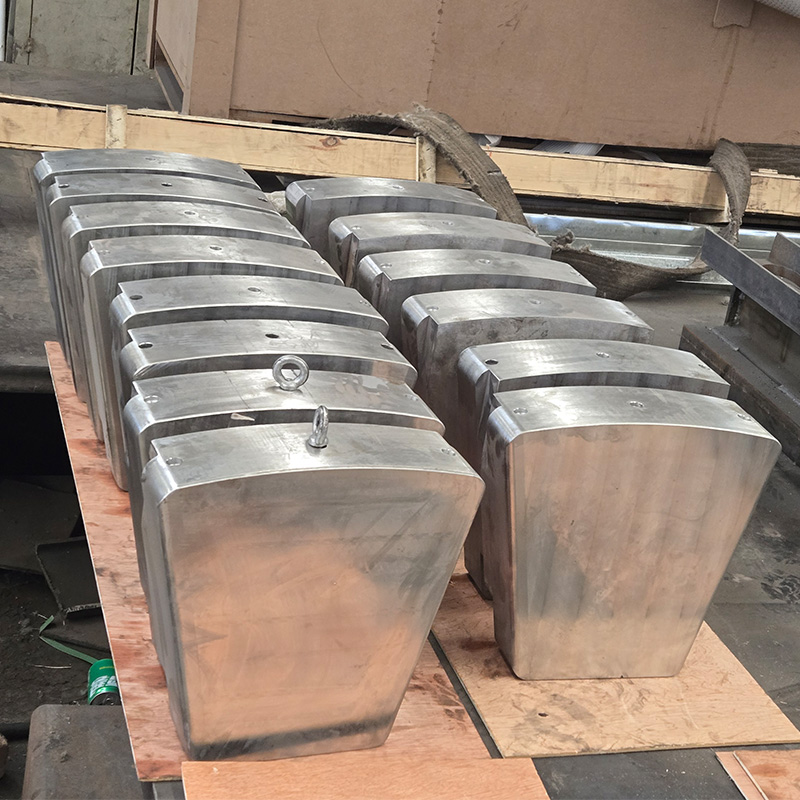
TOTEM MACHINERY’s 38CrNi3MoV Dynamic Balance Block (tilting pad bearing balancing weight) serves as a high-precision core component engineered specifically for tilting pad thrust bearing systems. In critical high-speed rotating equipment, maintaining absolute operational stability is a primary concern for engineers and procurement specialists. This specialized balance block for tilting pad thrust bearing assemblies delivers reliable load balancing and vibration suppression, acting as an indispensable safeguard for complex machinery. Working in strict coordination with thrust pads and supporting ring bases, it fine-tunes internal load distribution and corrects structural imbalances. By mitigating these operational stresses, the balance block ensures the stable, long-term operation of thrust bearing systems even under the most demanding and harsh industrial environments.
This high-precision dynamic balance block is meticulously designed to compensate for local mass inconsistencies and uneven force distribution during axial load transmission. By actively correcting the stress exerted on the thrust pad assembly, it effectively eliminates local load concentration points that often lead to premature component failure. Furthermore, this balancing weight optimizes the fitting performance of the thrust pads, which directly enhances the stability of the vital lubricating oil film. The result is a significant reduction in abnormal wear patterns and operational vibration risks during the continuous operation of high-speed equipment, ultimately lowering maintenance frequency and operational downtime.
Engineered specifically for extreme working conditions, our 38CrNi3MoV balance block delivers superior impact resistance and exceptional fatigue strength. The high-grade alloy steel construction allows the component to maintain strict dimensional stability even under continuous, high-load operational cycles. Ultra-precision machining ensures an exact, tight fit with all mating components within the bearing assembly. This precision minimizes assembly deviation, reduces mechanical friction, and significantly extends the service life of the entire thrust bearing system, providing a reliable return on investment for heavy-duty industrial applications.
The following technical specifications detail the core performance metrics and dimensional parameters of our dynamic balance block, ensuring it meets the rigorous demands of industrial thrust bearing systems.
Parameter | Standard Specification |
Core Material | 38CrNi3MoV High-Strength Alloy Steel |
Hardness Range | 28-32 HRC (fully customizable) |
Flatness Tolerance | ±0.005mm |
Applicable Temperature Range | -40℃ × 350℃ |
Surface Treatment | Anti-rust Oil Coating (custom anti-corrosion available) |
Coaxiality Tolerance | ≤0.008mm |
Max Adaptable Axial Load | Up to 2500kN (customizable per design) |
Compatible Components | Tilting Pad Thrust Bearings, Thrust Pad Base Rings |
Our dynamic balance block for thrust bearings is widely specified and utilized in critical thrust bearing devices across a multitude of core industrial sectors. It provides essential support for marine propulsion systems, ensuring reliable navigation and power transmission. In the energy sector, it is a critical component for industrial steam turbines, hydro turbines, and thermal power generation equipment, where uninterrupted operation is mandatory. Additionally, it serves as a vital stabilizing element in petrochemical rotating machinery and high-speed compressor sets, accommodating the stringent safety and performance requirements of these heavy industries.
The component is heavily optimized for both continuous steady-state operation and highly fluctuating load conditions. It adapts effectively to challenging industrial environments characterized by high humidity, extreme temperature variations, and heavy mechanical impacts. Regardless of the operational challenges, this balance block maintains its structural integrity and balancing performance without degradation, offering engineers and procurement specialists a dependable solution for complex rotating machinery projects.

The foundation of a reliable industrial thrust bearing system relies heavily on the materials utilized. For this specific balance block component, we rigorously select premium 38CrNi3MoV alloy steel. This material is highly regarded in heavy machinery manufacturing due to its outstanding tensile strength, superior impact toughness, and reliable long-term fatigue resistance. In high-speed rotating equipment, components are constantly subjected to immense stress and continuous operational demands. By utilizing 38CrNi3MoV alloy steel, we ensure that the balance block can withstand these extreme mechanical loads without deformation or premature failure. This careful material selection directly translates into enhanced operational stability, reduced maintenance frequency, and a significantly extended service life for the entire thrust bearing assembly, providing substantial value for industrial procurement projects.
Achieving the required mechanical performance necessitates a highly controlled manufacturing environment. Our full-process precision machining flow is centered around advanced 5-axis CNC milling technology. This sophisticated machining capability allows us to process all critical load-bearing surfaces and assembly reference planes with exact accuracy in a single setup. By maintaining strict control over dimensional accuracy and surface flatness, we guarantee that the balance block will integrate smoothly with other bearing components, ensuring an even distribution of thrust loads during operation. Following the precise CNC milling phase, every component undergoes a thorough industrial cleaning process to remove any residual machining fluids or micro-debris. Subsequently, a uniform layer of premium anti-rust oil is meticulously applied. This protective coating effectively prevents oxidation and corrosion during transit and storage, ensuring the components arrive at your facility in optimal condition, ready for immediate assembly.
Recognizing that industrial rotating machinery often requires highly specific configurations, TOTEM MACHINERY provides comprehensive, drawing-based custom machining services for our alloy steel balance blocks. We work directly from customer-provided technical drawings, thrust pad layout designs, and specific operational parameters. Our engineering and production teams carefully analyze these requirements to execute a customized manufacturing plan. This tailored approach ensures that the final machined component offers an exact fit with existing mating parts within your specific equipment infrastructure. By accommodating custom specifications, we help procurement managers and engineers eliminate compatibility issues, streamline the installation process, and ensure that the upgraded or replacement parts meet the exact mechanical demands of their unique industrial applications.
Beyond individual component manufacturing, we possess comprehensive capabilities to provide full thrust bearing system supporting solutions. We understand that the reliable operation of a thrust bearing relies on the precise coordination of multiple interconnected parts. Therefore, we supply a complete range of supporting components, including babbitt alloy thrust pads, precision-machined base rings, heavy-duty thrust shafts, reliable white metal bearing bushes, durable bearing housings, and specialized oil supply semi-rings. By sourcing these critical components from a single, capable manufacturer, clients benefit from unified machining standards and a cohesive quality control protocol across the entire assembly. This integrated manufacturing strategy guarantees that all parts work together harmoniously, minimizing localized wear, optimizing hydrodynamic lubrication, and ultimately maximizing the operational efficiency and reliability of the complete thrust bearing system.


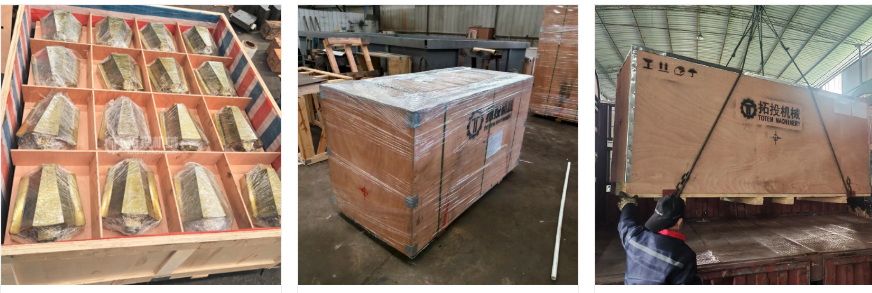
When sourcing industrial thrust bearing components globally, ensuring the structural integrity and surface finish of the Babbitt alloy thrust pads during long-distance transit is critical. We understand that overseas buyers need absolute assurance against rust, corrosion, and mechanical damage. Therefore, we have developed a strict, multi-layer protective packaging protocol designed to eliminate these concerns and ensure your components arrive in factory-grade condition.
We use a meticulously designed multi-layer protective packaging solution for all global transportation routes, focusing on environmental isolation and physical protection:
Inner Protective Layer (Moisture & Air Isolation): The delicate machined mating surfaces and critical end faces of the Babbitt alloy are highly susceptible to oxidation if exposed to harsh environments. Before packing, every component is thoroughly coated with an industrial anti-rust agent. Subsequently, the parts are wrapped in VCI (Volatile Corrosion Inhibitor) anti-corrosion paper. This advanced wrapping creates a sealed micro-environment that actively neutralizes corrosive elements, effectively isolating the pads from moisture and salt-laden air typically encountered during extended ocean freight.
Cushioning & Fixation Layer (Shock Absorption): To prevent any transit displacement that could compromise the precision-machined surfaces, we implement a highly effective internal cushioning system. Utilizing high-density pearl cotton, industrial-grade foam, and custom-engineered positioning blocks, each thrust pad is firmly secured within its casing. This layer is specifically designed to absorb heavy vibrations and mechanical shocks across all modes of transport, ensuring the Babbitt layer remains completely intact and free from impact deformation.
Outer Reinforced Layer (Structural Integrity): The final line of defense is our heavy-duty export wooden cases. Constructed with exceptional load-bearing capacity, these reinforced crates are built to withstand the rigors of international logistics. Whether your order is dispatched via sea, land, or air transportation, our outer packaging guarantees that the heavy industrial components are shielded from external compression and rough handling at port terminals.
Our commitment to safe delivery extends to comprehensive logistics management. To facilitate safe handling by port authorities and warehouse personnel, we apply clear, standardized handling marks on all exterior packaging. Essential indicators such as the center of gravity, designated lifting points, moisture protection umbrellas, and anti-tilt symbols are prominently displayed based on customer requirements. Furthermore, we offer fully customized packaging configurations tailored to meet specific project constraints, regional customs requirements, and unique transportation needs, ensuring a predictable delivery process directly to your facility.
Sourcing critical machinery components requires a reliable partner who understands the broader operational context of your equipment. As a dedicated manufacturer of thrust bearing components, TOTEM MACHINERY integrates decades of precision machining expertise with rigorous, full-process quality control. Our facility is equipped with advanced production machinery operated by highly skilled technicians. This foundation allows us to consistently deliver industrial components that strictly comply with international manufacturing standards, providing our global clients with dependable parts that meet exacting operational demands.
What truly distinguishes our approach is our holistic view of industrial service. We recognize that our clients require more than just isolated parts. We deliver not only single component machining but also comprehensive, full-system bearing and lubrication solutions. By understanding the intricate dynamics of your machinery, we provide strategic support that helps your equipment achieve safe, stable, and long-term operation. Our ultimate goal is to partner with you to minimize unexpected downtime, reduce ongoing maintenance costs, and maximize the overall lifecycle value of your industrial assets.