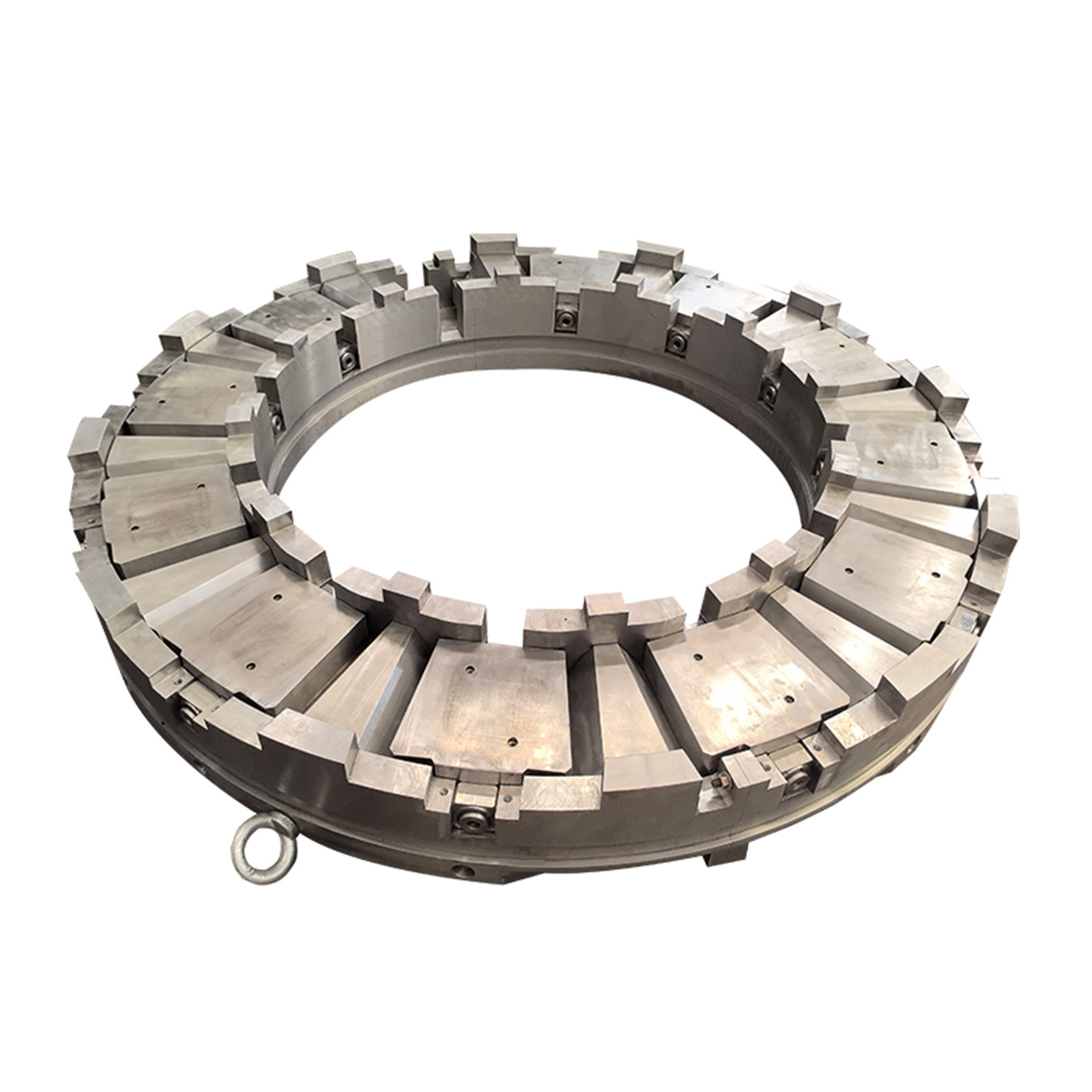
Marine Propulsion System Shafting is the core component of ship power propulsion systems, and its technological advancement directly determines propulsion efficiency, operational safety, and economic performance. This paper systematically reviews the design theory, key components, new materials, vibration control, and intelligent monitoring technologies of marine propulsion system shafting, covering critical technical domains including shafting alignment, vibration control, carbon fiber reinforced polymer (CFRP) composite drive shafts, water-lubricated bearing materials, and digital twin monitoring. Intelligent monitoring systems integrating multi-parameter sensors — vibration, temperature, strain, and oil condition — are examined in the context
Read More →Compare Babbitt vs. roller bearings. Learn how load, speed, and maintenance dictate selection to optimize heavy machinery reliability.
Read More →Comprehensive guide to Babbitt bearings. Learn about hydrodynamic lubrication, alloy selection, casting methods, failure analysis, and sourcing.
Read More →Marine Propulsion System Shafting is the core component of ship power propulsion systems, and its technological advancement directly determines propulsion efficiency, operational safety, and economic performance. This paper systematically reviews the design theory, key components, new materials, vibration control, and intelligent monitoring technologies of marine propulsion system shafting, covering critical technical domains including shafting alignment, vibration control, carbon fiber reinforced polymer (CFRP) composite drive shafts, water-lubricated bearing materials, and digital twin monitoring. Intelligent monitoring systems integrating multi-parameter sensors — vibration, temperature, strain, and oil condition — are examined in the context
Read More →Compare Babbitt vs. roller bearings. Learn how load, speed, and maintenance dictate selection to optimize heavy machinery reliability.
Read More →Comprehensive guide to Babbitt bearings. Learn about hydrodynamic lubrication, alloy selection, casting methods, failure analysis, and sourcing.
Read More →A reciprocating compressor is a critical industrial machine that converts mechanical energy into gas pressure energy. It is widely used in industries such as petrochemicals, food and pharmaceuticals, electronics and semiconductors, and hydrogen energy.In March 2026, a Chinese manufacturer successfully achieved mass production of a Class 0 oil-free reciprocating compressor, breaking the long-standing monopoly of overseas companies in high-end oil-free sealing technologies.
Read More →Learn how tilting pad bearings stabilize high-speed rotors, prevent oil whirl, and manage heat in critical industrial turbines and compressors.
Read More →Many bearing problems do not begin after months of operation. They begin on the day the part is installed.
Read More →