
Views: 0 Author: Site Editor Publish Time: 2026-06-16 Origin: Site
In heavy machinery operation, the stakes are incredibly high. Incorrect bearing selection often leads to catastrophic rotor failure, unplanned downtime, and severe financial consequences. For engineers, plant managers, and procurement specialists, selecting a Babbitt Bearing is never a generic commodity purchase. It represents a highly engineered solution requiring precise matching of alloy characteristics, load demands, operating speed, and lubrication dynamics. Roller bearings might suffice for lighter, intermittent loads. However, heavy-duty industrial applications demand specialized fluid film performance to protect highly expensive shafts and rotors.
This guide outlines the critical engineering criteria, material comparisons, and manufacturing quality indicators necessary to specify the correct fluid film components for high-speed, high-load applications. You will learn how operating parameters dictate alloy choices and why foundry practices are essential for long-term reliability. Understanding these dynamics prevents premature equipment wear and disastrous system wipeouts.
Application matching: Babbitt bearings outperform roller bearings in continuous, high-speed, high-load applications due to hydrodynamic fluid film properties.
Alloy selection is binary but nuanced: Tin-based alloys dominate high-stress environments, while lead-based alloys offer cost efficiency and conformability for lower-speed, shock-heavy loads.
Temperature is the ultimate limit: Babbitt alloys lose structural integrity rapidly at elevated temperatures; precise thermal estimation and cooling strategies are non-negotiable.
Foundry practices dictate lifespan: Even the right alloy will fail prematurely without rigorous bonding processes (e.g., ultrasonic testing) and precise machining tolerances.
Engineers face a fundamental choice when designing or upgrading rotating machinery. You must decide between rolling element components and fluid film technologies. Rolling element bearings degrade under continuous heavy loads. Metal fatigue inevitably sets in over millions of operational cycles. In contrast, a properly designed Babbitt Bearing thrives in these exact conditions. The crossover point happens when shaft speed and load thresholds combine to create a robust hydrodynamic oil wedge. This pressurized fluid layer physically separates the rotating shaft from the stationary shell. At high RPMs, the hydrodynamic lift becomes so stable it entirely eliminates metal-to-metal contact.
Heavy machinery produces intense vibrations and operates in challenging environments. Babbitt alloys possess inherent softness. They absorb severe shock loads seamlessly. Furthermore, microscopic foreign particles inevitably enter industrial lubrication systems. Hard roller bearings crush these particles, causing immediate surface scoring and eventual spalling. The soft white metal alloy acts differently. It allows microscopic contaminants to embed safely below the surface layer. This sacrificial trait protects the much more expensive rotor or shaft from catastrophic damage.
Engineers often refer to the "infinite life" principle of fluid film bearings. Under ideal conditions, the rotor simply glides on pressurized oil indefinitely. However, we must balance this bold claim carefully. Infinite life relies entirely on a continuous, clean, and properly cooled oil supply. If the lubrication system fails, the soft metal surface wipes in seconds. System reliability depends as much on the oil pumps and filters as it does on the alloy itself.
Maintenance realities strongly influence procurement decisions. Replacing massive roller bearings on a multi-ton turbine requires specialized rigging, long factory lead times, and extensive labor hours. Rebabbitting offers a stark contrast. Repairing an existing shell often takes significantly less time and fewer resources. Technicians melt out the old degraded alloy, properly prepare the backing material, pour new metal, and machine it back to exact OEM specifications. This process restores the equipment to a like-new condition rapidly.
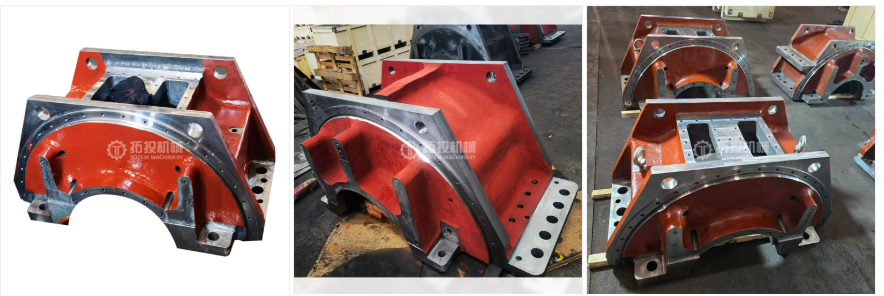
Selecting the right alloy formulation dictates the success of your rotating equipment. While custom blends exist, you generally choose between two primary categories: tin-based and lead-based formulations. Each offers distinct mechanical properties suited for specific operational environments.
Tin dominates high-stress, high-speed environments. Materials categorized under ASTM B23 Grade 2 and Grade 3 fall into this group. Tin offers exceptionally high compressive strength. It resists deformation even under immense fluid pressure. The material provides excellent corrosion resistance against degraded or acidic lubricating oils. It also maintains a lower friction coefficient during the critical startup phase before the fluid film fully forms. We specify tin-based alloys for critical machinery. Turbines, high-speed centrifugal compressors, and massive electric motors rely heavily on these grades. However, tin-based formulations present higher initial material costs. They also strictly require hardened steel shafts to prevent excessive wear during low-speed boundary lubrication phases.
Lead brings entirely different mechanical strengths to the table. Typical formulations include ASTM B23 Grade 7 and Grade 8. Lead provides superior conformability. It easily adjusts to slight shaft misalignments without failing. It also exhibits excellent emergency running properties. If the machine experiences a dry start, lead formulations resist immediate seizing better than tin. Furthermore, lead remains highly cost-effective for large-scale applications. You will frequently find lead-based alloys in low-speed heavy machinery. Rock crushers, rolling mills, and ball mills utilize these grades extensively. They excel in applications facing frequent start/stop cycles or heavy shock loads. Conversely, they remain highly susceptible to corrosion from acidic oils. They also suffer from a significantly lower load-carrying capacity at higher RPMs.
| Feature/Property | Tin-Based (e.g., Grade 2/3) | Lead-Based (e.g., Grade 7/8) |
|---|---|---|
| Compressive Strength | High (Maintains shape under pressure) | Moderate (Prone to extrusion under high load) |
| Corrosion Resistance | Excellent (Resists acidic oil degradation) | Poor (Vulnerable to oil oxidation byproducts) |
| Conformability | Moderate | Superior (Adjusts well to misalignment) |
| Ideal Applications | Turbines, Compressors, High-speed Motors | Crushers, Rolling Mills, Low-speed shafts |
| Relative Cost | Higher | Lower |
Engineering a reliable Babbitt Bearing demands precise mathematical evaluation. You cannot guess these operational parameters. Each variable directly impacts fluid film formation and long-term mechanical stability.
We must carefully calculate the maximum allowable pressure on the projected bearing area. Engineers determine this by dividing the total shaft weight by the effective bearing area (length multiplied by diameter). If the unit load exceeds the specific alloy's physical limits, the fluid film collapses. Material deformation follows immediately. Accurate load calculations ensure the hydrodynamic wedge remains stable under both steady-state and peak operational stress scenarios.
Hydrodynamic lift relies entirely on surface speed. We calculate Surface Feet Per Minute (SFPM) by evaluating the shaft diameter and operating RPM. You must match this speed to the specific lift capabilities of the selected alloy formulation. Too slow, and the oil film never fully forms, leaving the machine in a state of boundary lubrication. Too fast, and you risk excessive heat generation from intense fluid friction.
Heat destroys soft metal alloys quickly. Yield strength drops critically as operating temperatures exceed 150°F to 200°F (65°C - 93°C). Once the metal softens, it begins to wipe and smear across the shaft. Engineers utilize standard thermal estimation models during the initial design phase to predict heat generation. Proper cooling strategies are strictly non-negotiable. Furthermore, embedded Resistance Temperature Detectors (RTDs) or thermocouples are absolutely necessary for continuous condition monitoring. You must monitor real-time subsurface temperatures to prevent sudden wiping events.
The relationship between shaft clearance, oil viscosity, and minimum film thickness proves highly critical. The bearing bore must remain slightly larger than the shaft. Tight clearances increase localized heat but build very strong fluid pressure. Loose clearances run much cooler but risk severe structural instability and rotor vibration. Maintaining the exact specified diametrical clearance prevents disastrous metal-to-metal contact while keeping oil flow within safe thermal limits.
Even the perfect alloy specification fails if foundry practices fall short. Manufacturing execution matters just as much as theoretical engineering. Partnering with a reliable foundry ensures the finished product withstands industrial realities.
The metallurgical bond between the soft Babbitt layer and the hard backing shell represents the primary failure point. Backing materials typically include steel, bronze, or cast iron. If the chemical bond separates, thermal transfer stops immediately. The isolated alloy overheats, softens, and ultimately fails under load. Proper surface preparation and chemical tinning prior to casting prevent this catastrophic delamination.
Foundries employ different casting techniques depending on the geometry and application. Static casting works for certain complex geometries but often traps gasses within the cooling metal. This creates internal voids. Centrifugal casting provides a vastly superior alternative for cylindrical shells. The foundry spins the heated shell at high speeds during the pouring process. This high-speed rotation forces heavy impurities and trapped gasses inward toward the bore center. Machinists subsequently remove these impurities during final boring. Centrifugal casting significantly reduces porosity and improves the final micro-grain structure.
You must demand total transparency regarding Non-Destructive Testing (NDT). Quality foundries utilize ultrasonic testing (UT) to verify bond integrity across the entire shell surface. Sound waves detect microscopic voids between the backing material and the alloy. Foundries also apply dye penetrant testing (PT) to identify dangerous surface defects or hairline cracks. Never accept a finished component missing proper, certified NDT documentation.
Final machining achieves the exact bore profile required for complex rotor stability. Simple, low-speed applications often use standard cylindrical bores. However, high-speed, highly loaded rotors might require elliptical, lemon-bore, or complex multi-lobe profiles. Precision CNC machining prevents dangerous oil whirl phenomena. It ensures perfectly distributed fluid pressure across the entire load zone.
Procuring reliable fluid film bearings requires diligent vendor vetting and precise communication. You must provide specific operational data and demand strict manufacturing compliance.
Buyers must supply exact inputs to the manufacturer. Vague requests lead to poor performance and early failure. Ensure you gather the following details before requesting a quote:
Dimensional data: Exact shaft diameter, housing dimensions, and required diametrical clearance.
Speed metrics: Minimum startup speed, continuous operating RPM, and maximum overspeed limits.
Load profiles: Maximum static rotor weight and anticipated dynamic shock loads.
Lubrication details: Oil type, exact viscosity grade, flow rate, and inlet temperature.
Environmental factors: Known ambient conditions, extreme vibrations, or potential chemical hazards.
Verify vendor adherence to recognized international industry standards. The foundry should strictly follow ASTM B23 specifications for alloy composition and purity. Manufacturing processes should align closely with ISO 9001 guidelines. This guarantees repeatable quality, documented workflows, and traceable material origins.
Evaluate the vendor's aftermarket support structure. Determine if they offer rapid turnaround rebabbitting services. Quick, reliable repairs minimize costly unplanned downtime during sudden outages. Furthermore, evaluate their engineering capabilities. Can they successfully reverse-engineer heavily worn components without original factory drawings? Top-tier vendors utilize Coordinate Measuring Machines (CMM) and laser scanning to recreate legacy parts accurately. This capability proves invaluable for maintaining older equipment where OEM support no longer exists.
Specifying a highly reliable heavy-duty bearing requires carefully balancing alloy properties against strict operating parameters. Load, speed, and ambient temperature dictate the physical engineering limits. Understanding the distinct differences between tin-based and lead-based formulations empowers you to match the material to the exact mechanical application.
However, material selection represents only half the equation. You must partner with a foundry utilizing stringent NDT methods and proven centrifugal casting practices. Proper metallurgical bonding and precise CNC machining tolerances guarantee your theoretical lifespan matches actual field performance.
Do not leave critical machinery reliability to chance or incomplete data. Consult experienced application engineers today. Request a thorough technical review of your specific operating parameters, or submit your exact specifications to a certified foundry for a custom evaluation and manufacturing quote.
A: Standard safe operating zones typically remain under 180°F (82°C). As temperatures exceed this range, the alloy's yield strength drops significantly. Critical failure and rapid wiping usually occur as temperatures approach 275°F (135°C). The exact failure point depends on the specific alloy grade and total applied load.
A: Follow a standard engineering rule of thumb. Choose tin-based alloys for high-speed, continuous load applications like turbines. Choose lead-based alloys for low-speed, high-shock, or heavily misaligned applications where cost efficiency remains a primary concern.
A: Rebabbitting is often much faster and more cost-effective for large, custom shells. This holds true provided the base steel shell maintains its original structural integrity. The chosen foundry must perform proper pre-tinning and extensive ultrasonic testing to guarantee repair success.
A: Wiping occurs when the soft metal smears across the rotating shaft. Root causes include a sudden loss of the hydrodynamic oil film, extreme mechanical overloading, severe shaft misalignment, or sudden temperature spikes. These events drastically reduce the material's yield strength, causing immediate plastic deformation.


