Views: 0 Author: Site Editor Publish Time: 2026-03-27 Origin: Site
A machine may run smoothly for a long time and still develop one serious issue: unwanted axial movement. When a shaft shifts in the wrong direction, rotor position becomes unstable, or metal surfaces begin to wear faster than expected, the problem often points to the Thrust Bearing. At Shanghai TOTEM Machinery Co., Ltd., we supply industrial thrust bearing components for demanding rotating equipment, and many customers search this topic because they need a practical answer. They want to know what this part does, why it matters, and how it affects machine reliability.
The easiest way to understand a thrust bearing is to look at the direction of force. A thrust bearing is designed to carry axial load, meaning force acts along the shaft axis. A radial bearing, by contrast, mainly supports force across the shaft.
This distinction is important in real machines. A shaft does not only rotate. It may also be pushed forward or backward by pressure, gears, fluid action, or system imbalance. If that axial force is not controlled, the rotating assembly can shift position, damage nearby parts, and shorten overall service life.
A thrust bearing gives the machine a controlled way to absorb that force. Instead of allowing uncontrolled end movement, it supports the shaft where axial positioning matters most.
A thrust bearing does more than reduce friction. In industrial equipment, it also helps keep rotating parts in the right position. It supports shaft stability, protects working clearances, and reduces harmful contact between parts.
This role becomes even more important in larger or more demanding machines. If axial movement is poorly controlled, seals may wear faster, collars may rub, lubrication can become less stable, and vibration may increase. That is why a thrust bearing is not just a support part. It is a key element in keeping machinery running in a controlled and dependable way.
Thrust bearings are used in many kinds of rotating equipment where axial force must be controlled. Common examples include steam turbines, hydroturbines, pumps, compressors, gearboxes, marine propulsion systems, fans, and generators.
In all of these applications, the need is similar. The shaft must keep rotating smoothly while the machine also manages axial load safely. For buyers, this means a thrust bearing is usually not just a standard spare part. It is often tied directly to machine performance, repair planning, or system reliability.
Not every machine can rely on a simple rolling-element bearing. In lighter-duty systems, standard thrust ball bearings or thrust roller bearings may work well. But in heavy-load, high-speed, or continuous-duty equipment, more advanced designs are often preferred.
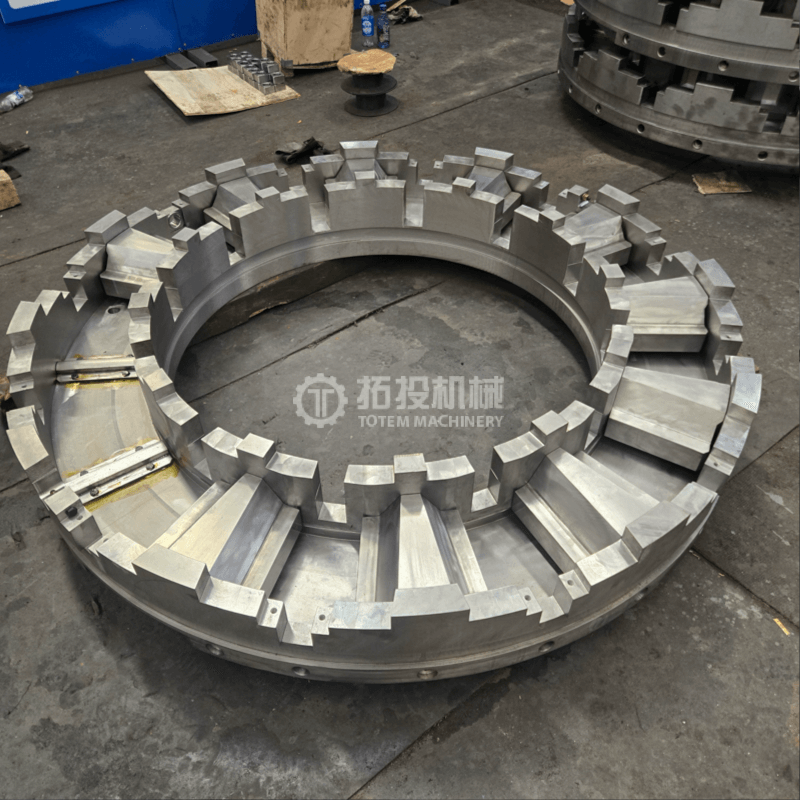
That is where tilting pad and Babbitt-lined thrust-bearing systems come in. These structures are widely used when better load distribution, more stable lubrication, and longer service life are required. Shanghai TOTEM Machinery Co., Ltd. supplies components used in these demanding systems, including Babbitt alloy thrust pads, white metal thrust shoe pads, Babbitt-lined thrust pads, thrust pad base rings, and related machined parts.
Rolling-element thrust bearings include thrust ball bearings and thrust roller bearings. Their purpose is to support axial load through rolling contact.
Thrust ball bearings are often used in lighter or moderate-duty conditions where axial load is present but not extremely severe. They are valued for their simple structure and compact design.
Thrust roller bearings are usually selected when greater load capacity is needed. In many cases, they can support heavier axial loads than thrust ball bearings. However, both rolling-element types may reach their limits in severe industrial service, especially where speed, load, and operating demands rise.
Tilting pad and white metal thrust-bearing systems are more common in high-performance industrial equipment. Instead of balls or rollers, these systems use pads that support the rotating surface through a lubricating film.
A tilting pad design allows each pad to adjust slightly during operation, helping the system distribute load more evenly and maintain a stable oil film. White metal, often called Babbitt alloy, is commonly used as the working surface in these systems because it supports reliable performance in demanding service.
For many industrial buyers, the real question is not only what bearing type they need, but what pad structure, working material, and support design will best match their equipment.
Thrust Bearing Type | Main Load Style | Typical Applications | Main Advantage | Common Limitation |
Thrust Ball Bearing | Light to medium axial load | Small machinery, lighter industrial systems | Simple structure and compact design | Less suitable for severe heavy-duty service |
Thrust Roller Bearing | Medium to high axial load | Gear systems, heavier equipment | Higher load capacity than ball type | May still be limited in critical high-speed duty |
Tilting Pad Thrust Bearing | High axial load, continuous duty | Steam turbines, hydroturbines, compressors | Better load distribution and oil film stability | Requires precise design and manufacturing |
Babbitt-Lined Thrust Pad System | Heavy-duty industrial axial support | Turbines, marine shafting, power equipment | Reliable working surface for demanding service | Performance depends strongly on lubrication quality |
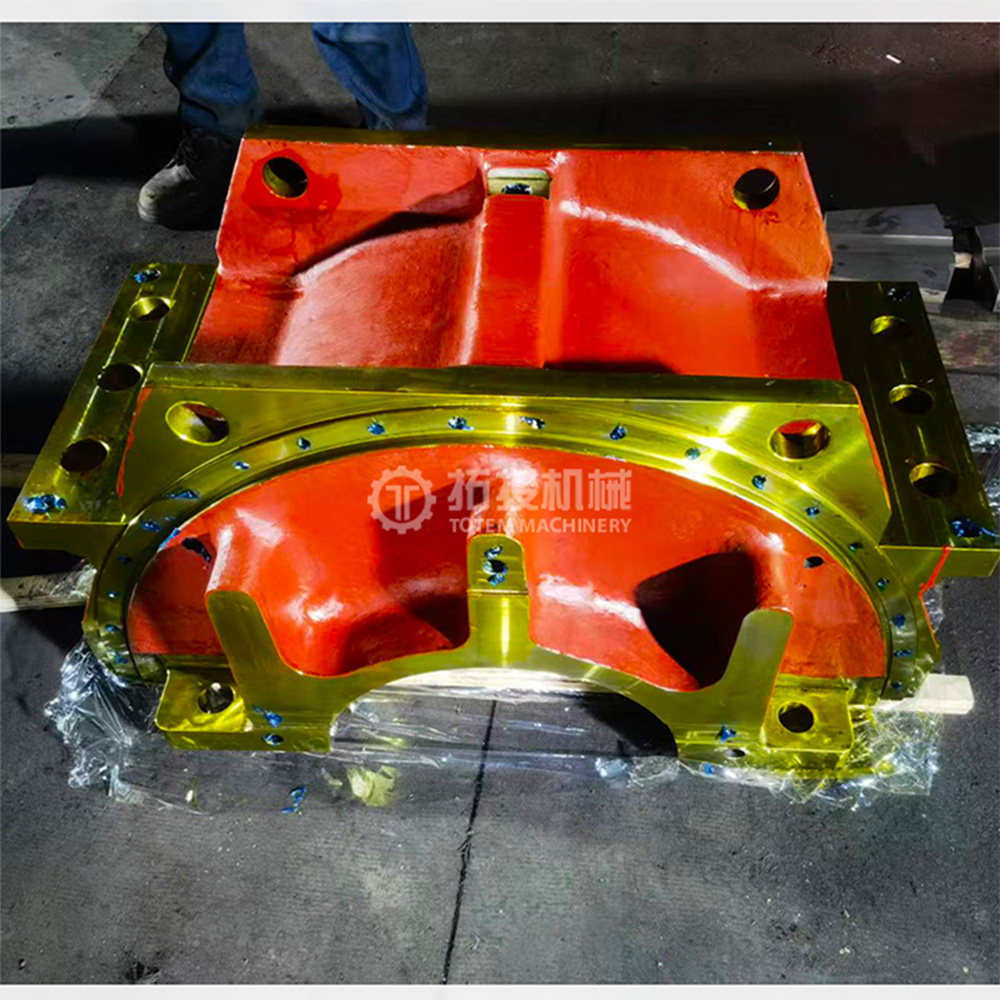
A thrust bearing system may include more than one visible part. Depending on the design, it can contain thrust pads, balancing weights, thrust pad support ring, bearing bushes, bearing housing/casing, and oil supply semi-ring.
In simple designs, the structure may be compact and easy to identify. In more advanced industrial systems, the thrust bearing is better understood as a full assembly. Each part affects how load is transferred, how movement is controlled, and how the machine handles heat and lubrication.
In heavy-duty assemblies, pad quality is central to performance. The pad must have the right geometry, support condition, and working-layer integrity. A poorly made pad can lead to uneven load distribution, unstable lubrication, and shorter service life.
The base ring also matters because it supports the entire arrangement and contributes to system rigidity. The working surface matters just as much. In Babbitt-based designs, material quality, bonding strength, machining finish, and dimensional consistency all affect real operating performance.
This is why many customers look beyond the name of the bearing itself and pay close attention to the quality of thrust pads, base rings, and associated machined components.
One common mistake is assuming that all thrust bearings are interchangeable. In reality, the right structure depends on how the machine operates. A bearing suitable for moderate service may not perform well in a turbine, compressor, or other high-demand system.
Axial load is only one factor. Temperature affects lubrication and material response. Speed influences heat generation and stability. Lubrication is also critical, especially in advanced thrust-bearing systems that rely on a stable oil film.
Because of these variables, the right thrust bearing must be matched to the actual application, not just selected by category name.
A well-matched thrust-bearing system can reduce wear, improve axial positioning, support smoother operation, and help extend maintenance intervals. For customers running critical machinery, that means lower downtime risk and more stable long-term performance.
This is why industrial buyers often focus on details such as thrust pad design, Babbitt surface quality, support ring rigidity, and machining consistency. These are not minor details. They are central to whether the system performs reliably in real service.
Understanding a thrust bearing should go beyond a simple definition. Once buyers connect axial load, machine stability, application conditions, and structural design, it becomes clear why this component matters so much in industrial equipment. At Shanghai TOTEM Machinery Co., Ltd., we supply thrust pads and related components for demanding mechanical systems, helping customers support reliable operation where axial control is critical. If you are evaluating parts for turbines, compressors, marine systems, or other rotating equipment, contact us to discuss your application and find the right axial bearing solution for your project.
A thrust bearing is used to support axial load in rotating equipment. It helps control shaft movement along the axis, protects nearby parts, and improves machine stability.
A thrust bearing supports force along the shaft axis, while a radial bearing mainly supports force perpendicular to the shaft. Many machines need both types to handle different load directions.
The main thrust bearing types include thrust ball bearings, thrust roller bearings, tilting pad thrust bearings, and Babbitt-lined thrust-bearing systems. The right choice depends on load, speed, and service conditions.
Babbitt thrust pads are used because they provide a dependable working surface for demanding axial-load applications. In properly designed systems, they help support load distribution, lubrication performance, and service life.