

| Quantity: | |
|---|---|
White metal bearings, commonly known as babbitt bearings, serve as critical sliding bearing components designed specifically for large-scale rotating machinery. Their primary function is to provide robust support for rotating shafts while significantly minimizing friction and wear during continuous operation. By ensuring stable hydrodynamic lubrication, these bearings maintain equipment reliability even under severe high-load and long-term operating conditions.
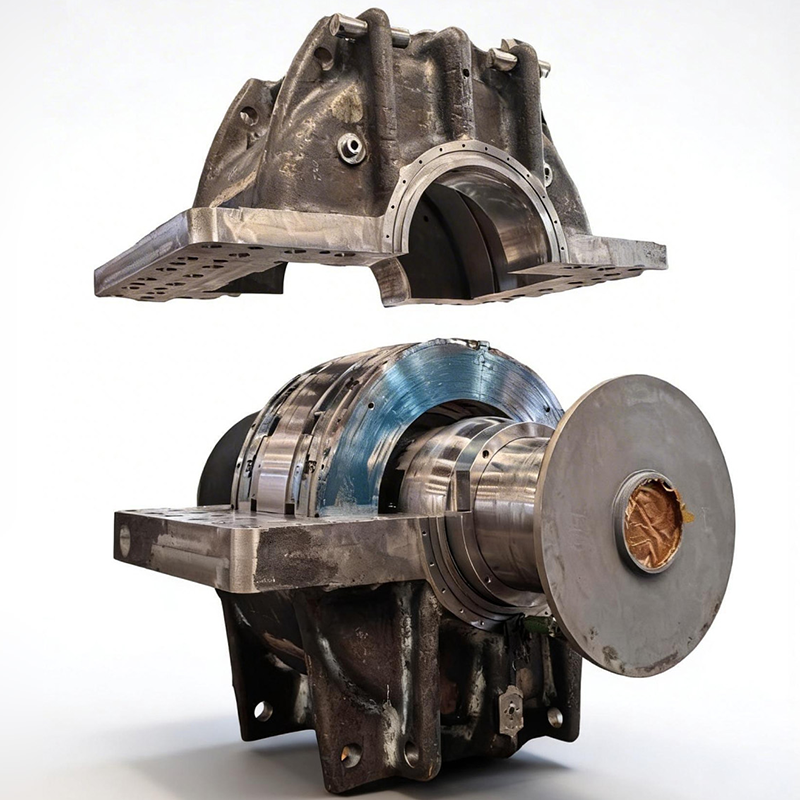
A defining advantage of these heavy-duty bearings is their specialized composite structure, which combines a rigid steel backing with a specialized white metal lining. This dual-layer design delivers optimal performance for heavy machinery. The white metal lining provides exceptional friction resistance, superior conformability, and strong embeddability. These characteristics allow the bearing surface to safely absorb micro-particle impurities that may enter the lubrication system during operation, while also accommodating minor shaft misalignments or deviations. Consequently, this composite structure effectively protects the critical journal surface from scoring, thereby prolonging both the bearing's operational life and the overall service cycle of the machinery.

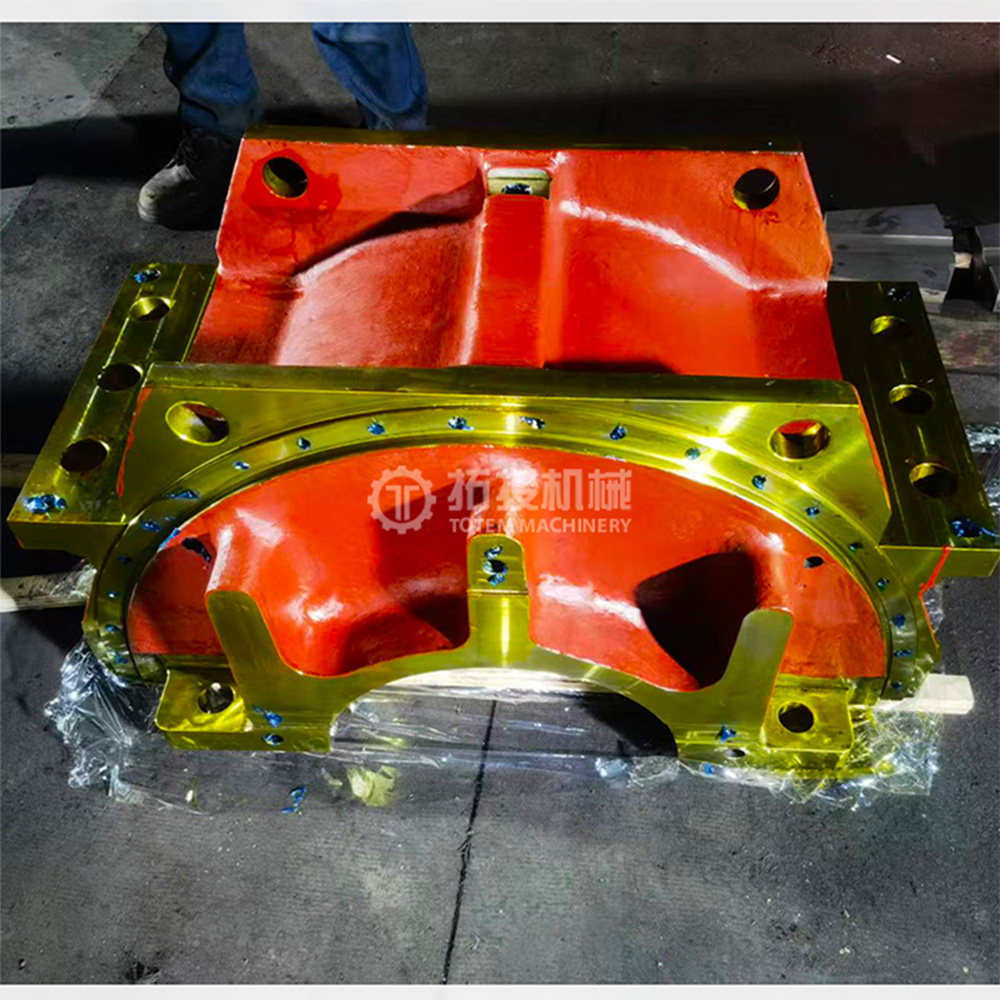
In demanding industrial applications, a complete thrust bearing system relies on several key components working in precise coordination. These essential parts typically include the thrust shaft, thrust pads (or thrust shoes), bearing casing, bearing housing, oil rings, and bearing bushes. Each component performs a vital function, ranging from axial load transmission and continuous lubrication to rigid structural support. Together, they form a cohesive system capable of managing massive axial forces and ensuring the reliable operation of the rotating equipment under extreme stress.
Leveraging extensive manufacturing experience, we deliver integrated solutions tailored to specific project requirements. Our capabilities range from machining individual replacement components—such as propulsion shafts, thrust shoes, and bearing shells—to engineering complete thrust bearing assemblies. Every component can be custom-produced strictly according to provided technical drawings and specific operational parameters, ensuring exact fitment and seamless integration into existing mechanical systems.
The performance reliability of heavy-duty thrust babbitt bearings heavily depends on the precise selection of base materials and alloy compositions. Our bearings are constructed using a two-part material system optimized for durability and friction reduction.
Bearing Base Material: The foundational backing is typically manufactured from premium-grade carbon steel or alloy steel. These robust materials deliver the high tensile strength and structural stability required to withstand intense mechanical stress, providing a reliable and deformation-resistant supporting foundation for the entire bearing assembly.
Babbitt Alloy Lining: The functional sliding surface utilizes a specialized Babbitt alloy, primarily composed of a precise mixture of tin, antimony, and copper. This specific metallurgical composition ensures excellent embeddability, superior conformability, and rapid thermal conductivity to efficiently dissipate operational heat.
To meet diverse operational demands, the Babbitt layer can be customized. Depending on the specific equipment operating conditions, load capacities, and rotational speeds, we select either tin-based or lead-based Babbitt alloy materials to maximize performance and longevity.
Engineered for maximum stability and load-bearing capacity, these thrust babbitt bearings are widely utilized across demanding industrial sectors. They are essential components in marine propulsion systems, where reliable axial load management is critical for continuous vessel operation. Additionally, they are extensively applied in steam turbines, hydro generators, reciprocating compressors, heavy-duty pumps, rolling mills, and various other large-scale industrial rotating machinery, ensuring secure operation in critical infrastructure.
The manufacturing of heavy-duty thrust babbitt bearings for marine propulsion systems demands a highly controlled and precise machining process. Our production facility is equipped with advanced machinery and follows a rigorous step-by-step manufacturing protocol to ensure every bearing meets the exacting demands of marine environments. The process is divided into three critical stages: base machining, white metal casting, and finish machining. Each phase is executed by experienced technicians to guarantee the structural integrity and operational reliability of the final product, ensuring long-term stability for complex marine applications.
The foundation of a reliable thrust bearing begins with the precise preparation of the steel backing. During the base machining phase, the bearing steel substrate is first machined through specialized turning and milling processes. This step is critical for achieving the basic structural dimensions required for marine propulsion assemblies.
Beyond general shaping, positioning and mating surfaces are also meticulously machined at this stage to prepare for the subsequent casting process. These surfaces must be flawlessly prepared to ensure proper alignment during installation and to create an optimal foundation for the babbitt material. Proper base machining eliminates surface irregularities and establishes the exact geometric baseline needed for heavy-duty performance. By controlling the tolerances at this early stage, we significantly reduce the risk of misalignment, ensuring that the bearing substrate is perfectly primed for the metallurgical bonding process.
The core performance of a babbitt bearing relies heavily on the quality of the babbitt layer and its adhesion to the steel substrate. In this second phase, using centrifugal or gravity casting processes, the molten white metal alloy is poured onto the inner surface of the bearing substrate.
The controlled cooling and advanced application methods ensure a dense, uniform babbitt layer. More importantly, this process forms a strong metallurgical bond between the white metal layer and the steel backing. A robust metallurgical bond is essential for heavy-duty marine applications, as it prevents the babbitt layer from delaminating or separating under extreme thrust loads and continuous operational stress. This secure bonding directly translates to enhanced durability, better load distribution, and a longer operational lifespan for the bearing, significantly reducing maintenance risks and replacement frequency for the end-user.
After casting is completed and the bearing has properly cooled, it moves to the finish machining stage. This final phase is where the bearing achieves its ultimate precision. Finish machining is performed on the bearing bore and mounting surfaces through highly accurate processes such as turning and boring.
The primary goal of this stage is to ensure that dimensional and geometric accuracy strictly meet the design requirements and engineering tolerances. For marine propulsion systems, even the slightest deviation can lead to excessive vibration, premature wear, or system inefficiency. Therefore, our finish machining process is executed with meticulous attention to detail, ensuring a perfect fit within the propulsion assembly. This high level of precision not only facilitates smoother and faster installation for the purchasing party but also guarantees optimal hydrodynamic lubrication and stable operation under heavy marine thrust loads.
Ensuring the absolute reliability of marine propulsion systems requires uncompromising quality control. Because heavy-duty thrust babbitt bearings operate under extreme loads and continuous mechanical stress, any microscopic defect can lead to significant operational downtime. To mitigate procurement risks and guarantee long-term performance, every bearing undergoes a systematic and rigorous quality inspection process. Our testing protocols are designed to verify dimensional precision, structural integrity, and material adhesion, ensuring that each component is fully prepared for demanding marine environments before it leaves our facility.
Dimensional Inspection: Precision measurements are meticulously conducted on critical parameters, including the bore diameter, overall width, coaxiality, and key installation dimensions. By utilizing advanced metrology instruments, our quality control team ensures that all physical dimensions strictly conform to the exact drawing requirements and specified engineering tolerances. This high level of dimensional accuracy is crucial for ensuring proper fitment and alignment within the marine propulsion shaft system. It directly contributes to minimizing mechanical vibration, reducing installation time, and preventing uneven wear during operation.
Non-Destructive Testing (NDT): To verify the internal and surface integrity of the bearing without altering its physical properties, we perform comprehensive Ultrasonic Testing (UT) and Penetrant Testing (PT). UT is deployed to deeply inspect the material for hidden cracks, internal pores, or any bonding defects between the babbitt lining and the steel substrate. Simultaneously, PT is applied to reveal any microscopic surface discontinuities that might compromise performance. This rigorous NDT framework ensures that the bearing can safely endure heavy thrust loads and continuous dynamic forces without the risk of sudden structural failure.
Bonding Strength Test: The integrity of the metallurgical bond between the white metal (babbitt) layer and the rigid steel substrate is inspected to ensure firm and reliable adhesion. Because marine bearings face fluctuating temperatures and intense mechanical stress, a flawless bond is essential to prevent delamination or material separation. Our bonding strength verification guarantees that the babbitt layer remains securely attached under peak operational demands, thereby extending the service life of the propulsion system and reducing the frequency of essential maintenance.
Surface Quality Inspection: The active bearing surface undergoes a thorough visual and tactile inspection to ensure it is completely free from obvious defects, mechanical scratches, or casting imperfections. Achieving a pristine surface finish is vital for the formation and maintenance of an effective hydrodynamic lubrication film. A flawless contact area minimizes friction against the rotating shaft, prevents premature localized wear, and supports smooth, efficient power transmission throughout the vessel's operational lifecycle.
Ensuring the safe and pristine delivery of heavy-duty thrust babbitt bearings is a critical priority for marine propulsion system projects. Our comprehensive packaging and shipping protocols are strictly designed to protect these high-precision components from environmental and mechanical risks during international sea freight and long-distance transit.
Protective Surface Treatment: To safeguard the critical machined surfaces of the bearings against corrosion during extended maritime transit and warehouse storage, we implement a rigorous protective protocol. Each bearing is meticulously coated with industrial-grade anti-rust oil or specialized protective agents. Subsequently, the components are securely wrapped in premium rust-proof (VCI) paper and sealed within moisture-proof materials to completely isolate them from humidity, salt air, and environmental contaminants.
Internal Cushioning and Structural Fixation: Given the substantial weight and precision requirements of marine propulsion bearings, internal stability is paramount. We utilize custom-machined wooden supports and specialized bracing structures tailored to the exact dimensions of each product. This precise fixation eliminates internal shifting, effectively absorbing shocks and preventing any mechanical deformation, surface scratching, or collision damage during complex logistics handling.
Heavy-Duty Outer Packaging: For the final layer of protection, the bearings are encased in reinforced, custom-built wooden cases or robust steel-framed crates. These heavy-duty enclosures are specifically engineered to withstand the rigors of international sea freight and long-distance overland transportation. The packaging design also accommodates safe and efficient handling by forklifts and cranes, ensuring the products arrive at your facility in optimal condition, ready for immediate installation.