| Quantity: | |
|---|---|
The gas reciprocating compressor is a positive displacement compressor that compresses gas through the reciprocating motion of a piston inside a cylinder. It is widely used in industrial fields such as petroleum, chemical processing, natural gas, refining, fertilizer production, steel manufacturing, and pharmaceuticals.
Our company specializes in the customized production of core components for reciprocating compressors. Our main products include key components such as crankshafts, cylinder blocks, crossheads, connecting rods, piston assemblies, and valve bodies. In a reciprocating compressor, the rotational motion of the motor is converted into the reciprocating linear motion of the piston through the crank-connecting rod mechanism, achieving gas suction, compression, and discharge. In this process, the crank bears significant alternating loads, the cylinder housing provides a sealed compression chamber, the crosshead shoe ensures smooth motion transmission, the link rod links the power output, the piston accomplishes gas compression, and the valve body controls gas intake and exhaust.
We have mature processing techniques and a well-established manufacturing system, allowing us to produce customized components according to customer drawings or technical parameters. Our products are widely used in various domestic and international reciprocating compressor models, offering complete solutions from single components to core component systems.
High-strength compressor crankshaft designed for reciprocating compressor applications, manufactured through an integral forging process and optimized with torsional vibration analysis to ensure stable operation under high-speed and heavy-load conditions.
Enhanced fatigue resistance and long service life are achieved through surface hardening treatment on main journals and crank pins, making the crankshaft suitable for various compression media, including natural gas, oxygen, nitrogen, and hydrogen.
Customized crankshaft solutions are available according to different compressor models and operating requirements, including integrated solutions with connecting rods, bearings, and other transmission components for improved compatibility and reliability.
Crankshaft
Crankshaft
High-performance cylinder blocks for reciprocating compressors are engineered with optimized wall thickness and cooling channel designs, using Finite Element Analysis (FEA) to improve structural strength, heat dissipation, and long-term operating reliability.
Optimized intake and exhaust port designs improve gas flow efficiency and compressor performance, increasing volumetric efficiency by 5% to 8%, reducing energy consumption, and supporting both dry and wet cylinder liner configurations.
Customized cylinder block solutions are available for different operating environments, including water-cooled, air-cooled, and corrosion-resistant designs, meeting the requirements of industries such as oil refining, chemical processing, fertilizer production, and natural gas compression.
Cylinder Block
Cylinder Block
Heavy-duty crossheads for reciprocating compressors are designed with detachable sliding shoes, allowing easier maintenance and replacement while improving service life compared with conventional designs.
Hardened crosshead pins combined with a forced lubrication system reduce wear and improve operating stability, making them suitable for high-load and continuous-duty compressor applications.
Customized crosshead assemblies can be integrated with connecting rods, piston rods, and other moving components, ensuring precise fitting accuracy, reliable motion transmission, and optimized compressor performance.
Crosshead
Crosshead
High-strength connecting rods for reciprocating compressors are manufactured from alloy steel forgings, featuring an optimized H-section design that provides excellent rigidity while reducing weight and reciprocating inertia forces for improved operating efficiency.
Precision-manufactured connecting rod bolts with rolled thread technology enhance fatigue resistance and reliability, ensuring stable performance under repeated alternating loads and demanding operating conditions.
Complete connecting rod assemblies are available with big end bearings and small end bushings, suitable for various compressor applications, including air compressors, natural gas compressors, process compressors, and refrigeration systems.
Connecting Rod
Connecting Rod
·A range of piston structures (cylindrical, disc-shaped, combined, and differential) and materials (aluminum alloy, cast iron, alloy steel, stainless steel) is available to meet different pressure levels and media requirements.
·The piston connecting rod surface can be chrome-plated or nitrided. These piston assemblies are widely used in applications such as oil refining, chemical processing, and gas handling.
Piston Assembly
Piston Assembly
High-efficiency valve assemblies for reciprocating compressors are designed to optimize gas flow and reduce energy consumption, with valve power consumption accounting for only 3% to 7% of shaft power, improving overall compressor efficiency.
Complete suction and discharge valve assemblies are available for various reciprocating compressor models, supporting both domestic and international compressor equipment with reliable sealing performance and long service life.
Valve Body
Valve Body
| Component | Materials | Applications | Process |
| Crankshaft | 45Steel/ 40Cr/ Alloy Steel/ Customize | Air compressor/ Natural gas compressor/ Oxygen compressor/ Nitrogen compressor | Forging + CNC Precision Machining, Torsional Vibration Analysis |
| Cylinder Block | HT250/ HT300/ Alloy Cast Iron/ Customize | Reciprocating compressors/ Oxygen compressors/ Process compressors | Casting + CNC Boring and Milling, Hydrostatic Testing |
| Crosshead | QT500/ Alloy Steel/ Customize | All kinds of reciprocating compressors, oxygen compressors, and nitrogen-hydrogen compressors | Casting + Precision Processing, Sliding Shoe Scraping and Matching |
| Connecting Rod | 40Cr/ 42CrMo/ Alloy Steel Forgings/ Customize | Reciprocating compressors/ High-pressure pumps/ Oxygen compressors | Die Forging + CNC Machining, Thread Rolling |
| Piston Assembly | Wear-resistant Cast Iron/ Aluminum Alloy/ Aloy Steel/ Customize | Air compressors/ Process compressors/ Oxygen compressors | Casting/Forging + CNC Machining |
| Valve Body | Stainless Steel/ Alloy Steel/ Customize | Reciprocating compressor/ Oxygen compressor/ Nitrogen compressor | Precision Casting + CNC Machining |
· Forging process: Used for components that bear heavy loads, such as piston compressor crankshafts and crosshead connecting rods. High-quality carbon steel or alloy steel forgings are used and formed by die forging or free forging to ensure continuous metal flow lines and enhance fatigue strength.
· Casting process: Used for complex structural components, such as cylinder body, crosshead guides, and piston assemblies. High-strength HT250 cast iron or alloy cast iron is used to ensure structural rigidity and vibration damping performance.
Crankshaft
Connecting Rod
Compressure Cylinder
· Normalizing/Annealing: Eliminates casting or forging stresses and improves machinability.
· Quenching and Tempering: Enhances the comprehensive mechanical properties of the material.
· Surface Hardening: Surface quenching or carburizing is applied to friction surfaces such as crankshaft journals and crosshead pins.
· CNC Turning: Used for machining the outer diameters, end faces, and inner bores of shaft and disc-type components.
· CNC Boring & Milling: Used for machining the hole systems and mounting surfaces of complex housing components such as cylinder liner and crosshead assembly.
· CNC Grinding: Used for finishing critical mating surfaces, including crankshaft journals, crank pins, and plunger rod outer diameters.
· Chemical Composition Analysis: Verifies that the material composition conforms to standard requirements.
· Mechanical Property Testing: Tests tensile strength, yield strength, elongation, and impact toughness.
· Dimensional Inspection: Dimensions are measured during machining using calipers, micrometers, bore gauges, and other instruments.
· CMM Inspection: Precise measurements are performed on complex components using coordinate measuring machines.
· Surface Roughness Inspection: Ensures that surface finish meets specified requirements.
Dimensional Inspection
Dimensional Inspection
MT
· Ultrasonic Testing (UT): Used to detect internal defects in forgings and to verify the bonding quality of bearing liners.
· Magnetic Particle Testing (MT): Used to detect surface and near-surface cracks in ferromagnetic materials.
· Penetrant Testing (PT): Used to detect surface defects in non-ferromagnetic materials.
· Industrial Endoscope Inspection: Used to examine concealed areas such as internal cavities and oil passages.
· Pressure Testing: Hydrostatic and pneumatic pressure tests are conducted on pressure-containing parts such as cylinders and valve bodies to verify sealing integrity.
· Leakage Testing: The leakage rate of sealing components, including valves and packing, is measured.
· Dynamic Balancing Test: Dynamic balancing is performed on high-speed rotating components such as crankshafts.
· Hardness Testing: The surface hardness of critical areas is checked after heat treatment.
Pressure Testing
Dynamic Balancing Test
Hardness Testing
To prevent corrosion during transportation and storage, rust prevention measures are applied to the key machined surfaces of the product:
· Anti-rust oil or a peelable protective coating is applied
· Critical areas such as journals and mating surfaces are wrapped with VCI (Vapor Corrosion Inhibitor) paper
· The product is completely wrapped with moisture-proof material
Appropriate securing methods are selected based on the shape and weight of the product:
· Heavy components such as crankshafts and compressor cylinder are secured using wooden support frames
· Precision components are protected with custom foam inserts
· All parts are firmly fastened to prevent shifting or impact during transit
Suitable packaging is chosen according to the mode of transport and destination:
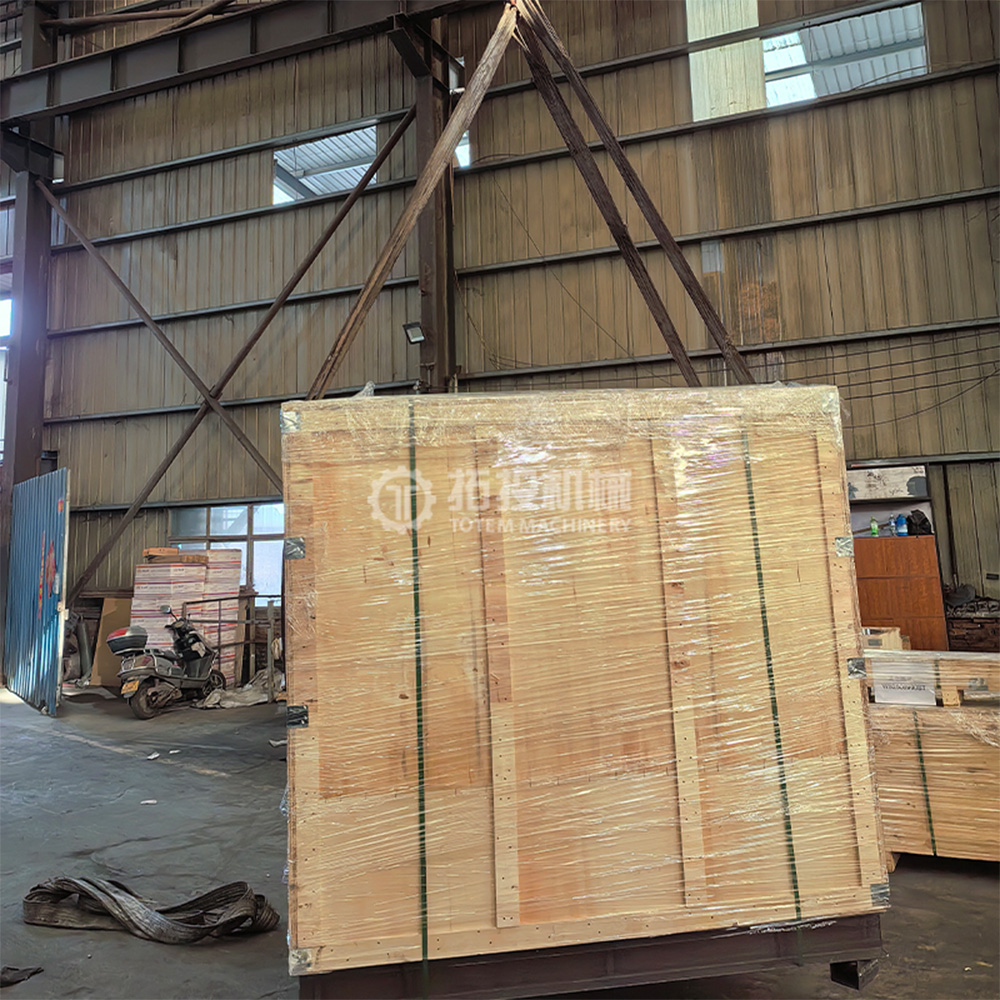
· Wooden Case Packaging: Ideal for export sea freight
· Steel-framed Case: Designed for overweight or over-length components
· Pallet Packaging: Suitable for small batches and standard-size accessories