


| Quantity: | |
|---|---|
White Metal Sliding Bearings are critical hydrodynamic plain bearings engineered for demanding industrial applications, including cement mills and heavy rotating machinery. The sliding surface of these bearings is formed by "white metal"—a highly specialized, silver-colored bearing alloy primarily composed of tin, lead, antimony, and copper. This specific metallurgical composition provides exceptional conformability and embeddability, allowing the bearing to absorb microscopic contaminants while protecting the expensive shaft from premature wear. Designed to deliver high load capacity, smooth running performance, and operational safety, they excel in large-scale, low-to-medium speed, and heavy-load operating conditions, acting as the foundational support that ensures the continuous and stable operation of key industrial equipment.
Beyond heavy industrial mills, sliding bearings serve as indispensable support components for the intermediate shaft in marine propulsion systems. In a vessel's propulsion architecture, the intermediate shaft bridges the thrust shaft and the propeller shaft. The operational stability of this connection directly determines the reliability and power transmission efficiency of the entire propulsion network. Installed within the intermediate bearing seat, these white metal bearings work in close coordination with the shaft, bearing bushings, and lubrication systems. Their primary function is to carry the immense radial load of the intermediate shaft while maintaining strict alignment accuracy across the shaft system.
Because the sliding bearing acts as the direct working support surface for the intermediate shaft, it faces rigorous requirements regarding dimensional accuracy, surface finish, and long-term wear resistance. To meet these stringent demands, our company offers customized design and precision manufacturing of sliding bearings tailored to specific ship types, shaft diameters, and unique load conditions. This tailored approach guarantees reliable performance even during long-term continuous operation under complex and harsh sea conditions, helping vessel operators and shipyards reduce maintenance frequency and operational risks.
 |  |  |
While the sliding bearing is a core individual component, it operates within a highly interdependent network. In a complete ship propulsion system, the intermediate shaft bearing system, thrust bearings, thrust shafts, and propeller shafts function together to form a unified propulsion shaft system. During maritime operations, the immense thrust generated by the propeller must be transmitted efficiently through the propeller shaft, intermediate shaft, and thrust shaft. Throughout this intense dynamic process, the intermediate shaft sliding bearings and their dedicated lubrication systems provide continuous, stable support, ensuring that power transmission remains smooth and highly reliable.
Recognizing the critical need for system-wide compatibility, our company extends beyond individual component manufacturing to provide comprehensive matching capabilities for the entire marine propulsion system. We supply and integrate various key components, including intermediate shafts, bearing bushings, thrust shafts, thrust bearing components, propeller shaft assemblies, and related structural bearing elements. By focusing on the precise matching between the white metal sliding bearing and the broader intermediate shaft bearing system, we help eliminate compatibility risks during installation and operation. This reliable manufacturing approach empowers our customers to build stable, controllable, and efficient ship propulsion systems, delivering a complete solution from individual precision components to the entire propulsion shaft architecture.
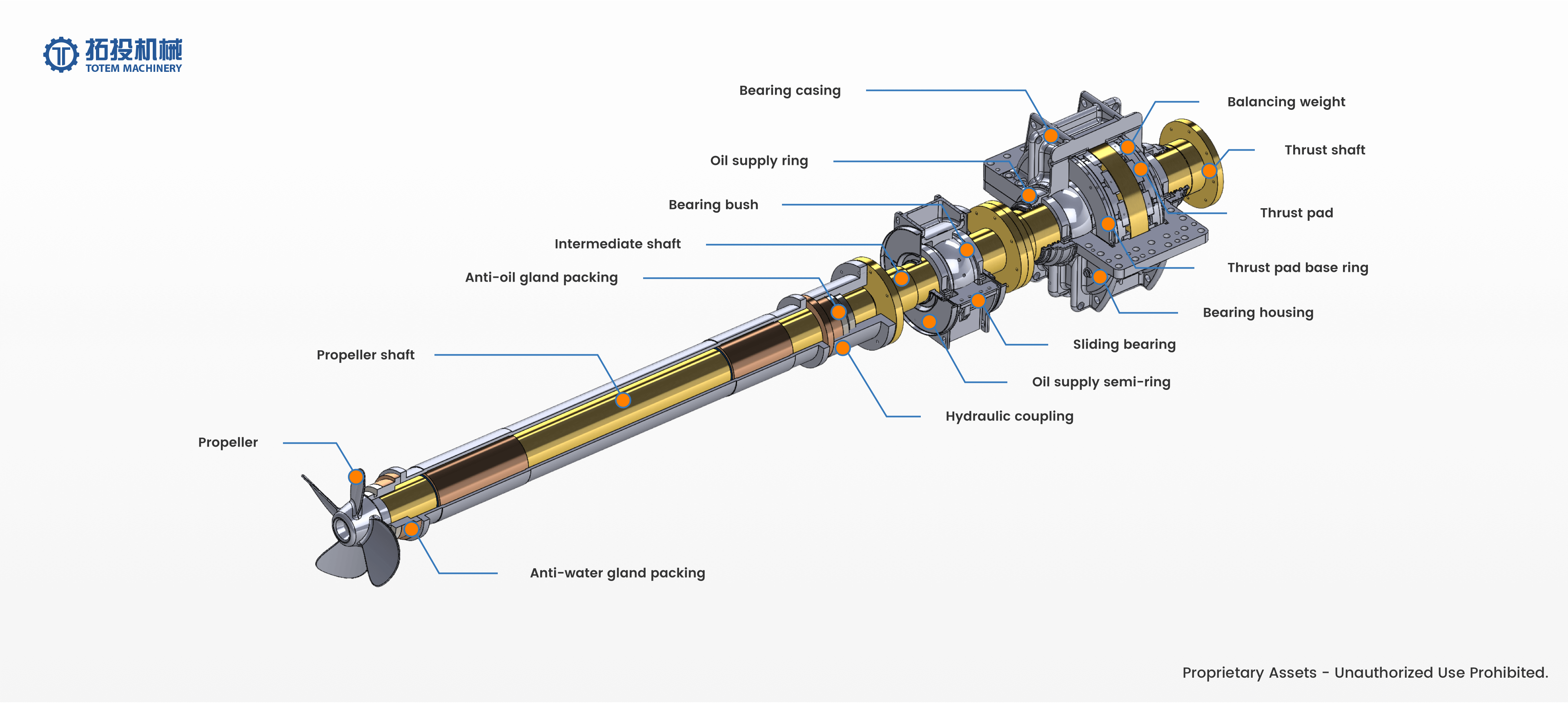
Whether upgrading a cement mill's heavy machinery or outfitting a commercial vessel's propulsion line, selecting precisely engineered white metal bearings ensures that every component is built for long-term durability and systemic harmony, safeguarding your critical operations against unexpected downtime.
Babbitting is a highly specialized metallurgical process that involves bonding a relatively soft white metal (babbitt alloy) to a robust backing shell, typically constructed from mild steel, cast iron, or bronze. This engineered composite structure is specifically designed to support the immense radial loads and severe torsion experienced by rotating shafts in heavy industrial equipment. The babbitt material functions as a critical sacrificial layer. Because it is significantly softer than the main shaft and possesses superior anti-frictional properties, it effectively absorbs microscopic particulate contaminants. This embedding capability prevents galling, scoring, and catastrophic failure of the expensive main shaft during long periods of continuous operation. By maintaining a precise balance between structural backing strength and surface conformability, our manufacturing process ensures optimal operational stability, reduces maintenance downtime, and significantly extends the service life of industrial plain bearings.
To guarantee structural integrity, dimensional precision, and reliable performance in demanding environments, our production follows a strict, systematic workflow. The standard manufacturing procedure is divided into seven critical stages: Steel Backing Preparation, Surface Cleaning, Preheating & Tinning, Babbitt Casting, Cooling & Rough Machining, Finish Machining, and Quality Inspection.


Rough Machining: Initial turning and milling operations are meticulously performed to remove surface burrs, mill scale, and dimensional irregularities from the raw material. This ensures a uniform, clean base geometry for all subsequent metallurgical treatments.
Heat Treatment: The steel backing undergoes a critical thermal stress-relief process, heated to precisely 700°C and held for 5–6 hours. This essential step relieves internal manufacturing stresses generated during initial forming. It is followed by a controlled, slow cooling phase to room temperature, which prevents future dimensional distortion when the bearing is subjected to heavy-duty operational loads.
Mechanical Grinding: The inner surface of the backing shell is carefully ground to remove any residual oxide layers, exposing the pure, active base metal required for optimal alloy adhesion.
Chemical Cleaning: The exposed surface is then treated with specific industrial chemical agents, including a saturated ZnCl₂ solution. This completely eliminates residual oils, grease, and microscopic contaminants. A pristine, chemically clean surface is the fundamental prerequisite for achieving a flawless metallurgical bond.
Preheating: The chemically cleaned shell is preheated to approximately 200°C. Depending on the physical size, wall thickness, and mass of the bearing shell, this thermal soaking process takes between 45 minutes to 4 hours to ensure a completely uniform temperature distribution across the entire component.
Tinning: The heated shell is immediately immersed in a molten tin bath utilizing an active NH₄Cl/ZnCl₂ flux. This process creates a uniform, premium tin coating that acts as a vital transitional layer, maximizing the ultimate bond strength between the rigid steel backing and the softer babbitt alloy.
Centrifugal casting is the preferred and most reliable method utilized in our facility for manufacturing high-performance industrial sliding bearings. By rotating the prepared bearing shell at precisely calculated high speeds while pouring the molten white metal, centrifugal force drives the heavier alloy particles outward against the tinned backing. This advanced centrifugal casting technique ensures several key structural advantages: a highly dense material microstructure, an exceptionally strong metallurgical bond, and the complete elimination of internal porosity, blowholes, or air pockets that could compromise bearing integrity.
Controlled Cooling: The newly cast bearing undergoes a carefully managed cooling sequence using directed air or water mist. This forces the babbitt to solidify evenly from the bond line inward, preventing thermal shock, internal tearing, or cracking.
Rough Turning and Boring: The bearing is then rough-machined to remove excess babbitt material and casting slag. A precise stock allowance of approximately 0.75–1.0 inch (19–25 mm) is intentionally left on the working surface. This allowance is critical to accommodate the final precision finishing operations and ensure dimensional accuracy.
Precision Boring: The bearing is bored to its exact final internal diameter, ensuring exact geometric alignment and a precise clearance fit for the specific rotating shaft it is designed to support.
Honing and Polishing: The inner babbitt surface is meticulously polished to achieve a strict target surface finish of Ra ≤ 0.8 μm. This ultra-smooth finish is absolutely essential for minimizing startup friction, reducing initial wear, and maintaining an effective, continuous hydrodynamic oil film during operation.
Specialized Tooling: Our CNC operators utilize extremely sharp, high-positive-rake cutting tools (such as HSS or polished aluminum-grade inserts) during this phase. This specialized tooling prevents any tearing, smearing, or micro-deformation of the soft babbitt surface structure.
Visual & Dimensional Checks: Thorough initial inspections confirm the absence of surface cracks or foreign inclusions, followed by precise measurement of the bore diameter, wall thickness, overall roundness, and straightness to ensure strict adherence to engineering tolerances.
Non-Destructive Testing (NDT) & Validation: We utilize Ultrasonic Testing (UT) to verify internal bond integrity and Dye Penetrant Testing (PT) to detect microscopic surface anomalies. Destructive testing on sample batches further validates that any material failure occurs within the babbitt layer itself, never at the critical babbitt-steel interface.
Ensuring the operational stability of heavy machinery, such as cement mills and marine propulsion systems, requires components that can withstand extreme mechanical stress. After completing the main manufacturing processes, our sliding bearings undergo a strict and comprehensive quality inspection protocol. This critical phase is meticulously designed to verify that every component meets the highest industrial standards, mitigating procurement risks and ensuring long-term reliability in demanding working environments.
Precise dimensional accuracy is the fundamental baseline for the mechanical performance and longevity of industrial plain bearings. Our dedicated quality assurance team conducts meticulous measurements to verify the exact size, geometric tolerances, and fitting precision of each bearing unit before it leaves the facility. This strict dimensional control is essential for guaranteeing proper internal clearance, which directly influences the optimal formation of a lubricating oil film during continuous, high-speed, or high-load operation. By ensuring precise fitment and exact geometric alignment, we help buyers avoid complex on-site installation issues, minimize friction-induced wear, and significantly extend the overall service life of the heavy machinery. Every measurement is documented to provide full traceability and peace of mind for your engineering teams.
To guarantee that there are no hidden structural flaws that could compromise operational safety, we implement advanced Non-Destructive Testing (NDT) protocols, with a specific focus on Penetrant Testing (PT). This specialized inspection methodology is systematically applied to the babbitt metal lining and the bearing shell to detect any micro-cracks, porosity, bonding inconsistencies, or processing defects on the surface and near-surface areas. In heavy machinery applications, even the most microscopic discontinuity can propagate under high-load conditions, potentially leading to catastrophic equipment failure. Our rigorous PT inspection verifies the flawless integrity of the sliding bearing, confirming that the white metal is perfectly sound, securely bonded, and free from any imperfections that could affect load distribution.
The visual documentation below displays our actual PT inspection site for our industrial bearings. This transparent testing process ensures that each component strictly meets our high-standard quality requirements before being cleared for final delivery, providing visible proof of our commitment to structural excellence.
Relying on mature processing technology and an uncompromising testing framework, our industrial sliding bearings are proven to meet the rigorous operational needs of heavy-duty applications. Whether utilized in marine ship propulsion systems navigating harsh environments or heavy cement milling equipment operating under constant vibration and heavy dust, these bearings are thoroughly verified to endure high dynamic loads and long-term continuous operation. Every component that successfully passes our inspection facility is certified to deliver stable, vibration-free performance. This rigorous validation process gives industrial buyers complete confidence in their procurement decisions, knowing the components are engineered to thrive in complex, high-stress working conditions.
We understand that specialized industrial projects often require highly specific component configurations that go beyond standard catalogs. In addition to our standardized quality checks, we provide comprehensive quality control support for customized manufacturing based on your specific technical drawings. Our quality assurance team works closely with your engineering specifications to ensure that bespoke tolerances, unique dimensions, and specific material standards are rigorously tested and verified. This guarantees that custom-engineered white metal bearings receive the exact same uncompromising level of quality assurance as our standard models, perfectly aligning with your unique project requirements and ensuring seamless integration into your specialized machinery.
PT
PT
Ensuring the safe delivery of white metal sliding bearings for cement mill heavy machinery is a critical priority. Due to the high precision of the machined surfaces and the substantial weight of these components, the babbitt metal lining is highly sensitive to impact and environmental degradation. Therefore, our multi-stage packaging system is meticulously designed to eliminate the risks of micro-abrasions, oxidation, and structural stress during sea, land, or air freight.
All critical surfaces of the sliding bearing, particularly the precision-machined babbitt metal mating surfaces and end faces, undergo rigorous preparation before packing. They are thoroughly coated with industrial-grade anti-rust oil and specialized protective agents. Following this, the components are meticulously wrapped using VCI (Volatile Corrosion Inhibitor) paper and heavy-duty moisture-barrier films. The VCI technology actively releases corrosion-inhibiting molecules that form an invisible protective layer on the metal surfaces. This multi-layered barrier effectively isolates the bearing from air, salt, and moisture, preventing oxidation and corrosion even during extended maritime shipping or prolonged on-site storage. This meticulous preparation ensures that when the bearing is unpacked at the installation site, the critical tolerances and surface finish remain exactly as they were when leaving our facility.
Heavy machinery components require robust internal stabilization to prevent damage from vibrations and impacts. High-density cushioning materials, including pearl cotton, industrial foam, and heavy-duty rubber pads, are strategically applied around the sliding bearing to absorb shocks and provide full 360-degree protection. To address the significant weight of the bearing, customized wooden supports and precision-cut positioning blocks are installed inside the packaging case. These structural reinforcements strictly secure the component in place, eliminating any risk of rolling, shifting, or displacement caused by dynamic loads during transit. By isolating the bearing from external vibrations, we safeguard the structural integrity of the white metal bonding, ensuring immediate readiness for heavy-duty operation.
The exterior defense consists of a reinforced export-grade wooden case, constructed with strong structural integrity and exceptional load-bearing capacity. These heavy-duty crates are specifically designed to withstand the rigors of international logistics, including multiple loading and unloading cycles, and are treated to comply with international phytosanitary standards for smooth customs clearance globally. To facilitate safe handling by port operators and site installation teams, comprehensive handling marks are clearly stenciled on the exterior. These include precise center of gravity indicators, designated lifting points for cranes, moisture protection symbols, and anti-tilt warnings. Clear identification ensures that lifting and rigging operations are executed safely, preventing accidental drops or improper handling.
Recognizing that every project has unique logistical requirements, our packaging solutions can be fully customized. Depending on the specific transportation conditions, destination port facilities, and project site environments, we adapt our packaging strategies. Customization options include enhanced protection grades for extreme weather, specialized cushioning methods for sensitive inland routes, reinforced fixing structures for oversized bearings, and modified outer case designs. Our engineering team collaborates with procurement and logistics managers to determine the optimal packaging configuration, minimizing transit risks, optimizing freight costs, and guaranteeing that the bearings arrive in pristine, ready-to-use condition.


