
Views: 0 Author: Site Editor Publish Time: 2026-09-09 Origin: Site
A damaged propeller shaft brings immediate vessel downtime and compounding costs. You must decide whether to machine the existing shaft or buy a new one. This choice is never just about component price. It is fundamentally about risk mitigation. Compromised marine propulsion system parts heavily degrade vessel performance, destroy fuel efficiency, and threaten drivetrain safety. Ignoring these components risks catastrophic mid-voyage breakdowns.
We created this guide to provide a strict, compliance-focused framework. It helps you evaluate repair versus replacement without the guesswork. You will learn how to read diagnostic symptoms properly. We will explain why non-destructive testing dictates your options. You will also understand how to balance material upgrades against yard downtime. By the end of this article, you will have the practical knowledge to make the safest, most economical choice for your vessel.
Tolerances dictate reality: If a shaft is bent beyond specific manufacturer or regulatory (e.g., ABYC) tolerances, replacement is a structural necessity, not an upsell.
Hidden damage is the real risk: Visual inspections are insufficient; non-destructive testing (NDT) is required to rule out microscopic metallurgical fatigue before committing to a propeller shaft repair.
Alignment is non-negotiable: Whether repairing or replacing, improper installation guarantees a repeat failure.
Downtime vs. Capital: The decision often hinges on the lead time of custom fabrication versus the localized availability of precision machining.
Professionals look past obvious symptoms like heavy vibration. Proper diagnostics require precise symptom validation. You must differentiate between bent shafts, worn bearing journals, and coupling issues. A vibrating hull often points to propeller shaft failure. However, loose engine mounts create identical symptoms. You cannot guess the cause. You need dial indicators to measure shaft runout accurately. Mechanics mount these indicators on magnetic bases. They slowly rotate the shaft to detect deviations down to the thousandth of an inch.
Visual checks easily miss dangerous flaws. Non-destructive testing (NDT) plays a crucial role here. You need dye penetrant or ultrasonic testing. These methods reveal hairline fractures hiding under marine growth. They also find cracks buried beneath surface corrosion. Minor pitting might look harmless to the naked eye. NDT exposes whether those pits compromise the core alloy structure. During dye penetrant testing, technicians clean the metal thoroughly. They apply a highly visible dye that seeps into microscopic cracks. A developer spray then pulls the dye out, highlighting fatal structural flaws clearly.
Failures rarely happen in isolation. You must conduct a secondary damage assessment. Inspect struts, cutlass bearings, and transmission seals thoroughly. A bent shaft usually damages the cutlass bearing immediately. The unbalanced rotation hammers the rubber lining. Check the gearbox output seal for leaks as well. Severe vibrations can ruin the transmission bearings over time. You must evaluate the entire driveline before deciding on a shaft solution.
| Observed Symptom | Likely Underlying Cause | Required Diagnostic Action |
|---|---|---|
| Localized grooving at the strut | Cutlass bearing wear or debris intrusion | Measure journal diameter with micrometers |
| Heavy underway vibration at cruise | Bent shaft or severe misalignment | Dial indicator runout test on the taper |
| Hairline surface cracks near taper | Fatigue stress or torsional overloading | Dye penetrant or ultrasonic testing |
| Brown weeping stains near coupling | Crevice corrosion or internal shaft rust | Remove coupling and inspect splines |
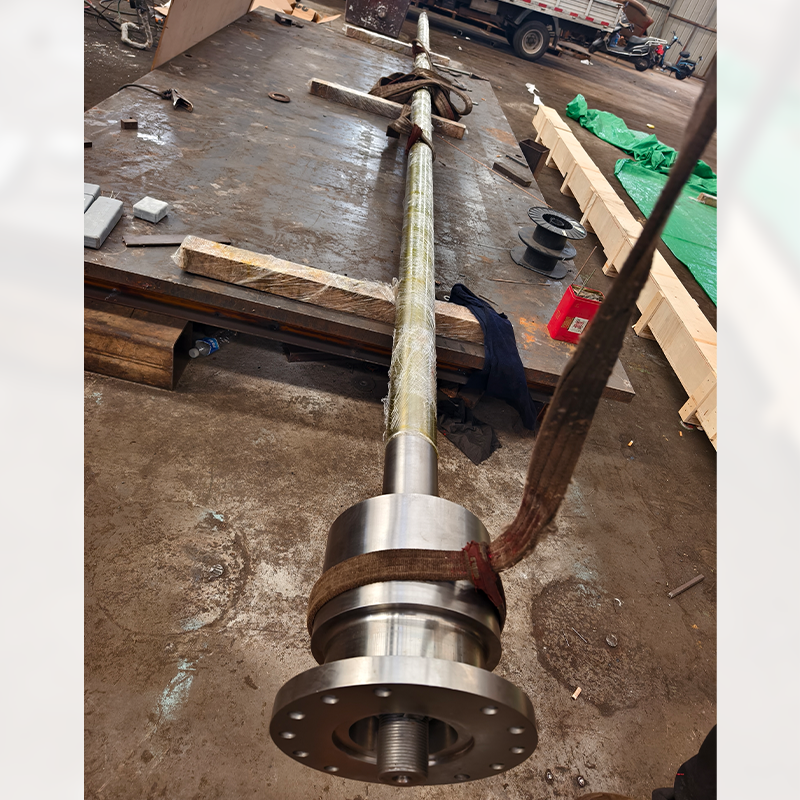
You need to know exactly when repair makes commercial sense. Straightening constraints dictate this decision entirely. Acceptable runout tolerances typically stay within 0.002 to 0.005 inches. This varies depending on shaft length and maximum RPM. Hydraulic straightening has strict physical limits. Minor bends often respond well to cold straightening presses. Skilled machinists apply calculated pressure to bend the metal back into phase. However, severe kinks will crack if pressed. You cannot force yielded metal back into a safe state.
Journal cladding offers another valid repair path. We also call this thermal spraying. Sometimes the shaft wears down exactly where it rides inside the bearing. Building up these worn areas is mechanically sound. The machinist first undercuts the worn section to remove damaged material. They spray molten metal powder onto the spinning shaft. This new material bonds mechanically to the base alloy. Finally, they turn the new layer down to the exact original diameter. This restores a tight bearing fit perfectly.
Localized machining provides a massive cost and time advantage. You might save weeks of lead time. Ordering a custom-machined alloy blank takes significant time. Shipping heavy materials adds expensive delays. A local machine shop can often finish cladding in three days. This keeps your vessel moving and minimizes yard fees.
However, you must remain skeptical of certain historical methods. Never allow "heat straightening." Heating marine-grade alloys like Aquamet ruins their temper. It permanently destroys the engineered metallurgical structure. You will lose the metal's natural corrosion resistance. The heated section becomes brittle and prone to snapping under load. Always demand cold straightening techniques from your chosen machine shop.
Sometimes you must scrap a marine propeller shaft to maintain safety. Metallurgical yielding acts as a hard boundary. Metals possess an elastic limit. Once a shaft bends past this limit, it stretches permanently. The metal's internal grain structure weakens. You cannot simply press it back into a reliable state. The core strength is gone. A straightened shaft that previously yielded will likely bend again under normal loads.
Crevice corrosion and severe pitting present another non-repairable hazard. Stainless steel requires oxygen to maintain its protective oxide layer. Oxygen starvation occurs under tightly packed marine bearings. This causes aggressive localized pitting. Deep pits act as massive stress risers. They create weak points where fractures initiate under torque. You cannot safely weld or fill deep pits on a rotating drivetrain component. It will fail catastrophically.
Torsional fractures strictly dictate immediate replacement. Look for signs of twisting at the coupling or taper. Damaged splines indicate massive over-torque events. This usually happens after a severe prop strike against rocks or logs. A twisted taper cannot securely hold a propeller anymore. Machining a twisted shaft only hides the structural damage. It does not restore the lost rotational strength.
Catastrophic underway failures risk heavy financial liability. Using patched-together shafts can void marine insurance policies. It also violates strict government and industry safety standards. American Boat and Yacht Council (ABYC) rules demand specific structural integrities for drivetrain components. A failed shaft can drop a spinning propeller. It can tear open the hull seal, leading to sinking. Replacement ensures compliance and supreme peace of mind.
You need a direct evaluation framework to make the right choice. Compare the immediate cost of a repair against the localized risk of a secondary failure. If a fix costs 60 percent of a new unit but offers a 30 percent shorter lifespan, buying new makes better mathematical sense. Do not pay for a weak fix twice. A localized repair might hold, but an older shaft carries hidden fatigue miles. Evaluating the remaining lifecycle helps you avoid repeating the teardown next season.
Downtime calculations heavily influence this matrix. Haul-out and drydock fees accumulate daily. A cheaper machining job might require three weeks of waiting. Dropping in a pre-machined replacement might take three days. The extended yard fees quickly erase the savings from machining. You must evaluate the full financial impact of remaining out of the water. Factor in lost charter revenue or lost vacation time.
Consider replacement as an opportunity for strategic material upgrades. It is not just a sunk cost. You can upgrade to higher-yield alloys. Moving from standard Aquamet 17 to Aquamet 22 improves corrosion resistance immensely. Aquamet 22 provides higher tensile strength for high-horsepower diesel applications. Better materials extend the time between required maintenance intervals. This proactive approach saves capital over the long term. It also increases the resale value of your vessel.
Buying a pristine shaft solves only half the problem. The "new shaft" fallacy traps many boat owners. A brand-new or perfectly straightened shaft will destroy itself rapidly if installed poorly. Alignment errors introduce extreme bending stress during rotation. This bending stress causes premature cutlass bearing wear. It eventually leads to metal fatigue and snapping.
Engine-to-shaft tolerances require extreme precision. You must verify marine shaft alignment meticulously. Technicians check face-to-face coupling tolerances using specialized feeler gauges. The gap between the transmission flange and the shaft flange must sit within thousandths of an inch. Anything wider induces catastrophic drivetrain vibrations.
Here are the standard steps for achieving proper installation:
Install the new shaft into the bearings without attaching the coupling.
Center the shaft perfectly within the stern tube to ensure zero binding.
Bring the engine coupling to the shaft coupling, not the other way around.
Measure the gap at the top, bottom, port, and starboard using a feeler gauge.
Adjust the engine mounts in tiny increments until the gap is uniform within 0.003 inches.
Static alignment on land is never enough. Fiberglass hulls flex significantly when placed in the water. The dynamic reality of water pressure changes engine mount geometry. A perfect alignment on the hardstand will often drift out of spec afloat. Final alignment must happen while the vessel is in the water. Wait at least 24 to 48 hours after launching. This allows the hull to settle into its natural shape before you tighten the final coupling bolts.
The choice between machining and replacing relies entirely on hard testing data. You cannot rely on visual guesswork. Runout measurements and non-destructive testing deliver the facts you need. Straightening works beautifully for minor deflections. However, severe yielding, deep pitting, or torsional fractures mandate a fresh alloy blank. Remember to calculate daily yard fees when comparing your options. The cheapest immediate fix often costs significantly more in extended downtime.
Take action before a minor vibration turns into a major underway failure. Consult a certified marine machinist or a trusted supplier today. Provide them with your exact shaft dimensions, material specifications, and current failure symptoms. Request a formal diagnostic evaluation or a quote for replacement components. Properly managed propulsion systems ensure your safety and keep your vessel performing at its peak.
A: No. It depends on the degree of the bend, the specific alloy, and whether the metal has yielded past its elastic limit. Extreme bends or sharp kinks require complete replacement. Attempting to straighten severely yielded metal leaves the internal grain structure compromised and unsafe.
A: Straightening and minor machining might cost 20 to 40 percent of a new shaft. This offers excellent value. However, if repair estimates approach 50 to 60 percent of a new unit, replacement is universally recommended. The lingering fatigue risks make expensive repairs uneconomical.
A: Timeframes vary. Fabrication and shipping usually take days to weeks depending on custom tapering requirements. Physical installation and alignment typically take one to three days. This depends heavily on drivetrain accessibility, hull style, and the condition of the existing engine mounts.


