
Views: 0 Author: Site Editor Publish Time: 2026-03-10 Origin: Site
Large industrial components create machining problems that rarely appear at smaller scales. Greater size and mass make workholding, datum control, cutting stability, material condition, handling, and final inspection more demanding, while complex hole patterns or multiple precision surfaces can increase the risk of accumulated error between setups. For OEMs sourcing marine propulsion parts, turbine components, compressor housings, heavy shafts, or welded structures, selecting a supplier therefore requires more than checking whether a CNC machine is physically large enough.
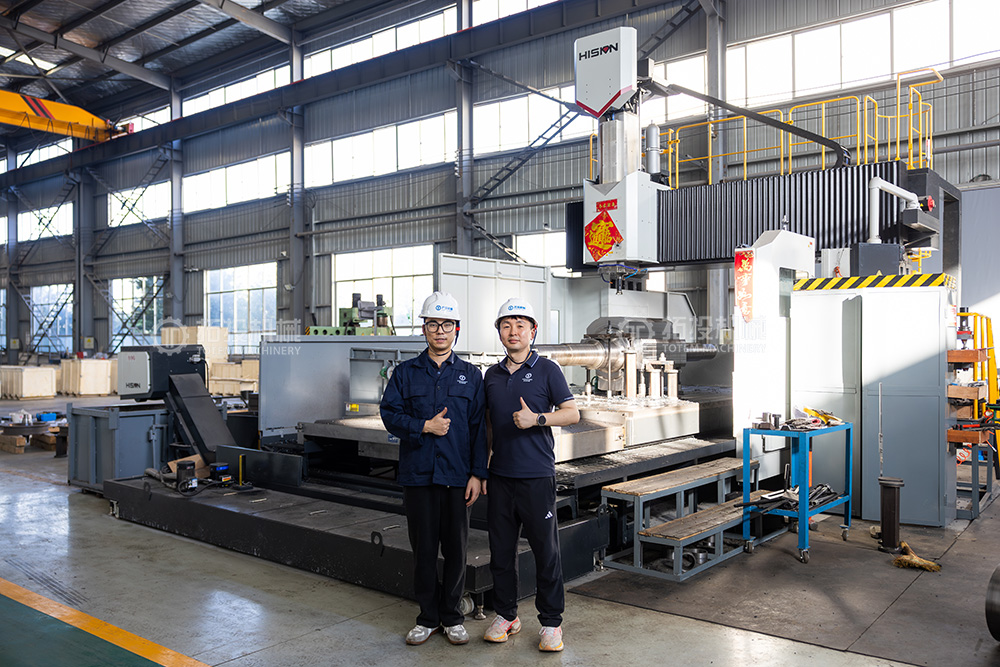
TOTEM Machinery has expanded its large part CNC machining capability with the introduction of a GAU32×40 CNC gantry-type boring and milling machine using a FANUC 0i control platform. The equipment is intended to support machining of large shafts, complex housings, castings, forgings, and heavy welded components that require stable cutting and accurate control of critical surfaces. Rather than treating the machine as an isolated investment, TOTEM integrates it into a broader manufacturing chain that can include material preparation, forging or casting, heat treatment, rough machining, finish machining, inspection, surface treatment, and packaging.
Large part CNC machining refers to the controlled machining of components whose dimensions, mass, geometry, or handling requirements exceed the practical range of ordinary production machining. There is no single dimension that defines a “large” workpiece because machine envelope is only one part of the engineering problem. A long shaft, a wide turbine casing, a heavy casting, and a fabricated frame can all require different machines, fixtures, lifting methods, cutting strategies, and inspection plans.
The main challenge is maintaining dimensional relationships across a workpiece that may contain widely separated bores, mating surfaces, journals, flange faces, or datum features. As component size increases, clamping forces, residual stress, thermal movement, structural deflection, and setup changes can have a greater influence on the final geometry. Effective large CNC machining therefore depends on process planning as much as machine capacity.
A gantry configuration provides a rigid machining platform for workpieces with large footprints and multiple surfaces requiring milling, boring, drilling, or related operations. The open working area also makes it easier to position heavy castings, fabrications, housings, and structural parts that would be difficult to accommodate on conventional machining centers. Where accurate holes and broad reference surfaces must be produced within the same manufacturing sequence, reducing unnecessary repositioning can help improve process consistency.
Machine rigidity is particularly valuable when cutters must reach across large components or remove material from heavy sections. Stable support does not eliminate distortion or thermal effects, but it gives process engineers a better foundation for controlling them through suitable fixtures, cutting parameters, sequencing, and inspection.
TOTEM introduced the GAU32×40 to strengthen its ability to manufacture technically demanding heavy components. According to the company's existing equipment announcement, the machine is configured as a CNC gantry-type boring and milling system with FANUC 0i control and is intended for complex surfaces, precision hole systems, shaft-related components, housings, castings, forgings, and welded structures.
For engineering buyers, however, the model name alone should never be treated as proof that a particular component can be produced. A proper large part CNC machining review should compare the drawing with usable machine travel, worktable or fixture space, workpiece mass, tool accessibility, lifting requirements, machining orientation, and the inspection method required after cutting. Final capacity should therefore be confirmed against the current machine specification and the actual part drawing during quotation.
Large components frequently require several machining operations rather than one simple milling cycle. Depending on workpiece geometry and the selected production route, the process may involve face milling, contour milling, boring, drilling, hole finishing, machining of mating surfaces, or preparation of critical datum features. Shaft-type parts can additionally require turning or grinding on dedicated equipment within the wider manufacturing route rather than on the gantry machine itself.
That distinction matters because a supplier's overall manufacturing capability is broader than the capability of any single machine. TOTEM's custom OEM machining business covers heavy industrial components made from forgings, castings, and welded structures, so equipment should be selected according to the feature being produced rather than presented as a one-machine solution.
Machine size is the first screening condition, but it is not enough to determine manufacturability. A realistic capability review should examine the relationship between part geometry, raw material condition, machining sequence, tolerances, inspection access, and handling requirements. Two parts of similar overall dimensions may require completely different processes if one is a rigid forging and the other is a thin-wall welded fabrication.
| Capability Area | What Should Be Reviewed | Why It Matters |
|---|---|---|
| Workpiece envelope | Length, width, height, fixture clearance | Confirms physical machine fit |
| Workpiece mass | Part weight plus fixture requirements | Affects handling and machine loading |
| Machining features | Bores, faces, holes, grooves, journals | Determines machine and tooling route |
| Material condition | Forging, casting, weldment, heat-treated blank | Influences cutting and distortion risk |
| Critical tolerances | GD&T, runout, coaxiality, flatness, position | Drives setup and inspection strategy |
| Surface requirements | Functional and mating surfaces | Determines finishing operations |
| Inspection plan | Measuring range, datums, reporting | Confirms final conformity |
Exact machining limits should be established from verified machine data rather than estimated from a model designation. Where tolerances are especially tight, TOTEM should evaluate the entire tolerance chain, including blank condition, stress state, setup count, machining allowance, temperature, tooling, and measurement method before confirming feasibility.
Large part CNC machining often begins with a forged, cast, or welded blank rather than finished bar stock. Each starting condition introduces different manufacturing considerations. Forgings may require careful allowance planning and heat-treatment control, castings can contain complex datum relationships and variable stock, while welded fabrications may need particular attention to residual stress and distortion before final precision machining.
TOTEM's existing product range includes forged shafts, turbine components, cast and fabricated heavy parts, which makes material condition an important part of process planning rather than a separate purchasing issue. Specific material grades, heat treatments, and inspection requirements should still be evaluated against the customer's drawing and applicable project specification.
The value of large part CNC machining becomes clearer when machine capability is connected to actual component geometry. TOTEM serves several industrial applications involving heavy rotating equipment and precision load-bearing components, including marine propulsion, power generation, oil and gas equipment, mining machinery, and general heavy machining.
Marine shafting combines large dimensions with demanding requirements for alignment, journal condition, flange relationships, and stable torque transmission. A forged intermediate shaft, for example, must integrate correctly with the surrounding thrust shaft, propeller shaft, bearings, and coupling arrangement. TOTEM's existing intermediate-shaft product range uses forged carbon or alloy steel and supports customized manufacture according to propulsion-system requirements.
For this type of part, large shaft machining should be planned around more than outside diameter and overall length. Engineers also need to identify the critical journals, coupling interfaces, reference centers, runout requirements, inspection stages, and any heat-treatment effects that could influence the final geometry.
A steam turbine rotor shaft contains multiple functional zones such as journals, sealing areas, locating surfaces, and coupling features, each of which can impose different machining and inspection requirements. TOTEM's turbine rotor product page describes manufacturing routes that use large CNC lathes, grinding, nondestructive testing, runout inspection, and surface-roughness verification according to the individual rotor design.
Large turbine casings create a different problem. Their broad joint faces, internal cavities, flange features, and precision hole systems make datum planning and boring accuracy particularly important. Gantry boring and milling can support these geometries where stable access to large faces and separated holes is necessary.
Large compressor cylinders and housings may combine bores, flanges, internal passages, mating faces, and fastener patterns within a single casting or fabricated structure. Reliable machining requires a clear datum strategy so that related features remain correctly positioned after roughing and finishing.
Welded structures introduce another concern: machining can release or redistribute residual stress. A heavy fabrication may therefore need controlled welding, suitable stress management, machining allowance, and staged cutting before final critical surfaces are finished. These considerations make heavy component machining a coordinated manufacturing process rather than simply a final CNC operation.
Large components magnify process decisions that may be relatively forgiving on smaller workpieces. A fixture that is excessively rigid can distort a thin section, while insufficient support may allow vibration or movement during cutting. Likewise, removing a large volume of material from only one side of a forging, casting, or weldment can change the internal stress balance and alter geometry before finish machining.
Datum transfer is another frequent source of risk. If a component must be repositioned between machines or orientations, every setup needs an unambiguous relationship to the drawing datum system. Critical faces, bores, journals, and hole patterns should be planned so that measurement can verify those relationships instead of merely checking individual dimensions.
Thermal effects also deserve attention during precision CNC machining. A large workpiece, machine structure, tooling system, and measurement equipment can respond differently to temperature changes, especially during long machining cycles. Suitable process planning therefore combines stable machining conditions with staged inspection rather than relying on a final measurement to detect accumulated errors.
One information advantage available to TOTEM is its broader manufacturing chain. The company describes capabilities covering raw-material control, heat treatment, rough and finish machining, surface treatment, and finished-product packaging, while its product portfolio spans forgings, castings, machined shafts, cylinders, bearings, and fabricated heavy equipment.
A practical workflow starts by reviewing drawings, material specifications, blank condition, machining allowance, heat-treatment requirements, and critical datums. Rough machining can then remove excess material while leaving allowance for subsequent stabilization and finishing. Where heat treatment or stress-relief operations are required by the drawing or manufacturing plan, their position in the sequence should be selected to reduce the risk of dimensional movement after final cutting.
Finish machining establishes the critical functional geometry only after earlier operations have created a stable basis for precision work. Inspection should follow the same datum logic used in manufacturing so that dimensions are assessed as the designer intended. For projects involving heavy shaft machining, runout, journal relationships, coupling features, surface condition, and other drawing-specific characteristics may require staged verification rather than a single final check.
Quality control for large parts should be planned before machining begins. The inspection method must be capable of reaching the required features, reproducing the drawing datum structure, and producing documentation appropriate for the project. Conventional gauges, runout checks, dimensional measurement systems, surface-roughness instruments, and nondestructive testing may all have a role depending on part type.
A useful engineering principle is that machine positioning capability and finished-part tolerance are not the same thing. Final accuracy is influenced by part stiffness, material condition, tool access, fixture design, setup sequence, thermal behavior, cutting forces, and the measurement method. For that reason, responsible large part CNC machining suppliers review difficult tolerances on a feature-by-feature basis rather than applying one generic tolerance claim to every oversized component.
For critical rotating parts, inspection may extend beyond dimensional measurement. TOTEM's existing turbine rotor manufacturing information, for example, identifies ultrasonic testing, magnetic particle testing, runout inspection, and roughness verification as relevant quality-control activities for rotor shafts. Which tests are required for another component should be determined from its drawing, material specification, service conditions, and contractual requirements.
Buyers should start with a drawing-based feasibility review rather than a generic equipment list. Machine envelope and workpiece weight determine basic fit, but the stronger question is whether the supplier can create a complete process route from the supplied blank to the inspected finished component. Experience with comparable geometry, materials, handling, precision features, and quality documentation can be more informative than the number of CNC machines shown on a factory page.
The manufacturing chain should also be evaluated for interfaces between operations. If forging, casting, heat treatment, rough machining, finish machining, inspection, and packaging involve several facilities, process responsibility and quality handoffs need to remain clear. TOTEM's existing heavy shaft machining content and custom manufacturing portfolio reflect this broader process-oriented approach rather than presenting machining as an isolated production stage.
Providing complete engineering information at the beginning of an inquiry helps a manufacturer assess process risk more accurately. A 3D model can clarify geometry and tool access, while the controlled 2D drawing should identify tolerances, GD&T, surface finishes, material requirements, heat treatment, and inspection notes. Overall dimensions and approximate blank weight are equally important because handling and fixture planning can influence the available manufacturing route.
For a more efficient review, buyers should normally provide the following project information:
2D manufacturing drawing and available 3D model; material grade and blank form; overall dimensions and estimated weight; critical GD&T, runout, flatness, coaxiality, or positional requirements; required surface finishes and heat treatment; quantity and repeat-order expectations; inspection, NDT, documentation, packaging, and delivery requirements.
If some information is unavailable during an early sourcing stage, the missing items should be identified rather than assumed. That allows the machining supplier and customer to separate confirmed drawing requirements from preliminary engineering decisions before production planning begins.
Large part CNC machining requires more than a large machine envelope. Successful production depends on matching the workpiece to the right equipment, controlling datums and fixtures, planning material removal, managing distortion risk, and verifying critical features with an appropriate inspection strategy. The GAU32×40 expands TOTEM's capacity for gantry boring and milling within a wider manufacturing network supporting shafts, casings, forgings, castings, and heavy fabricated components. For new projects, the most reliable starting point is a drawing-based feasibility review that considers geometry, material, tolerances, process sequence, inspection, and handling together.
A part may be considered “large” when its dimensions, weight, fixture requirements, handling method, or inspection needs exceed the practical range of conventional machining. There is no universal size threshold. A long shaft and a wide casing can both require large part CNC machining even though their geometries are completely different.
Typical operations can include milling, boring, drilling, hole finishing, facing, contour machining, and machining of datum or mating surfaces. Turning, grinding, and other processes may be performed on dedicated machines when required by the component. The final process route should match the drawing rather than forcing every feature onto one machine.
Yes, provided that the selected equipment, fixture plan, material condition, machining allowance, and inspection strategy are suitable for the component. Castings, forgings, and weldments behave differently during material removal, so the machining sequence should reflect their individual stress state and structural characteristics.
Tolerance control begins with datum planning, workholding, machine selection, machining sequence, and suitable allowance between rough and finish operations. In-process checks can identify movement before all final material is removed. Final acceptance should then use an inspection method capable of verifying the drawing requirements.
A useful quotation package normally includes 2D drawings, a 3D model where available, material specification, blank type, overall size, estimated weight, quantity, critical tolerances, surface-finish requirements, heat treatment, and inspection requirements. More complete information allows the supplier to assess tooling, setup, handling, quality control, and manufacturing risk more accurately.


