| Quantity: | |
|---|---|
The 20 Steel Forged Babbitt Bearing Bush serves as the indispensable core load-bearing component within heavy-duty sliding bearing systems. Engineered to work seamlessly in conjunction with bearing housings, it provides vital support, precise positioning, and efficient load transfer for rotating thrust shafts. During dynamic equipment operation, this precision-machined Bearing Bush for Sliding Bearings facilitates the formation of a stable, continuous hydrodynamic lubricating oil film. This critical fluid layer minimizes direct metal-to-metal friction between the rotating shaft and the bearing assembly, which directly dictates the load-carrying capacity, operational stability, and overall service life of the entire rotating system. For industrial procurement professionals and equipment engineers, selecting our Heavy-Duty Forged Bearing Bush means investing in exceptional wear resistance, structural integrity, and long-term reliability, specifically designed to withstand the rigorous demands of harsh industrial working conditions and prevent costly unplanned downtime.
The precision-machined inner bore of our 20 Steel Bearing Bush is meticulously engineered to promote the rapid formation and maintenance of a uniform hydrodynamic lubricating oil film under dynamic operational speeds. This fluid boundary effectively separates the sliding surfaces, drastically reducing metal-to-metal contact and minimizing frictional wear. Consequently, it significantly lowers the operating temperature of the shaft system, prevents thermal deformation, and enhances the overall energy efficiency of the rotating equipment.
Accurate alignment is critical for the safe operation of heavy machinery. This Babbitt Alloy Bearing Sleeve provides exact radial and axial positioning for the rotating shaft, maintaining ultra-precise coaxiality throughout its operational cycle. By ensuring optimal alignment, the bush facilitates even load distribution across the entire bearing surface area. This balanced load transfer is essential for avoiding localized stress concentrations and edge loading, thereby preventing premature component failure and safeguarding the structural integrity of the main shaft.
Utilizing a highly durable bimetallic construction, the bearing bush is forged from premium 20 carbon steel to provide a robust, high-strength backing, which is paired with a specialized babbitt alloy lining for superior embeddability and conformability. This combination delivers exceptional impact resistance, outstanding anti-fatigue performance, and a high load-bearing capacity. It is specifically designed to support continuous, 24/7 operation in demanding industrial scenarios. For facility operators, this translates to a significant reduction in maintenance frequency, minimized replacement intervals, and a lower total cost of ownership over the equipment's lifecycle.
The following table outlines the standard parameters and customization capabilities for our forged bearing bushes, ensuring precise matching with your specific engineering requirements.
Parameter | Standard Specification | Customization Range |
Base Material | 20 Forged Steel / Centrifugal Cast Steel | Carbon Steel, Alloy Steel per client requirements |
Inner Diameter Range | 50mm - 500mm | Up to 1200mm |
Outer Diameter Range | 80mm - 600mm | Up to 1500mm |
Roundness Tolerance | ≤0.015mm | Custom precision grade available |
Coaxiality Tolerance | ≤0.02mm | Adjustable per drawing specifications |
Surface Roughness (Inner Bore) | Ra0.8 | Ra0.4-Ra1.6 customizable |
Non-Destructive Testing Standard | Ultrasonic Testing (UT) | PT, MT, RT testing available |
Compatible Bearing Type | Babbitt (White Metal) Sliding Bearings | Journal, Thrust, and Composite Sliding Bearing Systems |
Our Forged Bearing Bush with Babbitt Alloy is universally recognized and widely applied in critical rotating equipment across core heavy industrial sectors. Typical applications include marine propulsion shaft systems, hydro turbine rotors, steam turbine main shafts, industrial compressor crankshafts, heavy-duty mining machinery, and metallurgical rotating equipment. The product is fully adapted to perform under extreme working conditions. Whether facing high radial loads in mining crushers, high-speed rotation in power generation turbines, corrosive environments in marine applications, or continuous heavy-duty operation in steel mills, this bearing bush delivers uncompromising stability. It meets and exceeds the strict quality and performance requirements of global heavy equipment manufacturers, EPC contractors, and industrial engineering service providers, ensuring safe and efficient project execution.
|
|
|

The manufacturing excellence of our 20 Steel Forged Bearing Bush relies on a stringent material selection protocol combined with a highly controlled precision machining workflow. We prioritize structural integrity and mechanical reliability to ensure the final product meets the rigorous demands of heavy-duty sliding bearing applications.
We exclusively select premium 20 steel forged or centrifugal cast blanks as the foundational material for our products. The 20 steel substrate provides an optimal balance of mechanical strength and toughness, serving as a highly durable backing for the Babbitt alloy layer. To guarantee consistent mechanical performance and internal structural integrity, we maintain a fully traceable material supply chain. This strict oversight ensures that every batch of raw material complies with heavy-industry standards, effectively reducing procurement risks and providing engineers with confidence in the long-term stability of the bearing.
Transforming a raw blank into a high-performance bearing component requires meticulous control over every dimensional parameter. Our facility utilizes advanced equipment to execute a precise and repeatable machining sequence:
Outer Diameter Control: The workflow begins with rough and finish turning of the outer diameter on state-of-the-art CNC lathes. This step is critical for strictly controlling the overall size and roundness, ensuring a seamless and secure fit within the bearing housing.
Feature Machining: Following the turning phase, we perform high-precision milling of keyways and positioning grooves. Strict dimensional control during this stage guarantees that the bearing remains firmly locked in place, preventing any unwanted rotation or shifting under dynamic loads.
Inner Bore Optimization: The most crucial step for sliding bearings is the precision boring of the inner bore. We meticulously machine the Babbitt alloy surface to achieve the exact geometric tolerances required for optimal oil film formation. A perfectly machined inner bore minimizes friction, enhances hydrodynamic lubrication, and significantly extends the service life of the rotating equipment.
Beyond standard manufacturing, we specialize in delivering fully customizable Babbitt Bearing Bush solutions tailored to the specific operational demands of your equipment. We understand that complex industrial applications often require unique specifications to handle varying loads, speeds, and environmental challenges.
Our production facility is fully equipped to manufacture components based strictly on client-provided drawings. Whether your project requires specific shaft diameter dimensions, unique load-bearing profiles, or specialized oil groove designs for challenging working conditions, our custom machining capabilities ensure exact compliance with your technical requirements. By adapting our manufacturing processes to your specific needs, we help reduce integration risks and ensure that the bearing bush performs flawlessly in its intended application.
We do not just manufacture isolated parts; we provide comprehensive system supporting solutions. During the engineering and design review stage, our technical team comprehensively considers critical factors such as lubrication path design and load transmission efficiency. We meticulously evaluate how the bearing will interact with the entire mechanical assembly.
By focusing on the holistic system, we ensure perfect matching between the bearing bush, the bearing housing, and the rotating shaft system. This integrated approach guarantees that all matched system components work harmoniously, delivering a complete end-to-end bearing solution. For procurement and maintenance teams, this means simplified sourcing, faster installation, enhanced operational reliability, and a significant reduction in long-term maintenance costs.


To ensure maximum reliability for heavy-duty sliding bearings, comprehensive product inspection and strict quality control procedures are implemented before delivery. For purchasing managers and technical engineers, rigorous testing minimizes procurement risks and guarantees that every 20 steel forged babbitt bearing bush delivers consistent performance upon installation. Our systematic inspection protocols are designed to verify both dimensional accuracy and internal structural integrity, ensuring the bearing bush is fully prepared for demanding operational environments where continuous performance is non-negotiable. By prioritizing scientific testing, we help clients avoid unexpected downtime and maintenance costs.
After finish machining, the bearing bush undergoes meticulous dimensional inspection. A critical focus of this stage is the inner hole size measurement and calibrated assessment. Highly accurate measuring tools are used to detect the inner diameter size, ensuring absolute compliance with engineering drawings and specific technical requirements. Achieving precise inner hole dimensions is vital for heavy-duty sliding bearings, as it directly influences the critical clearance between the shaft and the bush. Proper clearance ensures the optimal formation and retention of a lubricating oil film, which is essential for reducing mechanical friction, preventing overheating, and significantly extending the service life of the rotating equipment. This rigorous calibration process guarantees precise assembly and reliable functionality in the field.
Beyond external dimensions, internal material soundness is crucial for heavy-duty applications. After finishing the main machining process, the bushing is subjected to rigorous Non-Destructive Testing (NDT). Specifically, Ultrasonic Testing (UT) is utilized to thoroughly inspect the internal structure. This advanced diagnostic method is used to check whether internal material defects such as inclusions, shrinkage cavities, or cracks are present within the forged steel base or the babbitt metal layer. In high-load rotating machinery, even microscopic internal flaws can propagate under intense operational stress, eventually leading to catastrophic component failure. By identifying and eliminating these hidden defects early, we ensure verified structural integrity, giving buyers complete confidence in the bearing's durability.
Measurement and Calibration
UT
Relying on strict quality control procedures and scientifically validated inspection methods, we guarantee that every machined connecting rod bush meets stringent industry standards. This uncompromising approach to quality assurance ensures reliable load-bearing capability and operating stability after assembly. Ultimately, these rigorous inspections confirm that the bearing bush will serve as a dependable foundational component, ensuring the long-term safe operation of the shaft system across various demanding industrial sectors. By delivering defect-free components, we support the continuous and efficient operation of critical industrial machinery.
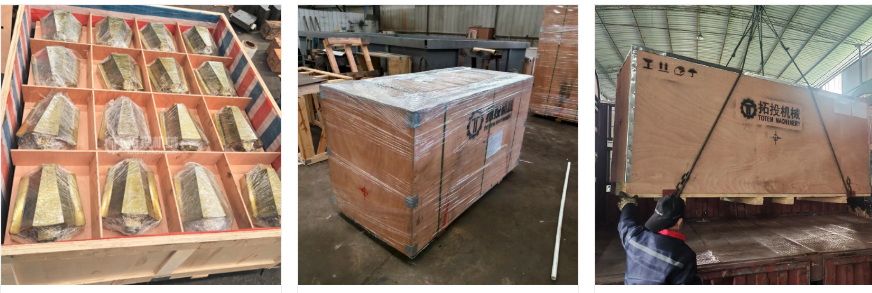
When procuring heavy-duty industrial components like the 20 Steel Bearing Bush, ensuring the product arrives at your facility in pristine condition is a primary concern. To protect the sensitive babbitt surfaces and durable steel backing during complex global transportation routes, we adopt a specialized export-grade multi-layer packaging system. This meticulous approach minimizes the risks of corrosion, physical impact, and dimensional distortion during transit.
Our comprehensive packaging protocol includes several critical layers of protection designed specifically for heavy machinery parts:
Precision Surface Protection: The critical bores and mating surfaces of each bearing bush are thoroughly coated with industrial anti-rust oil. We then wrap the components in VCI paper (Volatile Corrosion Inhibitor), creating an active protective environment that neutralizes moisture and prevents oxidation during extended sea voyages or storage.
Advanced Shock Absorption: To counteract vibrations and sudden impacts during handling, we utilize a shock absorption layer with high-density pearl cotton. This material provides reliable cushioning without degrading over time, ensuring the soft babbitt bearing layer remains isolated from external mechanical forces.
Custom Anti-Displacement Supports: Because heavy-duty sliding bearings carry significant mass, we engineer custom anti-displacement supports to lock the bearing bush securely in place. This prevents any internal shifting or rolling that could lead to surface abrasions inside the packaging.
Reinforced Export Wooden Cases: The outermost layer consists of reinforced export wooden cases. Designed specifically to be suitable for sea, land, and air transport, these heavy-duty containers withstand rigorous port handling, forklift operations, and crane lifting, maintaining structural integrity from our facility to your destination.
Furthermore, our logistics team provides fully customizable packaging configurations to meet specific transportation and project site standards, ensuring compliance with regional import regulations and specialized unloading requirements.
Selecting a reliable supply chain partner is crucial for the continuous operation of heavy machinery and industrial equipment. TOTEM MACHINERY is a professional manufacturer of precision sliding bearing components, with decades of expertise in serving global industrial equipment operators and heavy machinery manufacturers.
Our core competitive advantages are built upon a foundation of manufacturing precision and an unwavering commitment to client success. We boast advanced CNC turning, boring, and milling equipment, allowing us to handle complex geometries and demanding tolerances with efficiency. This production capacity is backed by a strict full-process quality control system and comprehensive non-destructive testing capabilities, ensuring that every bearing bush leaving our facility meets exact engineering specifications.
Beyond our hardware capabilities, TOTEM MACHINERY delivers strict compliance with international industrial standards, providing procurement teams with peace of mind and significantly reducing sourcing risks. We understand that every project has unique operational demands, which is why we offer flexible custom manufacturing services. Whether you require bespoke dimensions, specialized material formulations, or specific structural designs, our engineering team is equipped to support your specific needs.
We also pride ourselves on our full system supporting capabilities for bearing and lubrication assemblies. By offering comprehensive solutions rather than just isolated parts, we help streamline your supply chain and reduce assembly compatibility issues. Our dedication to consistent manufacturing standards, on-time delivery, and responsive technical support makes us a trusted long-term partner for industrial clients worldwide.