
Please Choose Your Language


| Quantity: | |
|---|---|
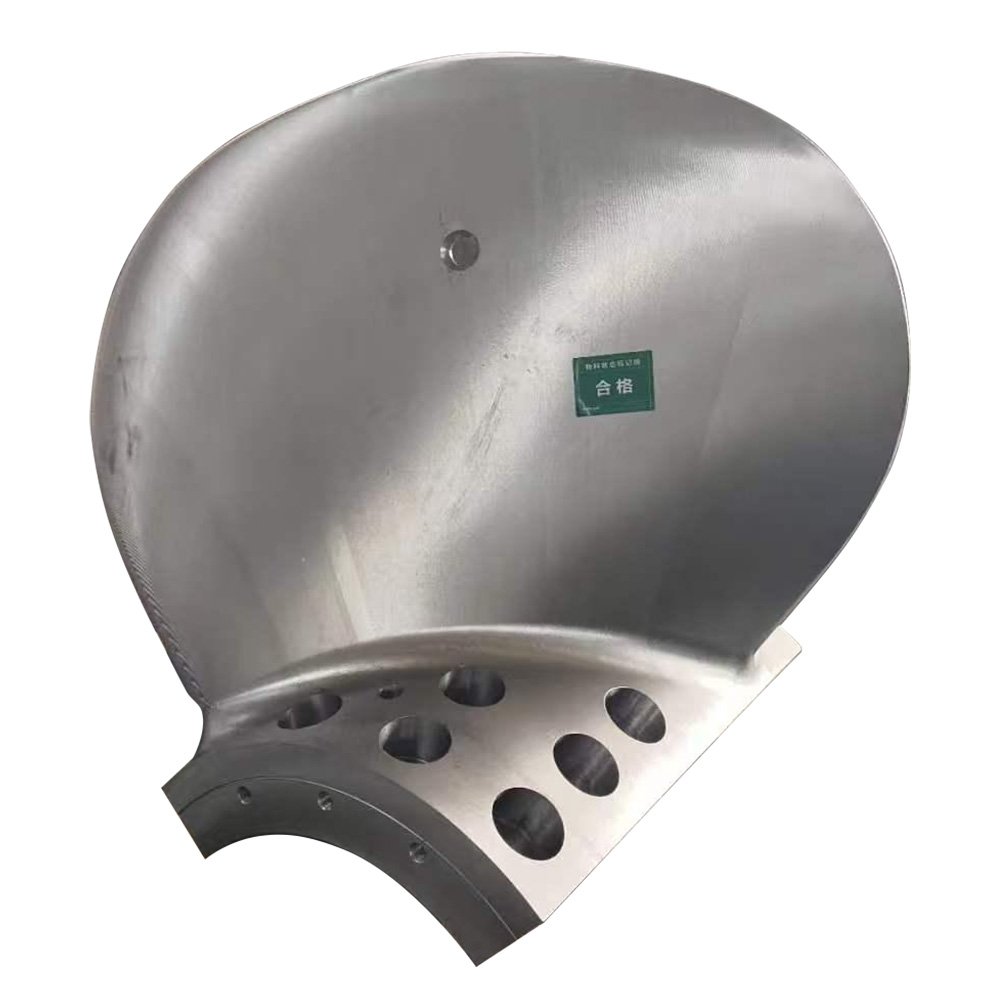
This product is a stainless steel fixed-pitch propeller, specifically designed to withstand harsh sea conditions. To meet the design and maintenance requirements of various vessels, we offer two structural options: integral and assembled. The integral type features an integrally formed blade and hub for a compact structure. The assembled fixed-pitch propeller has separately cast blades and hub, connected by high-strength flanges and bolts, which balances the manufacturing feasibility of large castings, logistical convenience, and the cost-effectiveness of single-piece replacement during later maintenance. The product is particularly suitable for merchant ships and ice-class vessels that require high reliability and operate under relatively stable working conditions.
Power Conversion: Converts the mechanical energy of the ship's main engine into hydrodynamic force to propel the vessel forward or backward.
Ice Impact Resistance: Withstands and resists the massive impact loads and bending moments caused by floating ice on polar or ice-class routes.
Thrust Transmission: Transmits the axial thrust generated by the water flow to the hull through the shafting system.
Convenient Maintenance: When individual blades are damaged, the assembled fixed-pitch propeller does not require replacing or cutting the entire propeller. Flange bolts can be removed for single-blade replacement, significantly reducing later maintenance costs and downtime.
Large-Scale Manufacturing: Supports large-scale customization, with a maximum single-piece weight of up to 45 tons and a maximum diameter of up to 7.5 meters.
Material Expertise: Primarily utilizes high-strength martensitic stainless steel (such as 08Х14НДЛ, 0Cr13Ni4Mo, 0Cr16Ni5Mo, 1Cr13, etc.), supplemented by austenitic stainless steel (such as 12Х18Н10Т). Martensitic materials feature high strength and significant impact resistance, making them ideal for ice-class navigation.
Flexible Structural Adaptation:
Integral Type: No assembly clearances, high hydraulic efficiency, suitable for small and medium-sized vessels or vessels with high hydrodynamic requirements.
Assembled Type: Separately casting reduces the casting difficulty of large components. The flange connecting surfaces are precisely machined to ensure they can withstand immense torque and thrust after fastening, making it suitable for ultra-large vessels or working conditions involving frequent berthing and high risk of scraping.
Hydrodynamic and Structural Optimization: Whether integral or assembled, the blade profiles are precisely controlled. The surfaces are precisely machined and treated with fillet transitions to reduce stress concentration and delay cavitation.
Parameter Item | Customizable Range | Remarks |
Material | Stainless Steel (08Х14НДЛ, 0Cr13Ni4Mo, 0Cr16Ni5Mo, 12Х18Н10Т, etc.) | Selected based on vessel type & operating conditions |
Diameter | Customized per design, maximum diameter 7.5m | Any size customizable |
Number of Blades | 3 / 4 / 5 / 6 Blades | Affects vibration & efficiency |
Pitch Ratio | 0.6 - 1.6 (Customized as per drawing) | Designed based on speed requirements |
Rotation Direction | Right-hand / Left-hand / Contrarotating | Determined by main engine configuration |
Manufacturing Process | Precision Casting + 5-Axis CNC Machining / Monobloc Casting | Ensures blade curve accuracy |
Surface Roughness | Ra ≤ 3.2 μm - 6.3 μm (Finer upon request) | Reduces frictional resistance |
Weight | Calculated per final drawing, maximum single-piece weight 45 tons | Weight certificate provided |
Certification | Factory Certificate / Classification Society Approval (ABS, BV, CCS, DNV, LR, etc.) | With customer's request |
Precision Casting and Rough Machining: Precision casting is performed based on the design model to establish the foundational blade geometry. Initial rough machining (turning and milling) is then applied to the hub and key mounting components to remove excess material allowance.
Flange and Positioning Hole Machining: Precision boring of hub flange connection holes and blade flange holes, and machining of positioning steps to ensure concentricity and fit rate during assembly.
Precision Blade Machining: High-precision CNC milling, complemented by manual trimming, is conducted to guarantee that the blade geometry, pitch distribution, and surface accuracy strictly meet the hydrodynamic design requirements.
Surface Grinding and Polishing: Precision grinding and polishing are applied to the blade surfaces to minimize surface roughness, thereby improving hydrodynamic efficiency and reducing operational drag.
Non-Destructive Testing (NDT): 100% ultrasonic (UT) and magnetic particle (MT) inspection of blades and hubs to ensure zero internal or surface crack defects.
Dynamic Balancing: High-precision dynamic balance corrections are performed on the integral propeller or the fully assembled unit to significantly reduce vibration and noise during operation, ensuring overall operational stability.
Surface Anti-Corrosion Treatment: Final polishing and necessary surface passivation treatments to enhance seawater corrosion resistance.
Protective Treatment: Anti-rust oil or protective agents are applied to key machined surfaces to prevent corrosion during transportation.
Cushioning and Fixation: Wooden supports or special support structures are used to fix the product, which can prevent deformation or collision during transportation.
Outer Packaging: The product is packed with customized wooden cases or steel frames, which are suitable for sea transportation and long-distance transportation.


